The Illusion of the Wooden Box
To an outsider, a beehive looks simple. A stack of wooden boxes. A quiet structure that you can, presumably, just open.
This is a profound psychological error. It’s the illusion of simplicity.
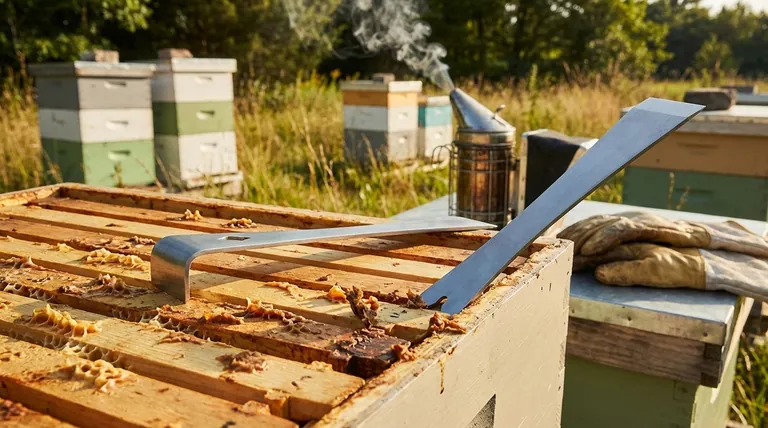
A beehive isn’t a box; it’s a fortress. Every seam, every gap, every frame is welded shut with a resinous, antimicrobial substance called propolis. The bees engineer their home into a single, solid, biosecure unit. Attempting to enter it without the right key is not an inspection; it's a brute-force invasion.
That key is the hive tool.
Engineering Against Nature's Engineer
The hive tool is not merely a tool. It is the physical interface between the beekeeper's intent and the colony's reality. Its design is a direct response to the elegant engineering of the honeybee.
Its core functions are born from necessity.
A Lever Against a Biological Seal
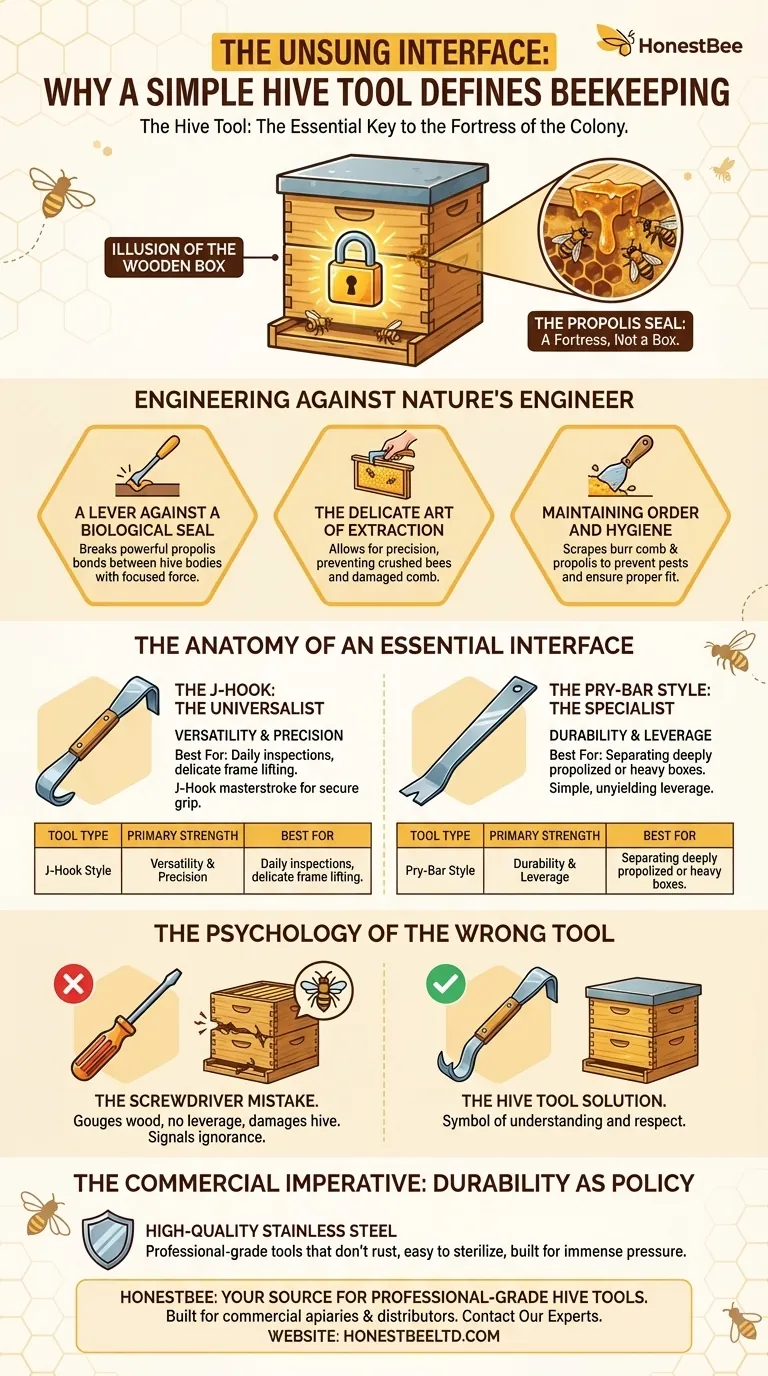
The primary challenge is breaking the propolis seal between hive bodies. This requires leverage. The flat, sharpened end of a hive tool is designed to be wedged into the tightest seam, allowing the beekeeper to apply focused force and pop the seal with minimal disruption. It’s a small act of physics against a powerful biological bond.
The Delicate Art of Extraction
Inside, each honeycomb frame is also glued in place. A careless hand can crush bees or damage precious comb. The hive tool allows for precision. It’s used to gently pry frames apart before lifting them, turning a potentially jarring process into a careful, respectful extraction.
Maintaining Order and Hygiene
Bees also build excess "burr comb" in any available space. The flat edge of the hive tool is a scraper, used to remove this comb and scrape away excess propolis. This isn't just tidying up; it's essential maintenance that prevents pests from finding refuge and ensures components fit together properly for future inspections.
The Anatomy of an Essential Interface
While the purpose is universal, the form varies slightly based on the specific task. Understanding the design choices reveals the subtle complexities of hive management.
The J-Hook: The Universalist
The most common design features a flat pry-bar on one end and a J-shaped hook on the other. The "J-Hook" is a masterstroke of functional design. It’s perfect for hooking under the top bar of a frame, providing a secure grip to lift it straight up without rolling or damaging the bees on its surface. It's the versatile choice for daily inspections.
The Pry-Bar Style: The Specialist
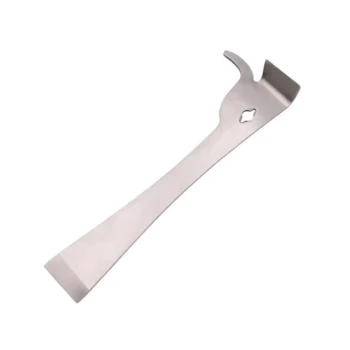
A simpler, heavier design resembles a small crowbar. This tool forsakes the finesse of the J-hook for raw, unyielding leverage. For beekeepers managing hives that have been sealed for a long time, or for separating heavy, honey-laden supers, its durability is unmatched.
| Tool Type | Primary Strength | Best For |
|---|---|---|
| J-Hook Style | Versatility & Precision | Daily inspections, delicate frame lifting |
| Pry-Bar Style | Durability & Leverage | Separating deeply propolized or heavy boxes |
The Psychology of the Wrong Tool
A beginner’s most telling mistake is reaching for a screwdriver.
This choice stems from a failure to appreciate the problem. A screwdriver is designed for a single, rotational task. It has no broad edge for scraping, no leverage for prying, and its tip will gouge and damage the soft wood of the hive bodies.
Using a substitute tool is an act of ignorance. It signals a misunderstanding of the bees' world. The result is a damaged hive, stressed bees, and a frustrated beekeeper. The hive tool, by contrast, is a symbol of understanding and respect.
The Commercial Imperative: Durability as Policy
For a commercial apiary or a beekeeping equipment distributor, this isn't just about understanding—it's about operational efficiency and asset protection. A tool that bends, rusts, or breaks is a liability.
That's why professional-grade hive tools are made from high-quality stainless steel. They don't rust, making them easy to sterilize to prevent the spread of disease between yards. They are forged to withstand the immense pressure of separating hundreds of heavy, propolis-sealed boxes without failing.
For operations at scale, the hive tool is not just an accessory; it is a piece of critical infrastructure. Ensuring your teams or your customers are equipped with durable, reliable hive tools is fundamental to successful, sustainable beekeeping. HONESTBEE specializes in supplying these professional-grade tools, built for the demands of commercial apiaries and the quality expectations of distributors.
The hive tool is the elegant, one-piece solution to a complex biological problem. It is the first, and most important, piece of equipment that enables a productive partnership between human and bee. To equip your operation with the tools it deserves, Contact Our Experts.
Visual Guide
Related Products
- HONESTBEE Professional Long Handled Hive Tool with Precision Cutting Blade
- Professional Multi-Function Stainless Steel Hive Tool
- HONESTBEE Premium Italian Style Hive Tool with Hardwood Handle
- Ergonomic Plastic Frame Spacer Tool for Rapid Hive Management Beekeeping
- Professional Grade Foldable Beehive Handles
Related Articles
- Force and Finesse: The Hive Tool as the Beekeeper's Critical Interface
- The Essential Guide to Hive Tools in Modern Beekeeping
- The Apiary as a System: Why Your Hive Tool is More Than Just Steel
- How to Choose Hive Tools That Match Your Beekeeping Workflow
- The Beekeeper's Scalpel: How a Simple Hive Tool Governs Apiary Health