The Frustration of a Vanishing Tool
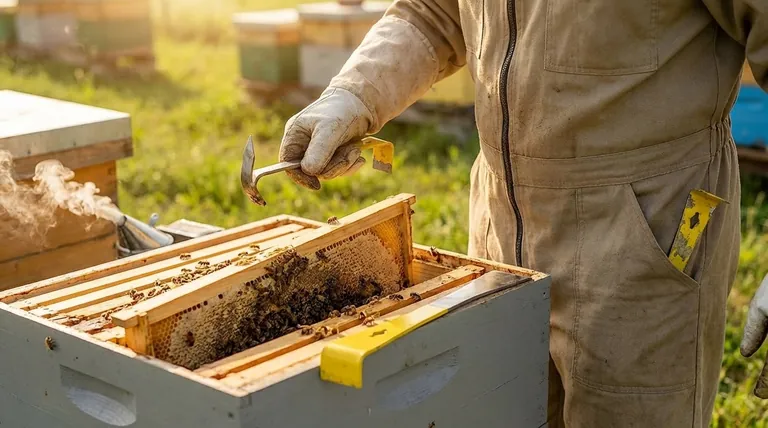
It’s a hot afternoon. The air is thick with the hum of bees. You’re halfway through a hive inspection, carefully prying apart two heavy supers glued tight with propolis. You set your hive tool down for just a moment on the neighboring hive cover to lift a frame.
When you reach for it again, it’s gone.
Vanished. The dark, propolis-stained metal blends perfectly into the shadows and grass. Work grinds to a halt. This small moment of friction isn't just an annoyance; for a commercial beekeeper, it's a systemic vulnerability. It's a single point of failure in a workflow that demands efficiency.
The All-in-One Myth
Our minds are wired to seek simplicity. We love the idea of a single, perfect tool that can do everything. It feels minimalist and efficient.
But in a complex, physical system like an apiary, this mindset creates a hidden risk. Relying on one hive tool is like a factory relying on a single critical machine with no backup. When it fails—or simply gets misplaced—the entire operation stops.
Owning multiple hive tools is not about redundancy. It's about building a resilient, adaptable system. It's an acknowledgment that the right tool for one job is rarely the perfect tool for another.
A Systems Approach to Apiary Tools
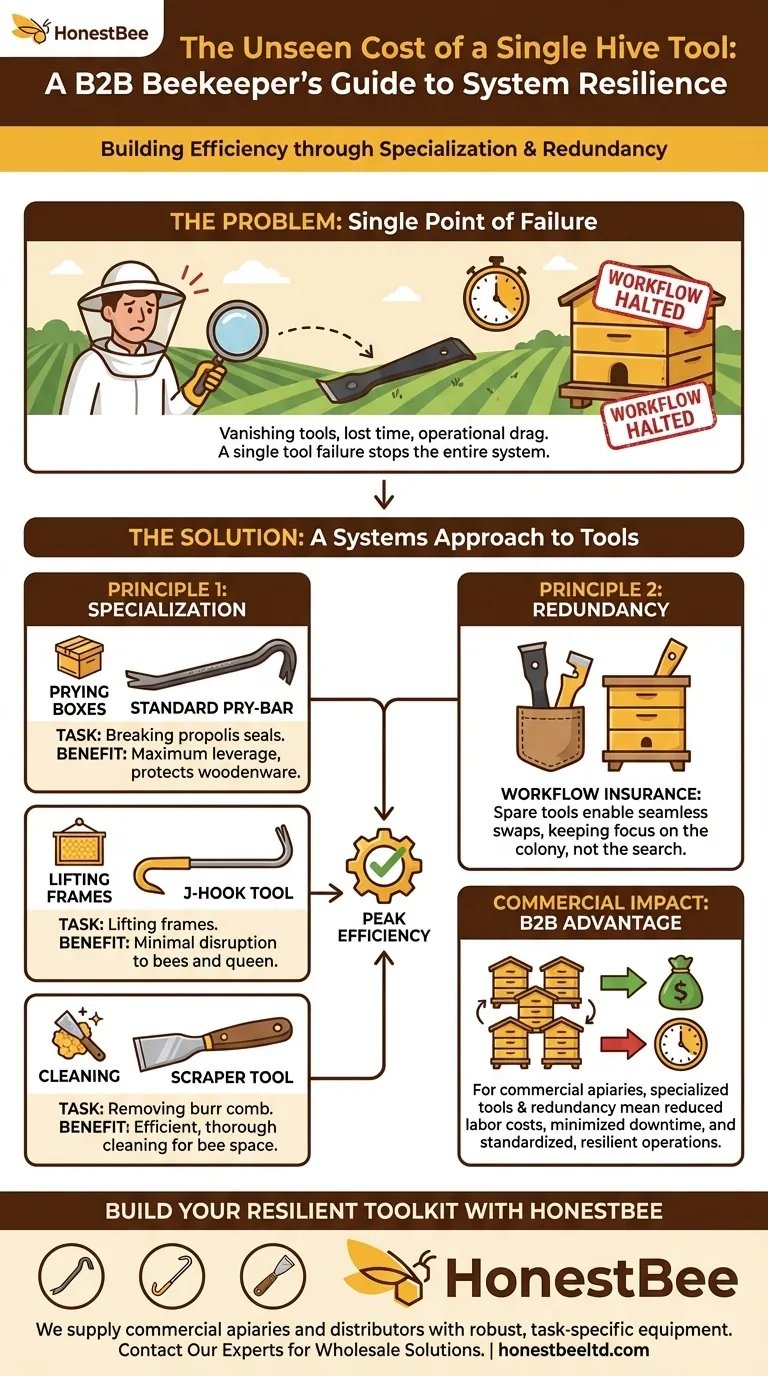
Viewing your tools as an interconnected system, rather than a collection of individual items, changes your entire approach. This system is built on two core principles: specialization and redundancy.
Principle 1: Specialization for Peak Efficiency
Different tasks present different physical challenges. Using a specialized tool provides a mechanical and ergonomic advantage that a "jack-of-all-trades" tool simply cannot match.
-
For Prying Boxes: The Lever. Heavy supers welded together with propolis require significant leverage. A standard pry-bar style tool with its wide, flat edge is engineered to distribute this force, breaking the seal cleanly without damaging your woodenware.
-
For Lifting Frames: The Hook. The most delicate part of an inspection is often lifting the first frame without rolling the queen or angering the bees. The elegant design of a J-hook tool is a masterclass in physics. It hooks under the frame's ear, using the adjacent frame as a fulcrum to lift it straight up with minimal disruption.
-
For Cleaning: The Blade. Maintaining proper bee space requires constant scraping of propolis and burr comb. While most tools have a scraping edge, wider or purpose-built scrapers make cleaning frames and boxes dramatically faster and more thorough.
Principle 2: Redundancy for Uninterrupted Flow
A hive tool is one of the most easily misplaced items in an apiary. It’s a cognitive inevitability, not a personal failing.
During an inspection, your focus is on the bees—assessing brood patterns, checking for pests, and managing space. Your brain offloads the location of your tool.
Having a spare in your pocket or bee box is not clutter; it is workflow insurance. It transforms a frustrating, time-wasting search into a seamless, two-second swap, keeping you focused on the colony.
From Annoyance to Operational Drag
For a hobbyist, a lost tool is an afternoon's frustration. For a commercial apiary, that same lost tool is multiplied across dozens or hundreds of hives. It's lost time, increased labor costs, and a drag on the entire operation.
Commercial success depends on standardizing efficient processes. This includes the tools themselves. Operators need durable, reliable equipment that can withstand the rigors of daily, intensive use. This is why having a dependable supply chain for essential gear is non-negotiable.
At HONESTBEE, we focus exclusively on supplying commercial apiaries and beekeeping distributors with the robust equipment they need. We understand that a hive tool isn't just a piece of metal; it's a component in a larger system of productivity. We provide wholesale access to task-specific tools built for performance and durability, ensuring your operation never stops because of a single point of failure.
Building Your Resilient Toolkit
Whether you manage two hives or two thousand, the principles remain the same. Your toolkit should be a deliberate choice that reflects your operational goals.
| Hive Tool Type | Primary Function | Key Benefit |
|---|---|---|
| Standard Pry-Bar | Prying apart stuck boxes | Provides maximum leverage to break propolis seals |
| J-Hook Tool | Lifting and removing frames | Hooks under frame ears for easy, minimal-disruption lifting |
| Scraper Tool | Scraping propolis and burr comb | Sharp, wide blade for efficient cleaning of frames and boxes |
A well-designed system of tools does more than make the work easier. It reduces mental friction, builds confidence, and allows you to focus on what truly matters: the health and productivity of your bees.
Ready to build a more resilient and efficient system for your apiary? Contact Our Experts
Visual Guide
Related Products
- HONESTBEE Professional Long Handled Hive Tool with Precision Cutting Blade
- Professional Multi-Function Stainless Steel Hive Tool
- HONESTBEE Premium Italian Style Hive Tool with Hardwood Handle
- Ergonomic Plastic Frame Spacer Tool for Rapid Hive Management Beekeeping
- Professional Grade Foldable Beehive Handles
Related Articles
- Force and Finesse: The Hive Tool as the Beekeeper's Critical Interface
- The Essential Guide to Hive Tools in Modern Beekeeping
- The Apiary as a System: Why Your Hive Tool is More Than Just Steel
- How to Choose Hive Tools That Match Your Beekeeping Workflow
- The Beekeeper's Scalpel: How a Simple Hive Tool Governs Apiary Health


















