The Invisible War
In beekeeping, the most dangerous threats are often the ones you cannot see. The daily life of a colony—the foraging, the brood rearing—can mask a silent crisis unfolding within the sealed cells of the honeycomb.
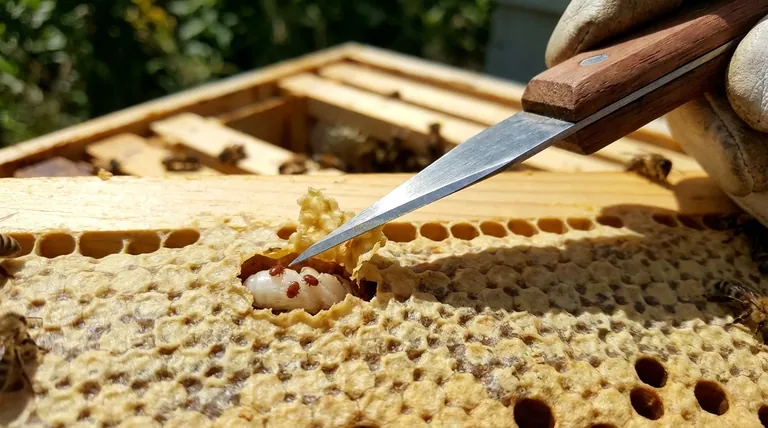
The antagonist in this story is the Varroa destructor mite. It’s an external parasite that reproduces exclusively under the wax cappings of developing bee brood. Left unchecked, it transmits viruses and weakens the colony until it collapses.
The challenge for the beekeeper isn't just fighting the mite; it's getting accurate information about an enemy that hides in plain sight.
The Fallacy of the All-Purpose Tool
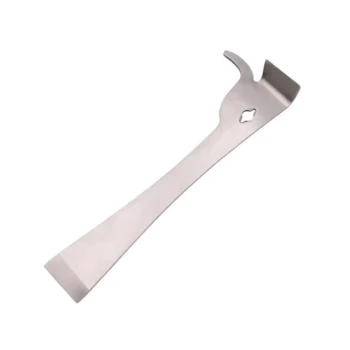
Every beekeeper has a standard hive tool. It's the pry bar, the scraper, the hammer of the apiary. It’s designed for leverage and brute force—separating sticky hive boxes and scraping away propolis.
But when you try to use this blunt instrument for a delicate diagnostic task, like inspecting brood cells for mites, the tool fails.
Attempting to uncap a single cell with a standard tool is like performing surgery with a crowbar. The result is predictable: crushed wax walls, a damaged pupa, and a messy crime scene where spotting the tiny, reddish-brown mites becomes nearly impossible. This collateral damage forces the bees to perform cleanup and repairs, wasting energy that could have been spent on foraging.
You cause harm in the process of trying to help, and you get bad data in return.
From Blunt Instrument to Surgical Scalpel
The solution is an act of simple, beautiful engineering. By modifying a standard hive tool, you can transform it from a blunt lever into a precision instrument.
The modification is focused and elegant, targeting the "J" hook end of the tool.
The Anatomy of the Modification
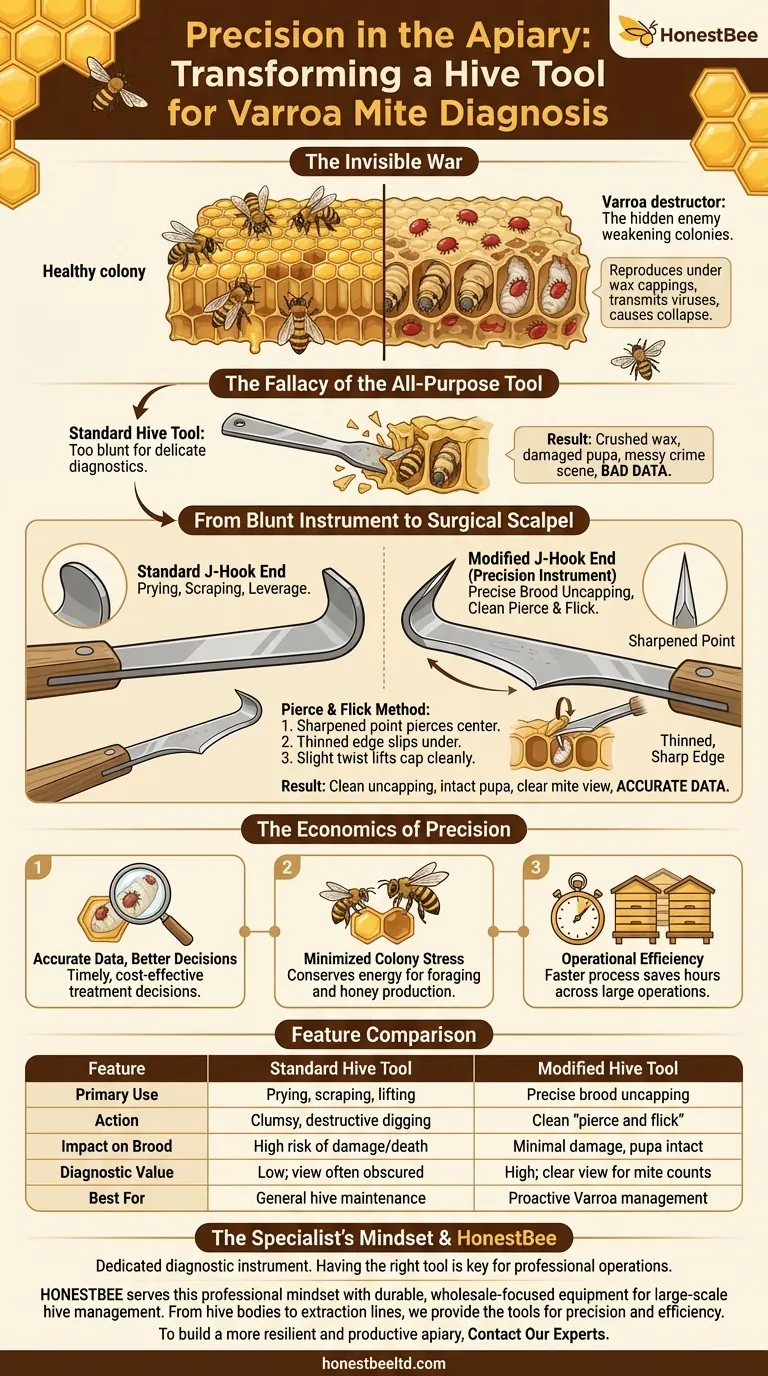
- A Sharpened Point: The tip of the hook is ground down to a fine, sharp point. This allows it to pierce the center of a wax capping with almost no pressure.
- A Thinned, Sharp Edge: The inside curve of the hook is ground to be thinner and sharper, creating a delicate blade.
This redesigned tool enables a completely different motion. Instead of clumsy digging, the beekeeper executes a quick, two-step "pierce and flick." The point enters the cap, the sharpened edge slips underneath, and with a slight twist of the wrist, the cap is lifted off cleanly, leaving the pupa and cell intact.
The Economics of Precision
This small change in tool geometry has a compounding effect on the health and productivity of an apiary.
Accurate Data, Better Decisions
A clean uncapping provides a clear view. You can easily see the mites against the white body of the pupa. Good data on infestation levels means you can make timely, cost-effective treatment decisions instead of guessing.
Minimized Colony Stress
Leaving the pupa and comb undamaged means the bees can quickly reseal the cell. This conserves the colony's energy, which is its most valuable economic resource. Less time spent on repairs means more time spent making honey.
Operational Efficiency
The "pierce and flick" method is dramatically faster than fumbling with a standard tool. Across hundreds or thousands of hives in a commercial operation, these saved seconds turn into hours.
| Feature | Standard Hive Tool | Modified Hive Tool |
|---|---|---|
| Primary Use | Prying, scraping, lifting | Precise brood uncapping |
| Action | Clumsy, destructive digging | Clean "pierce and flick" |
| Impact on Brood | High risk of damage or death | Minimal damage, pupa intact |
| Diagnostic Value | Low; view is often obscured | High; clear view for mite counts |
| Best For | General hive maintenance | Proactive Varroa management |
The Specialist's Mindset
A modified hive tool is no longer an all-purpose tool. Its fine edge would be ruined by prying hive bodies apart. It becomes a dedicated diagnostic instrument.
This reflects a crucial shift in mindset from amateur to professional: understanding that having the right tool for a specific, critical job is more important than having one tool that does everything poorly.
This dedication to having the right tool for a specific job is the hallmark of a successful commercial apiary. A single modified hive tool solves one problem, but a truly productive operation is built on a foundation of reliable, high-quality equipment for every task.
HONESTBEE is built to serve this professional mindset. We supply commercial apiaries and beekeeping distributors with the durable, wholesale-focused equipment that underpins effective, large-scale hive management. From hive bodies to extraction lines, we provide the tools you need to operate with precision and efficiency.
To build a more resilient and productive apiary, Contact Our Experts.
Visual Guide
Related Products
- HONESTBEE Professional Long Handled Hive Tool with Precision Cutting Blade
- Professional Multi-Function Stainless Steel Hive Tool
- HONESTBEE Premium Italian Style Hive Tool with Hardwood Handle
- Ergonomic Plastic Frame Spacer Tool for Rapid Hive Management Beekeeping
- Professional Grade Foldable Beehive Handles
Related Articles
- Force and Finesse: The Hive Tool as the Beekeeper's Critical Interface
- The Essential Guide to Hive Tools in Modern Beekeeping
- The Apiary as a System: Why Your Hive Tool is More Than Just Steel
- How to Choose Hive Tools That Match Your Beekeeping Workflow
- The Beekeeper's Scalpel: How a Simple Hive Tool Governs Apiary Health