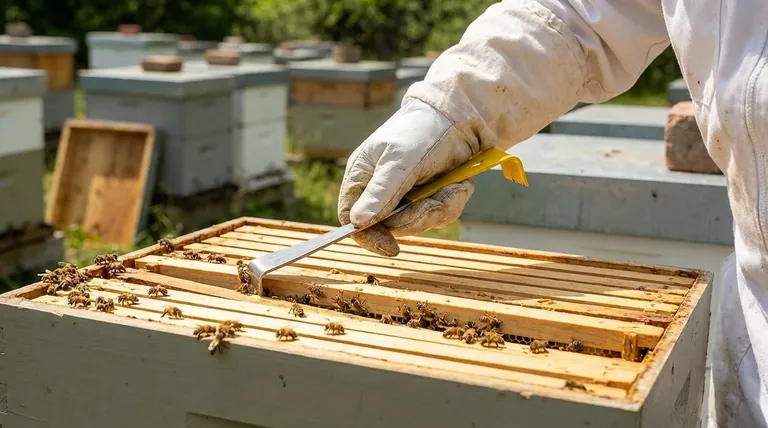
The Unspoken Dialogue Between Beekeeper and Hive
Approaching a beehive is not like opening a simple box. It's an entry into a sealed, living superorganism. The colony’s survival depends on its ability to fortify its home against intruders and the elements, using a powerful resinous glue called propolis to seal every crack.
The fundamental challenge for any beekeeper, especially at a commercial scale, is to inspect and manage this fortress without inciting chaos. This requires a tool designed not for brute force, but for a nuanced dialogue. The hive tool is that interface. It is the physical translation of the beekeeper's intent into controlled, effective action.
Deconstructing a Purpose-Built Design
The genius of the hive tool lies in its stark simplicity. Every curve and edge is the direct result of decades of problem-solving, engineered to overcome the two primary physical obstacles in beekeeping: the strength of propolis and the fragility of the colony.
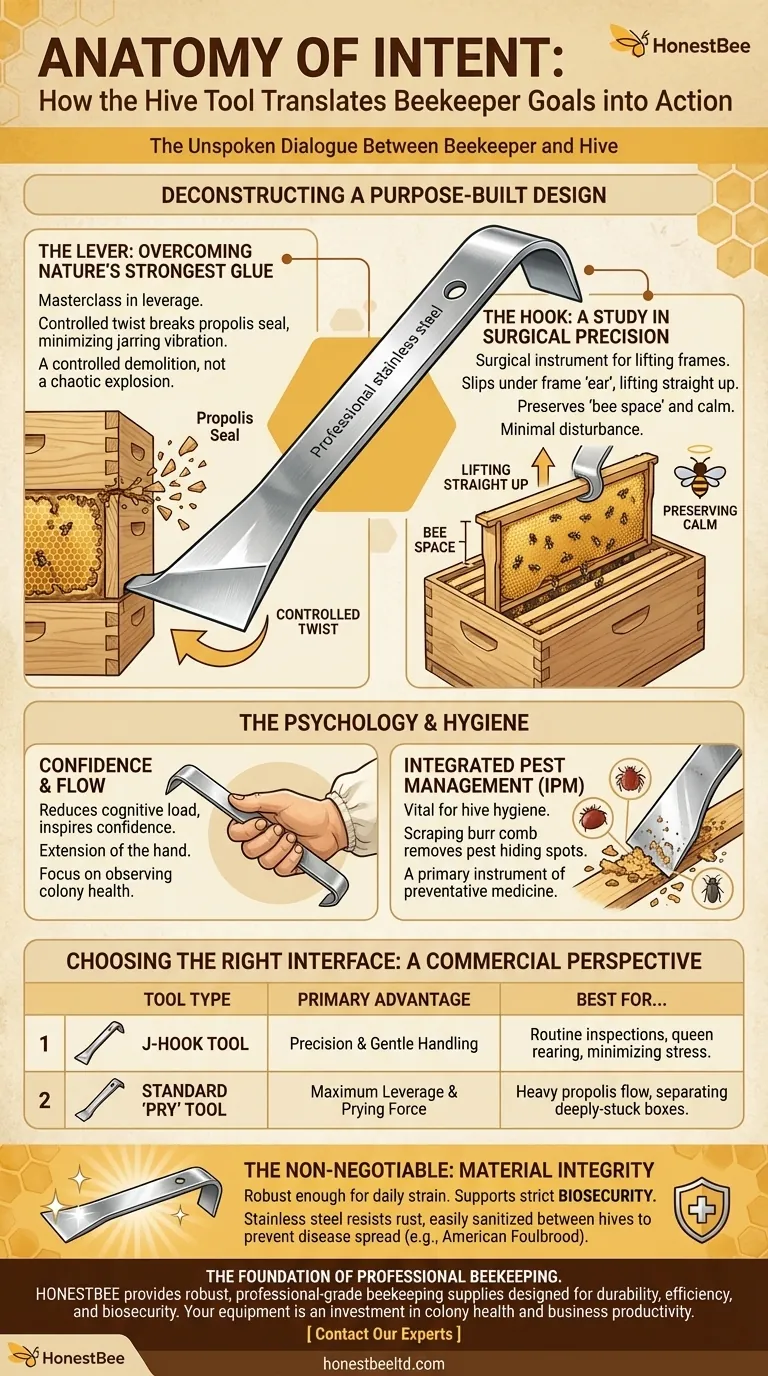
H3: The Lever: Overcoming Nature's Strongest Glue
The angled, sharpened end of the tool is a masterclass in leverage. Bees use propolis as their external immune system and structural cement, creating a bond that can be astonishingly strong. A simple pry bar would be too clumsy, risking damage to the wooden hive bodies.
The hive tool's blade is designed to slip into the hairline seam between hive boxes. The angle provides the mechanical advantage to break the propolis seal with a steady, controlled twist—minimizing the jarring vibration that can alarm the colony. It’s the difference between a controlled demolition and a chaotic explosion.
H3: The Hook: A Study in Surgical Precision
Once inside, the next challenge arises: lifting the first frame from a tightly packed box. These frames are separated by a precise "bee space," and attempting to wrench one out can crush bees, damage the delicate wax comb, and trigger a massive defensive response.
The J-hook is the solution. It is a surgical instrument designed to slip under the frame's top bar "ear," allowing the beekeeper to lift it straight up with minimal disturbance. This single, gentle movement is critical. It sets the tone for the entire inspection, preserving calm and allowing for efficient work.
The Psychology of a Well-Designed Tool
A great tool doesn't just perform a function; it reduces cognitive load and inspires confidence. A beekeeper fumbling with inadequate equipment is hesitant and clumsy, and the bees notice. A reliable hive tool becomes an extension of the hand, allowing the beekeeper to focus on observing the colony's health, not on the mechanics of opening the hive.
This confidence is crucial for hive hygiene. The tool's sharp edges are constantly at work scraping away burr comb and debris. This isn't just tidiness; it's a vital part of Integrated Pest Management (IPM). By removing hiding spots for pests like small hive beetles and varroa mites, the tool acts as a primary instrument of preventative medicine for the colony.
Choosing the Right Interface: A Commercial Perspective
For commercial apiaries managing hundreds or thousands of colonies, the choice of a hive tool is an operational decision with significant financial implications. The trade-offs in design directly impact efficiency and biosecurity.
| Tool Type | Primary Advantage | Best For... |
|---|---|---|
| J-Hook Tool | Precision & Gentle Handling | Routine inspections, queen rearing, and minimizing stress on the colony. |
| Standard "Pry" Tool | Maximum Leverage & Prying Force | Operations with heavy propolis flow or separating deeply-stuck boxes. |
The Non-Negotiable: Material Integrity
While design style can be a matter of operational preference, material quality is not. For a professional, a tool must be robust enough to withstand the daily strain of prying heavy boxes and scraping hardened propolis.
More importantly, it must support strict biosecurity protocols. A high-quality stainless steel hive tool will not rust and can be easily scraped clean and sanitized between hives, or even between apiaries. This simple act is critical in preventing the catastrophic spread of diseases like American Foulbrood. Investing in inferior tools that corrode or bend is an unacceptable risk.
The Foundation of Professional Beekeeping
The hive tool is far more than a simple piece of metal. It is the single most critical piece of equipment dictating the efficiency, safety, and health of an entire beekeeping operation. The right tool enables a calm, productive workflow, while the wrong one creates unnecessary stress for both the beekeeper and the bees.
For commercial apiaries and equipment distributors, sourcing tools built for the relentless demands of professional management is non-negotiable. HONESTBEE provides robust, professional-grade beekeeping supplies designed for durability, efficiency, and biosecurity. We understand that your equipment is an investment in the health of your colonies and the productivity of your business.
Visual Guide
Related Products
- HONESTBEE Professional Long Handled Hive Tool with Precision Cutting Blade
- Professional Multi-Function Stainless Steel Hive Tool
- HONESTBEE Premium Italian Style Hive Tool with Hardwood Handle
- Ergonomic Plastic Frame Spacer Tool for Rapid Hive Management Beekeeping
- Professional Grade Foldable Beehive Handles
Related Articles
- Force and Finesse: The Hive Tool as the Beekeeper's Critical Interface
- The Essential Guide to Hive Tools in Modern Beekeeping
- The Apiary as a System: Why Your Hive Tool is More Than Just Steel
- How to Choose Hive Tools That Match Your Beekeeping Workflow
- The Beekeeper's Scalpel: How a Simple Hive Tool Governs Apiary Health


















