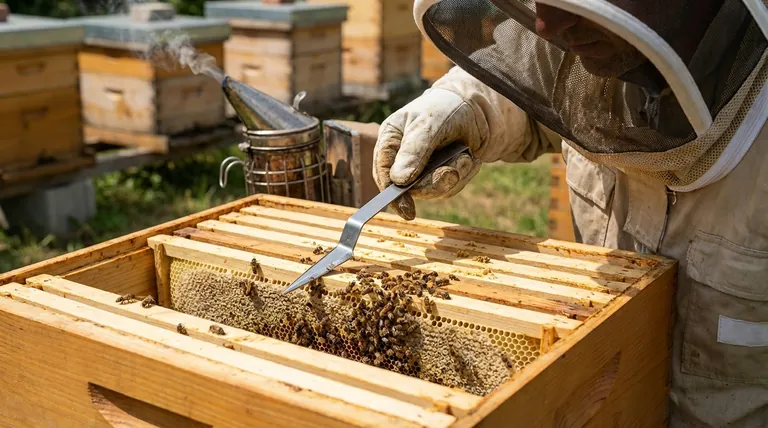
Ethical beekeeping hinges on minimizing harm to colonies during hive interventions. The right hive tool—and the techniques to use it—can mean the difference between a stressed colony and a thriving one. This guide explores the science behind bee-safe hive tools and field-tested methods to reduce disruption.
Why Hive Tools Are Non-Negotiable for Ethical Beekeeping
The Science of Propolis and Frame Adhesion
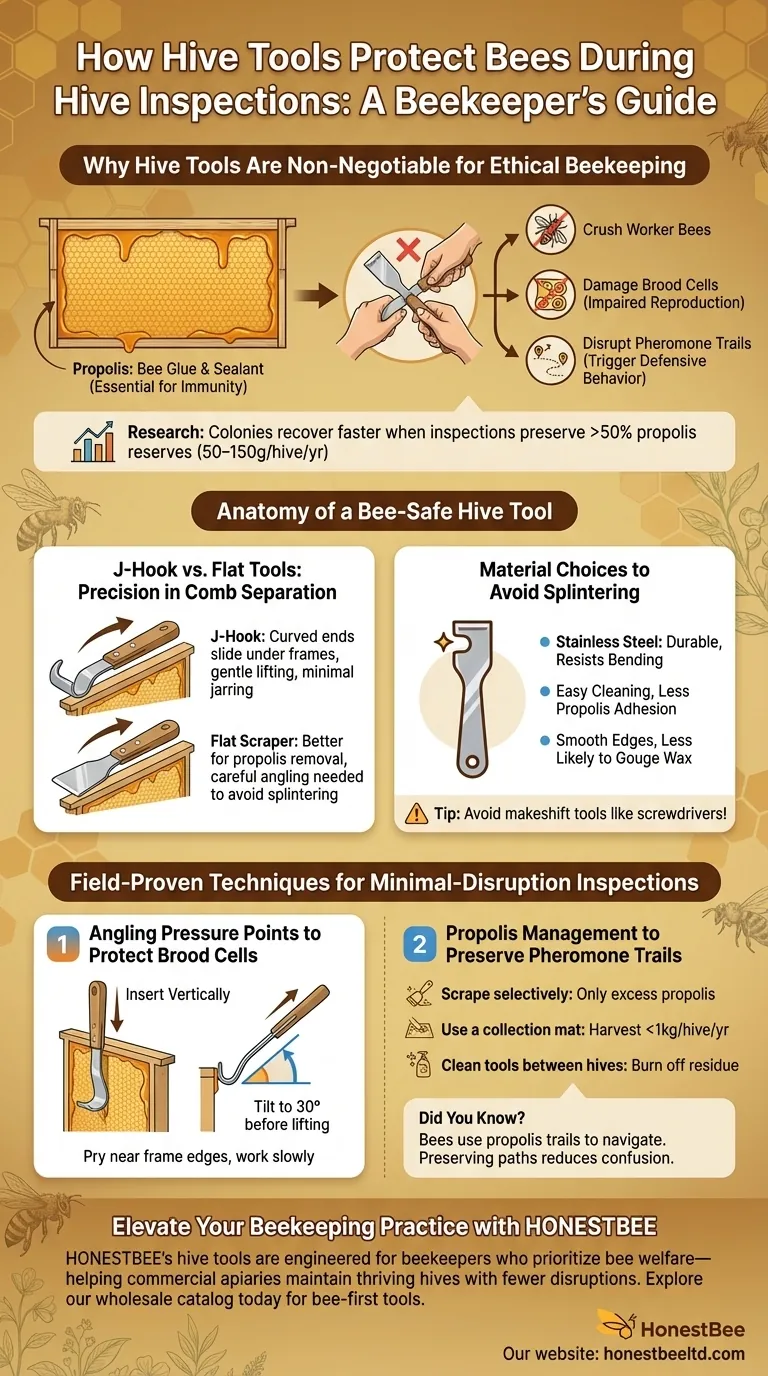
Bees seal hive gaps with propolis, a resinous "bee glue" with antimicrobial properties. While essential for hive immunity, propolis binds frames tightly—forcing beekeepers to pry them apart. Rough handling can:
- Crush worker bees caught between frames
- Damage brood cells, impairing colony reproduction
- Disrupt pheromone trails, triggering defensive behavior
Research shows colonies recover faster when inspections preserve at least half their propolis reserves (typically 50–150g per hive annually).
How Crushing Frames Stresses Bee Colonies
Aggressive prying risks:
- Brood mortality: Larvae and pupae are fragile; even slight frame shifts can collapse cells.
- Worker bee injuries: Crushed bees release alarm pheromones, escalating hive agitation.
- Energy depletion: Bees expend resources repairing damaged comb instead of foraging.
A hive tool designed for precision reduces these risks dramatically.
Anatomy of a Bee-Safe Hive Tool
J-Hook vs. Flat Tools: Precision in Comb Separation
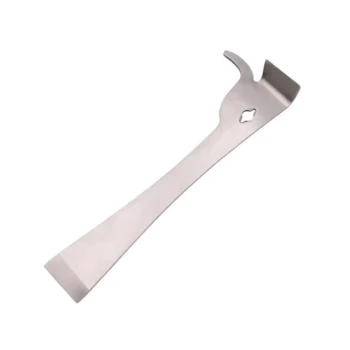
- J-Hook tools: Curved ends slide under frames with minimal upward force, ideal for lifting without jarring.
- Flat scrapers: Better for propolis removal but require careful angling to avoid comb splintering.
Material Choices to Avoid Splintering Wax Combs
Stainless steel is preferred for:
- Durability: Resists bending under pressure.
- Easy cleaning: Propolis won’t adhere as stubbornly compared to carbon steel.
- Smooth edges: Less likely to gouge delicate wax.
Tip: Avoid makeshift tools like screwdrivers—their narrow edges concentrate pressure, increasing comb damage.
Field-Proven Techniques for Minimal-Disruption Inspections
Angling Pressure Points to Protect Brood Cells
- Insert the tool vertically between frames, then tilt to 30° before lifting.
- Pry near frame edges, where brood cells are sparse.
- Work slowly: Let bees move away naturally instead of scraping them.
Propolis Management to Preserve Pheromone Trails
- Scrape selectively: Remove only excess propolis blocking frame movement.
- Use a collection mat: Harvest up to 1kg per hive annually without over-stripping.
- Clean tools between hives: Burn off residue in a smoker to prevent cross-contamination.
Did you know? Bees use propolis trails to navigate. Preserving these paths reduces inspection-induced confusion.
Elevate Your Beekeeping Practice with HONESTBEE
Every intervention affects colony health. HONESTBEE’s hive tools are engineered for beekeepers who prioritize bee welfare—helping commercial apiaries and distributors maintain thriving hives with fewer disruptions. Explore our wholesale catalog today to equip your operation with bee-first tools.
Final thought: The quiet hum of a calm hive isn’t just luck—it’s the result of deliberate, tool-enabled care.
Visual Guide
Related Products
- HONESTBEE Professional Long Handled Hive Tool with Precision Cutting Blade
- Professional Multi-Function Stainless Steel Hive Tool
- HONESTBEE Premium Italian Style Hive Tool with Hardwood Handle
- Ergonomic Plastic Frame Spacer Tool for Rapid Hive Management Beekeeping
- Professional Grade Foldable Beehive Handles
Related Articles
- Force and Finesse: The Hive Tool as the Beekeeper's Critical Interface
- The Essential Guide to Hive Tools in Modern Beekeeping
- The Apiary as a System: Why Your Hive Tool is More Than Just Steel
- How to Choose Hive Tools That Match Your Beekeeping Workflow
- The Beekeeper's Scalpel: How a Simple Hive Tool Governs Apiary Health