The Forgotten Leverage Point
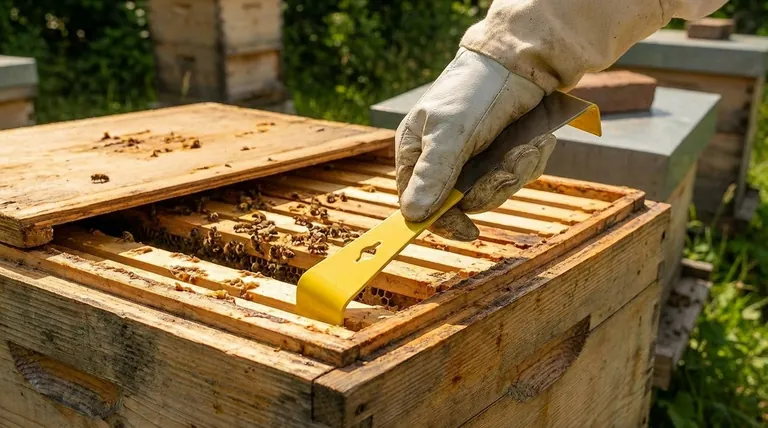
An experienced beekeeper stands over an open hive. The sun is high, the bees are growing restless, and a routine inspection is seconds from becoming a problem. Why? Because the hive tool, set down in the grass just moments ago, has vanished.
This small, frustrating moment isn't just about a misplaced piece of steel. It's a failure in a system.
In a complex operation like a commercial apiary, we focus on the big variables: queen genetics, Varroa mite counts, and nectar flow. Yet, the entire system can be compromised by the management of its simplest component: the hive tool. It is simultaneously a lever, a scraper, a blade, and a potential vector for disease. Its condition is a direct reflection of an operation's discipline.
The Psychology of a Simple Tool
It’s human nature to dedicate our sharpest focus to the most complex challenges. We build intricate schedules for feeding and treatment but often overlook the mundane task of cleaning a tool after every single use.
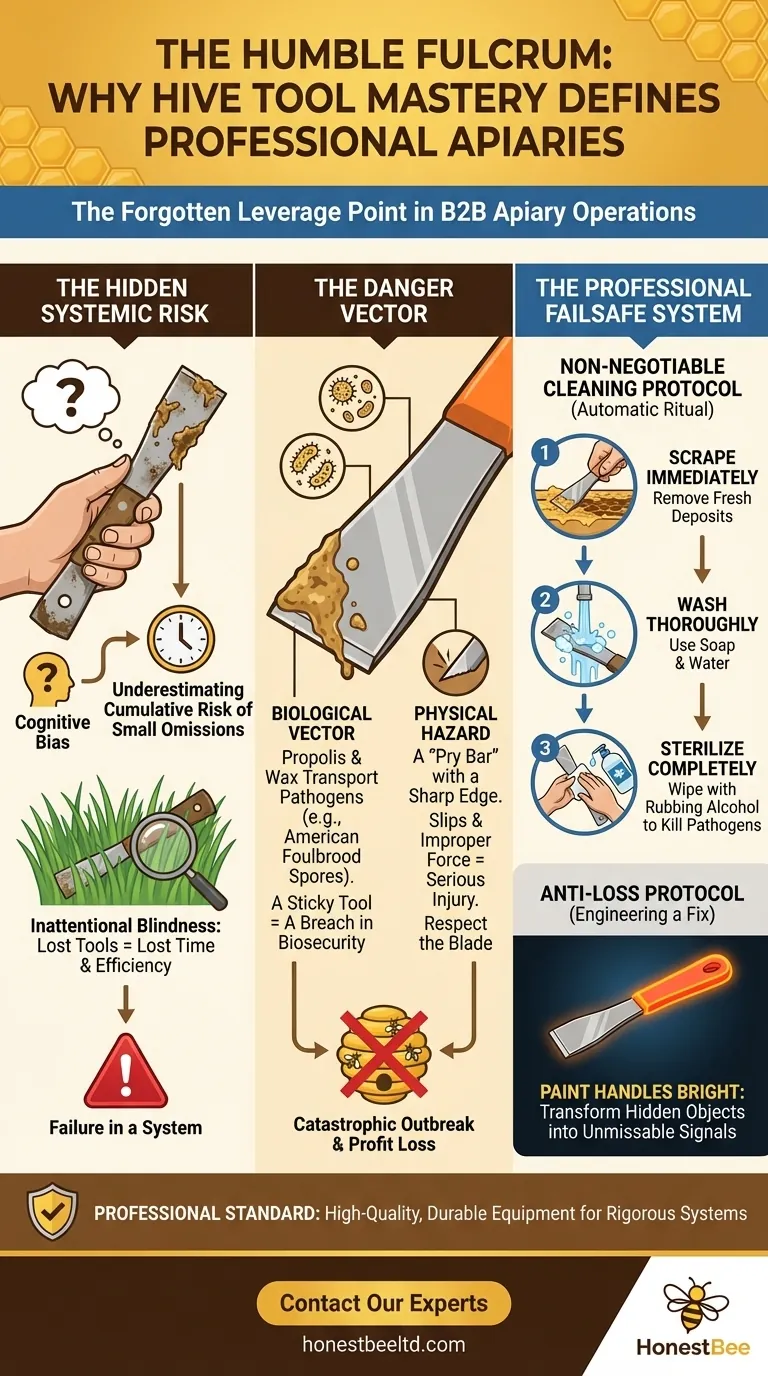
This isn't a character flaw; it's a cognitive bias. We underestimate the cumulative risk of small, repeated omissions. A sticky tool seems trivial until it transfers American Foulbrood spores from one yard to another, triggering a catastrophic and costly outbreak. The discipline of tool care is a psychological battle against this tendency to dismiss the small stuff.
The Anatomy of Systemic Risk
A hive tool is a fulcrum for more than just frames and hive bodies; it’s a leverage point for risk. Understanding the specific dangers it presents is the first step toward mitigating them professionally.
The Biological Vector
Propolis and wax are powerful antimicrobial agents inside the hive. On a tool, however, they become a sticky, perfect medium for transporting pathogens. Every scrape carries microscopic hitchhikers.
- Propolis: Can harbor resilient spores like Paenibacillus larvae (American Foulbrood).
- Wax and Debris: Can transfer pests and other viral or fungal diseases between colonies.
A tool that is not sterilized between hives is a breach in biosecurity. It's the equivalent of a surgeon using the same scalpel on multiple patients without sterilization.
The Physical Hazard
We often call it a "pry bar," but that name fosters a dangerous sense of complacency. A standard hive tool has a sharp, beveled edge designed for cutting and scraping. It demands the same respect as a chisel or a knife.
Sudden slips while prying propolis-sealed boxes can lead to deep cuts. Directing force toward your body or hands is an unnecessary gamble. Proper technique—stable footing, a firm grip, and directing force away from yourself—is not optional; it's a core safety protocol.
Engineering a Failsafe System
The best apiaries run on systems, not just intentions. To counter cognitive bias and human error, we must build simple, repeatable processes for managing our most fundamental equipment.
The Non-Negotiable Cleaning Protocol
This three-step process should be an automatic, muscle-memory ritual performed after every inspection and especially before moving to a new colony.
- Scrape Immediately: Remove heavy deposits of wax and propolis while they are still fresh and soft.
- Wash Thoroughly: Use warm soap and water to remove honey and other sticky residues.
- Sterilize Completely: Wipe the tool down with rubbing alcohol to dissolve any remaining propolis film and, most importantly, to kill pathogens.
The Anti-Loss Protocol
Losing a tool in the grass is a failure of visibility. A dull, metal-colored tool is perfectly camouflaged against the ground. This is a design flaw in the human-tool interface that is easily corrected.
Painting the handle a bright, fluorescent color—neon orange, pink, or yellow—transforms it from a hidden object into an unmissable signal. It's a simple engineering fix for the common human phenomenon of inattentional blindness.
The Professional Standard
In a commercial apiary, a single lost tool means lost time and efficiency. A single dirty tool represents an unacceptable biosecurity risk. The standards for equipment must be higher because the stakes are greater.
This is why professionals invest in high-quality, durable equipment. A well-made hive tool from a trusted supplier like HONESTBEE is built to withstand the constant scraping, prying, and sterilizing that a rigorous professional system demands. It's not about having a fancier tool; it's about having a reliable component in a system engineered for health, safety, and profitability. We exclusively supply commercial apiaries and distributors with equipment that meets this professional threshold.
Ultimately, the humble hive tool is a mirror. It reflects an operator's attention to detail, their respect for risk, and their commitment to excellence.
To ensure your equipment meets the highest standards of a professional apiary, Contact Our Experts
Visual Guide
Related Products
- HONESTBEE Professional Long Handled Hive Tool with Precision Cutting Blade
- Professional Multi-Function Stainless Steel Hive Tool
- HONESTBEE Premium Italian Style Hive Tool with Hardwood Handle
- Ergonomic Plastic Frame Spacer Tool for Rapid Hive Management Beekeeping
- Professional Grade Foldable Beehive Handles
Related Articles
- Force and Finesse: The Hive Tool as the Beekeeper's Critical Interface
- The Essential Guide to Hive Tools in Modern Beekeeping
- The Apiary as a System: Why Your Hive Tool is More Than Just Steel
- How to Choose Hive Tools That Match Your Beekeeping Workflow
- The Beekeeper's Scalpel: How a Simple Hive Tool Governs Apiary Health


















