The Unseen Architect of the Hive
Imagine standing before a stack of honey supers on a hot July afternoon. The boxes, weighing over 50 pounds each, are not just stacked; they are fused together by an incredible biological cement. This is propolis.
Bees are master architects and civil engineers. They use this resinous mixture of saliva, beeswax, and plant exudates to seal every crack, reinforce the hive's structure, and defend against pathogens. It's a testament to their evolutionary genius.
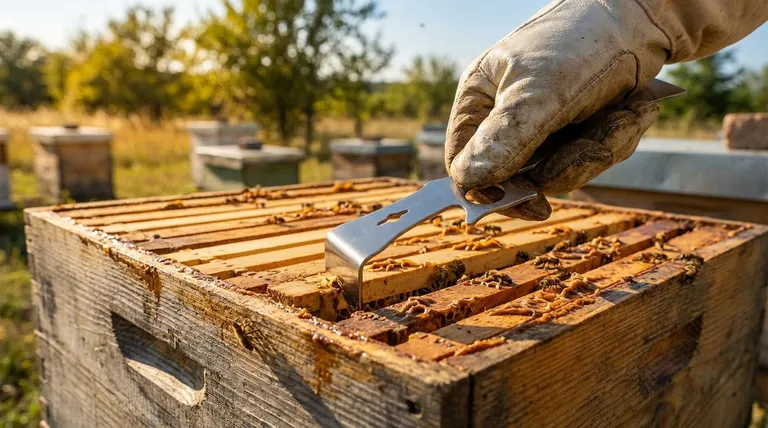
For the beekeeper, however, this architectural marvel presents a physical problem. Propolis is the force that resists every inspection, every harvest. And the hive tool is the simple, elegant answer—the one piece of steel that makes a modern apiary possible.
Two Philosophies of Force
Choosing a hive tool isn't merely about picking a piece of metal. It's about selecting a workflow. It reflects a philosophy on how to best interact with the colony. The two dominant designs—the standard tool and the J-hook—represent two different approaches to the same fundamental problem.
The Standard Tool: A Study in Brute-Force Elegance
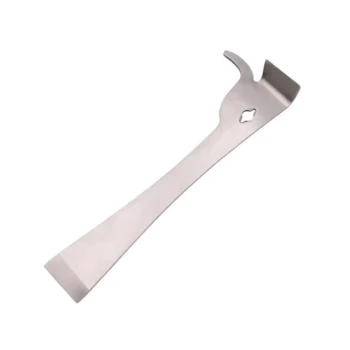
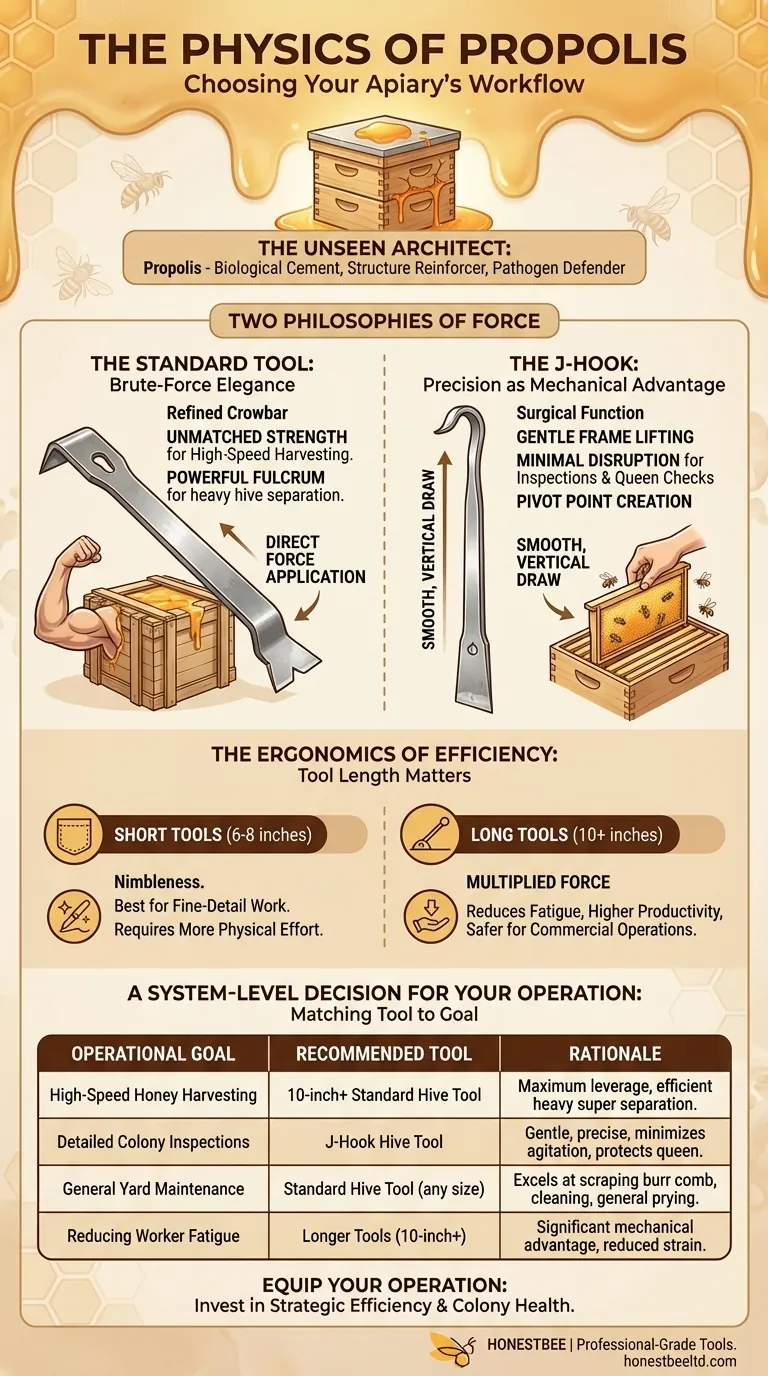
The classic hive tool is a marvel of simplicity. A small, flat steel bar, with a sharpened end for scraping and a 90-degree bend on the other for leverage. It is, in essence, a refined crowbar.
Its genius lies in its directness. When separating heavy, propolis-welded hive bodies, its strength is unmatched. The wide, bent end provides a powerful fulcrum, allowing a beekeeper to apply immense force with control. For commercial operations where speed during honey harvesting is critical, the standard tool is the uncompromising workhorse. It’s a statement of intent: a task needs doing, and this is the most direct way to do it.
The J-Hook: Precision as a Mechanical Advantage
The J-hook tool trades some of the standard tool's raw power for a specialized, almost surgical, function. While one end remains a scraper, the other is shaped into its namesake hook.
This hook changes the entire dynamic of frame inspection. By resting the notch of the "J" on the hive wall or an adjacent frame, the beekeeper creates a new pivot point. A gentle lift on the handle translates into a smooth, vertical draw that lifts a single frame with minimal jarring. It’s the difference between prying and persuading.
For tasks requiring finesse—queen checks, brood pattern inspections, or disease diagnosis—the J-hook minimizes colony disruption and reduces the risk of rolling or injuring bees. It’s the tool for a beekeeper who thinks like a strategist, valuing minimal impact over maximum speed.
The Ergonomics of Efficiency
In a commercial apiary, actions are repeated hundreds, if not thousands, of times a day. The physical design of a tool, particularly its length, ceases to be a minor detail and becomes a critical factor in operational efficiency and worker well-being.
-
Short Tools (6-8 inches): Offer nimbleness. They fit easily in a pocket and are excellent for fine-detail work, but they demand more physical effort when separating heavy boxes.
-
Long Tools (10+ inches): Are levers, pure and simple. The extra length multiplies the force applied, making the arduous task of cracking open heavy supers significantly easier. Over the course of a full day, this reduction in physical strain translates directly to less fatigue, higher productivity, and a safer work environment.
For a commercial operation, investing in longer tools isn't a luxury; it's a strategic decision to protect your most valuable asset: your team.
A System-Level Decision for Your Operation
The most effective apiaries don't choose one tool; they deploy the right tool for the job at hand. The decision is not about which tool is "best," but which tool best serves a specific operational goal.
| Operational Goal | Recommended Tool | Rationale |
|---|---|---|
| High-Speed Honey Harvesting | 10-inch+ Standard Hive Tool | Maximum leverage to quickly and efficiently separate heavy, propolis-sealed supers. |
| Detailed Colony Inspections | J-Hook Hive Tool | Gentle, precise frame removal minimizes bee agitation and protects the queen. |
| General Yard Maintenance | Standard Hive Tool (any size) | Excels at scraping burr comb, cleaning bottom boards, and general prying tasks. |
| Reducing Worker Fatigue | Longer tools (10-inch+) of either type | Provides a significant mechanical advantage, reducing physical strain over long workdays. |
The hive tool is more than steel; it's the critical interface between the beekeeper's hands and the colony's world. Equipping your operation with a strategic mix of high-quality, durable tools is an investment in efficiency, colony health, and the long-term sustainability of your business.
At HONESTBEE, we supply professional-grade tools engineered for the demands of commercial beekeeping. To ensure your operation is equipped with the optimal instrument for every task, Contact Our Experts.
Visual Guide
Related Products
- HONESTBEE Professional Long Handled Hive Tool with Precision Cutting Blade
- Professional Multi-Function Stainless Steel Hive Tool
- HONESTBEE Premium Italian Style Hive Tool with Hardwood Handle
- Ergonomic Plastic Frame Spacer Tool for Rapid Hive Management Beekeeping
- Professional Grade Foldable Beehive Handles
Related Articles
- Force and Finesse: The Hive Tool as the Beekeeper's Critical Interface
- The Essential Guide to Hive Tools in Modern Beekeeping
- The Apiary as a System: Why Your Hive Tool is More Than Just Steel
- How to Choose Hive Tools That Match Your Beekeeping Workflow
- The Beekeeper's Scalpel: How a Simple Hive Tool Governs Apiary Health