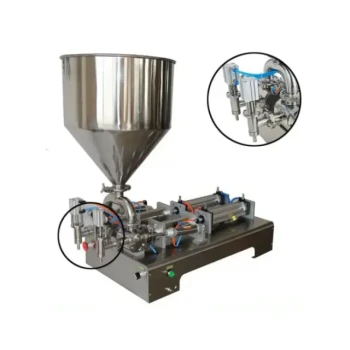
Automated honey-filling machines are the cornerstone of market competitiveness in the export industry because they ensure the rigorous hygiene standards and precise volumetric control required for high-value trade. By eliminating manual inconsistencies, these systems allow producers to scale operations while actively preserving the unique flavor profiles and biological integrity necessary for premium certifications like Protected Designation of Origin (PDO).
Core Takeaway: Automation is not merely about increasing speed; it is the mechanism that transforms raw honey into a standardized, safe, and compliant commercial commodity. It bridges the gap between local artisanal production and the strict requirements of global retail chains and export regulations.
Preserving Product Integrity and Value
Protecting Premium Classifications
For high-value products such as organic honey or those with Protected Designation of Origin (PDO) status, preservation is critical. Automated filling effectively prevents secondary contamination during packaging. This ensures the original flavor profile and chemical composition remain unaltered, justifying premium pricing in competitive markets.
Extending Shelf Life through Hygiene
Industrial filling machines operate in a closed environment, significantly minimizing the risk of microbial contamination. Furthermore, these systems prevent atmospheric moisture from entering the honey. This control is vital for preventing fermentation and spoilage, thereby extending the product's shelf life for long-distance export.
Maximizing Operational Efficiency
Eliminating Raw Material Waste
Manual filling often leads to weight deviations and product giveaway (overfilling). Automated machines utilize high-precision piston or weighing-based systems to ensure the net content of every jar complies strictly with label specifications. This precision reduces raw material loss, directly improving profit margins.
Scaling for Global Supply Chains
Efficient filling lines are essential for managing the significant increase in global honey trade volume. Mechanized operations allow producers to rapidly scale production to meet large orders without sacrificing quality. This responsiveness enables local producers to compete effectively against established imported honey brands.
Accessing Formal Retail Markets
Meeting Standardization Requirements
Formal retail channels, such as supermarkets and international exhibitions, demand absolute consistency. Automated equipment ensures standardized, quantitative packaging that manual operations cannot match. This consistency creates a professional appearance that meets the strict entry requirements of major retailers.
Enhancing Brand Perception
Consumer trust is often driven by visual professionalism. Machines equipped with no-drip nozzles and automatic capping ensure clean, airtight seals and stain-free bottle necks. Additionally, integrated labeling systems ensure that critical information—such as geographical origin and nutritional content—is presented clearly, building the brand trust necessary for export success.
Understanding the Operational Trade-offs
The Shift from Flexibility to Standardization
While automation increases efficiency, it requires a commitment to rigid standardization. Manual processes allow for on-the-fly adjustments to varying bottle sizes or honey consistencies, whereas automated lines require consistent inputs.
Maintenance and Calibration
To maintain the high-precision volumetric control touted in these systems, regular calibration is non-negotiable. Neglecting maintenance on piston or weighing systems can lead to the very regulatory non-compliance issues the machine was purchased to solve.
Making the Right Choice for Your Goal
To leverage automation effectively, align your equipment choice with your specific market strategy:
- If your primary focus is Premium/PDO Markets: Prioritize machines with advanced hygiene controls and closed-loop systems to guarantee flavor preservation and zero contamination.
- If your primary focus is Mass Market Retail: Select high-speed lines with integrated capping and labeling to ensure visual uniformity and strict weight compliance for supermarket shelves.
Investing in automation is the definitive step toward turning a raw agricultural product into a globally competitive brand.
Summary Table:
| Feature | Impact on Export Competitiveness | Key Benefit |
|---|---|---|
| Precise Volumetric Control | Eliminates overfilling and raw material waste | Higher profit margins and weight compliance |
| Closed-loop Hygiene | Prevents secondary contamination and moisture ingress | Preserves PDO status and extends shelf life |
| Standardized Packaging | Ensures uniform appearance and airtight seals | Meets strict global retail and supermarket entry requirements |
| High-Speed Scalability | Rapidly fulfills large international orders | Ability to compete with established global brands |
Elevate Your Honey Export Business with HONESTBEE
Transitioning from artisanal production to global competitiveness requires the right industrial partner. HONESTBEE specializes in empowering commercial apiaries and distributors with high-performance beekeeping tools and advanced machinery. Our professional-grade honey-filling machines and specialized hardware are engineered to ensure the precision, hygiene, and standardization demanded by international retail chains.
From honey-themed cultural merchandise to the full spectrum of industry consumables, we provide a comprehensive wholesale offering to help you scale efficiently. Contact us today to optimize your production line and see how our expertise can turn your raw honey into a premium, globally-recognized brand.
References
- Liam Pippinato, Filippo Brun. A Sustainable Niche Market: How Does Honey Behave?. DOI: 10.3390/su122410678
This article is also based on technical information from HonestBee Knowledge Base .
Related Products
- Fully Automatic Honey Filling Packaging Machine for Processing Line
- Automatic Honey Filling and Filtering Machine for Beekeeping Bottle Filling
- Precision Durable Efficient HONESTBEE Rotary Honey Filling Machine
- Precision Automated Packaging Turntable Honey Spoon Filling Sealing Packing Machine
- Semi Automatic Small Honey Bottle Filling Machine Honey Filler
People Also Ask
- Why are fully automatic honey filling and packaging lines essential? Boost Your Honey's Market Value and Quality
- What is a fully-automatic honey filler? Streamline Your Production with High-Precision Automation
- How do automated honey filling and packaging machines affect profitability? Boost Margins with HONESTBEE Technology
- How do automated honey filling and packaging machines contribute to the market value of honey products? Maximize Your ROI
- How do industrial-grade automated honey filling and packaging machines mitigate the risk of physical contamination?