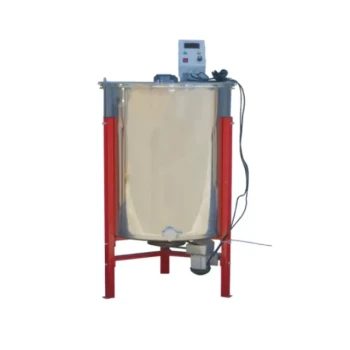
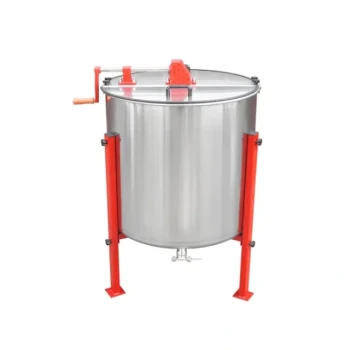
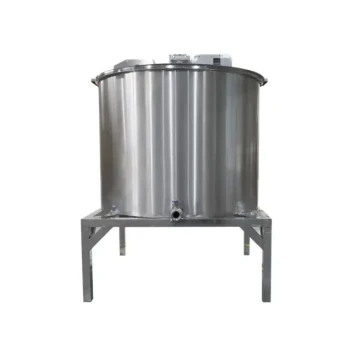
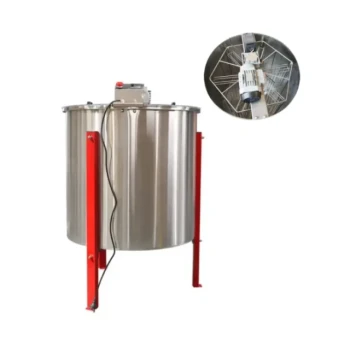
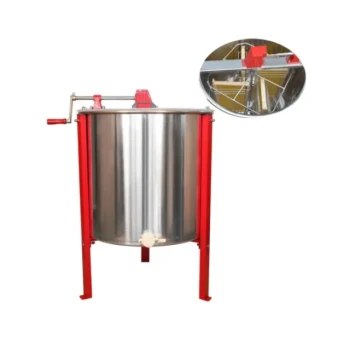
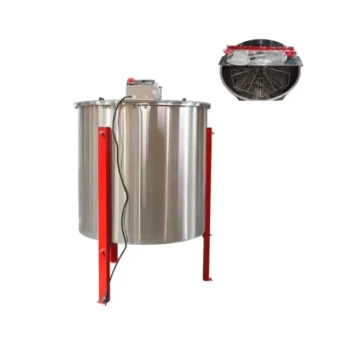
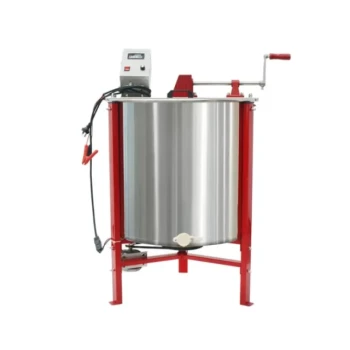
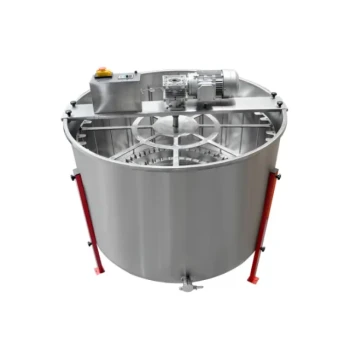
Industrial-grade centrifugal honey extractors fundamentally transform production efficiency by utilizing high-speed rotation to separate honey from wax combs without compromising the comb's physical structure. This mechanical process replaces destructive manual squeezing methods, ensuring cleaner separation while preserving the honeycomb frames for immediate reuse within the hive.
Core Takeaway: The true driver of efficiency is not merely the speed of extraction, but the biological energy saved for the colony. By preserving the comb structure, bees avoid the energy-intensive task of rebuilding wax, allowing them to focus entirely on nectar collection and significantly increasing overall yield.
The Mechanics of Non-Destructive Extraction
Utilizing Physical Centrifugal Force
Industrial extractors operate by spinning honeycomb frames at high speeds. This generates precise centrifugal force that pulls liquid honey out of the cells.
Preserving Structural Integrity
Unlike traditional manual pressing or squeezing, this method does not crush or damage the delicate wax cells. The empty comb remains intact and structurally sound after the honey is removed.
The Biological Efficiency Loop
Eliminating the Wax Tax
Bees consume significant amounts of energy and resources to secrete beeswax and build combs. When harvesting methods destroy the comb, the colony is forced to restart this labor-intensive construction process.
Rapid Recycling of Resources
Centrifugal extraction allows beekeepers to return undamaged combs directly to the hive. This creates a "closed-loop" system where the infrastructure for honey storage is immediately available for reuse.
Redirecting Colony Energy
Because the bees are relieved of the burden of rebuilding wax, they can redirect their collective energy toward foraging. This shift results in a higher volume of nectar collection and a faster production turnover rate.
Operational Advantages for Commercial Production
Maximizing Short Flowering Windows
Commercial honey production is often a race against time during specific flowering periods. The mechanized speed of centrifugal extractors allows for rapid harvesting, ensuring no nectar goes uncollected due to processing bottlenecks.
Standardizing Purity Levels
Manual extraction methods frequently result in wax particles contaminating the final product. Centrifugal separation prevents this destruction, leading to higher purity levels and better hygiene standards right out of the extractor.
Understanding the Operational Shift
Moving Beyond Traditional Methods
While traditional manual squeezing is low-tech, it creates a ceiling on production capacity due to comb destruction. Adopting centrifugal technology requires a shift toward standardized equipment to eliminate the "restart costs" associated with rebuilding combs.
The Requirement for Precision
To maintain the comb's integrity, the equipment must operate at specific intervals (often around 15 minutes) and precise speeds. This moves production from variable manual processes to a consistent, standardized industrial workflow.
Making the Right Choice for Your Goal
To leverage this technology effectively, align your equipment choice with your specific production targets:
- If your primary focus is yield maximization: Prioritize the rapid return of undamaged combs to the hive to minimize colony downtime and wax production.
- If your primary focus is product purity: Rely on the non-destructive nature of centrifugal force to eliminate wax contamination and reduce post-harvest filtration needs.
By aligning mechanical efficiency with the biological needs of the hive, you transform honey extraction from a bottleneck into a catalyst for sustainable growth.
Summary Table:
| Feature | Traditional Manual Extraction | Industrial Centrifugal Extraction |
|---|---|---|
| Comb Integrity | Destroyed/Squeezed | Preserved & Reusable |
| Colony Recovery | High energy cost to rebuild wax | Immediate return to nectar collection |
| Product Purity | High wax contamination | Clean, high-purity separation |
| Production Speed | Slow & labor-intensive | High-speed, standardized workflow |
| Yield Impact | Lower due to resource diversion | Maximized through biological energy savings |
Scale Your Honey Production with HONESTBEE
Are you ready to transform your apiary's productivity? HONESTBEE provides commercial apiaries and distributors with the professional-grade tools needed to dominate the market. From high-capacity industrial centrifugal honey extractors that preserve your precious wax combs to advanced honey-filling machines and hive-making hardware, our comprehensive wholesale offering is designed for growth.
Why choose HONESTBEE?
- Full Spectrum Supply: We offer everything from specialized machinery to essential consumables.
- Operational Excellence: Our equipment minimizes colony downtime and maximizes purity levels.
- Commercial Expertise: We understand the unique needs of large-scale beekeeping operations and distributors.
Don't let manual processes bottleneck your success. Contact us today to explore our wholesale machinery and equipment!
References
- Nataliia Pravdiuk. INFORMATION SUPPORT FOR THE BEEKEEPING INDUSTRY: ACCOUNTING AND ANALYTICAL PRACTICE IN UKRAINE AND THE WORLD. DOI: 10.32782/bses.90-11
This article is also based on technical information from HonestBee Knowledge Base .
Related Products
- electric honey extractor honey centrifuge 3 frame honey extractor stainless steel honey frame extractor
- Manual Hand Crank 4 Frame Honey Extractor Centrifuge for Beekeeping
- Professional 4 Frame Self Reversing Electric Honey Extractor for Beekeeping
- Electric 4 Frame Tangential Honey Extractor
- 24 Frame Honey Extractor Commercial Radial Honey Frame Extraction Machine
People Also Ask
- What are the characteristics of electric honey extractors? Boost Your Apiary Efficiency with Automated Technology
- What are the disadvantages of using an electric honey extractor? Weighing Cost, Power, and Comb Safety
- What are the advantages of an electric honey extractor? Boost Efficiency and Scale Your Honey Production
- What are the technical advantages of electric honey extractors? Maximize Yield and Protect Your Bee Colony
- How does an electric honey extractor affect the quality of honey? Preserve Flavor & Purity with Precision Extraction