Standard bee frames function as a precise, uniform metric for quantifying colony population changes over the winter season. By conducting a census of frames occupied by bees before and after the cold period, apiarists and researchers can calculate the Wintering Expenditure Percentage (ZOP), a numerical value that directly correlates to a honeybee breed’s ability to survive and adapt to specific local climates.
The Core Insight The standard frame transforms the subjective observation of "colony strength" into objective, calculable data. This standardization allows for the precise derivation of the Wintering Expenditure Percentage (ZOP), serving as the critical benchmark for comparing resilience across different honeybee breeds and environmental conditions.
The Mechanics of Measuring Winter Loss
The Frame as a Standardized Unit
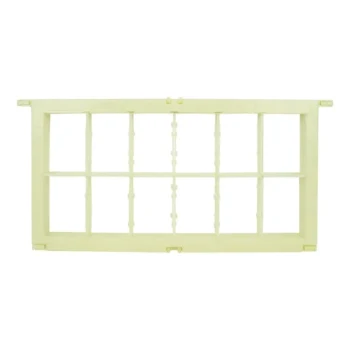
In wintering studies, the standard frame is the fundamental unit of measurement. Rather than estimating total bee numbers, researchers count the specific number of frames fully occupied by honeybees.
Establishing the Baseline
To assess wintering performance, an initial count is taken before the onset of winter. This establishes the colony's starting strength and ensures that all comparisons are based on standardized hardware layouts, eliminating variables caused by irregular hive structures.
Calculating the ZOP (Wintering Expenditure Percentage)
By comparing the pre-winter frame count to the post-winter count, a specific formula is applied to derive the ZOP. This percentage represents the biological cost of wintering, quantifying exactly how much colony strength was "spent" to survive the season.
Assessing Adaptability Through Data
Interpreting Climate Resilience
The ZOP provides a direct reflection of adaptability. A lower expenditure percentage in a harsh climate indicates a breed with superior thermal regulation or resource management, while a high percentage suggests the breed is struggling to adapt to those specific climatic conditions.
Comparative Breed Analysis
Because the hardware is standardized, the data allows for direct comparison between different honeybee breeds. If two breeds are wintered in identical standard frames under the same conditions, the difference in frame reduction isolates genetic adaptability as the primary variable.
Global Data Unification
Using standard frames allows for the unification of metrics across borders. As noted in broader monitoring efforts, consistent methodology enables the creation of a foundational framework for global health assessments, moving beyond local anecdotes to verified economic and biological data.
Understanding the Trade-offs
Quantity vs. Quality
While frame counts provide excellent quantitative data regarding population mass, they do not inherently measure individual bee health. A colony might retain a high number of frames but suffer from underlying issues such as high disease loads or poor hygienic behavior, which requires closer inspection of brood patterns.
The Influence of Intervention
Reliance on standard frames implies the use of commercial hive designs aimed at efficiency. It is important to recognize that this hardware choice dictates a higher level of human intervention compared to top-bar or natural beekeeping methods, potentially influencing the very adaptability metrics being measured by shielding bees from some natural selection pressures.
Making the Right Choice for Your Goal
When utilizing standard frames for analysis, tailor your approach to your specific objective:
- If your primary focus is Breeding and Genetics: Prioritize the ZOP metric to identify and propagate lineages that maintain the highest frame density with the lowest winter resource consumption.
- If your primary focus is Regional Planning: Use frame loss data to calculate the economic value loss of populations, adjusting hive numbers to account for expected attrition in your specific climate.
Standardization turns the biological complexity of a beehive into actionable data, empowering you to select for resilience rather than just hoping for survival.
Summary Table:
| Metric Category | Key Indicator | Purpose in Analysis |
|---|---|---|
| Standardized Unit | Frames Occupied | Provides a uniform metric for colony population census. |
| Key Calculation | ZOP Percentage | Quantifies the biological cost of wintering (colony strength loss). |
| Adaptability Metric | Frame Reduction | Identifies breeds with superior thermal regulation and resilience. |
| Strategic Focus | Comparative Analysis | Isolates genetic adaptability from environmental variables. |
Scale Your Apiary with Data-Driven Precision
Maximize your colony resilience and wintering success with professional-grade equipment from HONESTBEE. As a premier partner for commercial apiaries and distributors, we provide more than just tools—we provide the foundation for scalable beekeeping success.
From standardized hives and frames essential for accurate ZOP monitoring to advanced hive-making and honey-filling machinery, our comprehensive wholesale offering covers the full spectrum of industry needs. Whether you are stocking essential consumables or investing in specialized hardware, our portfolio is designed to enhance your operational efficiency and honey production.
Ready to optimize your wholesale supply chain?
Contact HONESTBEE Today to explore our full range of beekeeping equipment and cultural merchandise tailored for your business growth.
References
- Boymakhmat Kakhramanov, Nilufar Rakhimjanova. Breeding indicators of Carniolan (Apis mellifera carnica pollm) and Carpathy (Apis mellifera carpatica) honey bees. DOI: 10.1051/e3sconf/202124402008
This article is also based on technical information from HonestBee Knowledge Base .
Related Products
- Assembled Wooden Bee Frames with Plastic Foundation for Durability and Convenience by HONESTBEE
- Assembled Wooden Bee Frames with Beeswax Foundation Ready to Use by HONESTBEE
- Wooden Bee Hive Frames for Beekeeping and Wholesale
- HONESTBEE Wired and Assembled Wooden Bee Frames Foundation for a Thriving Hive
- Plastic Bee Frame Beekeeping Hive Frames for Wholesale
People Also Ask
- When should frames with new foundation be given to colonies? Master Timing for a Thriving Hive
- What types of bee frames can be cleaned and returned to service? A Guide to Safe Apiary Refurbishment
- How do you re-wax bee frames? A Simple Guide to Faster Comb Building
- Do you have to wire bee frames? Essential Guide to Frame Strength & Honey Harvesting
- Can beekeepers switch between wooden and plastic frames? Optimize Your Hive's Performance