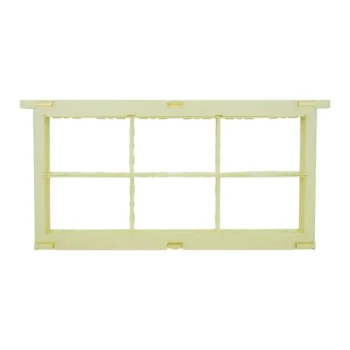
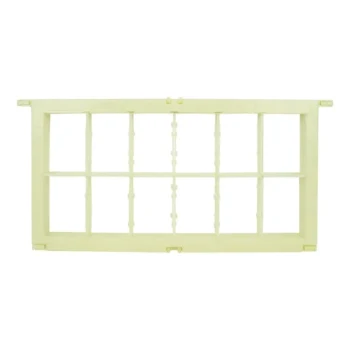
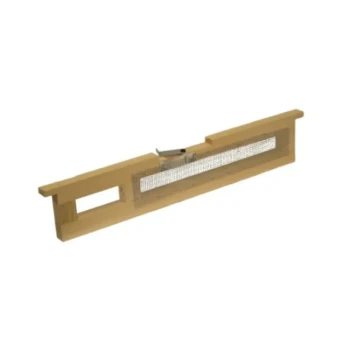
Three-frame artificial honeybee colonies function as high-density pollination units designed specifically for enclosed environments, such as isolation cages. By confining a specific population size to a limited area, these colonies generate a flower visitation frequency that far exceeds what occurs in natural settings. This creates an intensive pollination environment, ensuring virtually every available bloom is visited during short, critical flowering windows.
These colonies serve as a standardized biological tool to eliminate "pollination variance" from agricultural data. By guaranteeing maximum visitation, they allow growers and researchers to determine the absolute yield potential of a crop without the variable of inadequate insect activity.
The Mechanics of Intensive Pollination
Maximizing Visitation Frequency
The primary contribution of a three-frame colony is the hyper-concentration of foraging activity.
Because the bees are confined to a specific crop area, they visit flowers repeatedly. This redundancy ensures that pollination success is not left to chance, resulting in significantly higher fertilization rates compared to open-field conditions.
Adapting to Enclosed Environments
Standard honeybee hives are often too populous or unwieldy for small isolation cages.
Three-frame colonies offer the optimal density for these restricted spaces. They provide enough foragers to cover the crop thoroughly without creating the resource competition or overcrowding issues that might occur with a full-sized colony in a small cage.
Capitalizing on Short Flowering Windows
Many crops have brief periods of peak receptivity.
These artificial colonies are optimized to work intensively over a limited flowering period. They deliver immediate, high-volume pollination services exactly when the crop physiology demands it, rather than ramping up slowly over the season.
Applications in Research and Industry
Determining Biological Yield Potential
To understand how much a crop can produce, researchers must remove limiting factors.
Three-frame colonies remove the "lack of pollination" variable entirely. This allows scientists to accurately measure the maximum biological yield of a variety, separating genetic potential from environmental stressors.
Optimizing Commercial Services
Data derived from these intensive isolation trials scales up to broader applications.
By observing the results of high-density pollination in cages, agriculturalists can better calculate the stocking rates required for commercial fields. This helps in designing pollination contracts that maximize efficiency and return on investment for large-scale growers.
Understanding Operational Constraints
The Limitation of Scope
It is important to recognize that these colonies are specialized tools for controlled environments.
They are designed for "limited spaces," meaning they are less effective for vast, open-field monocultures where foragers would disperse too widely. Their efficiency relies entirely on the containment provided by isolation cages.
Temporal Restrictions
The reference highlights their effectiveness within a "limited flowering period."
These colonies are engineered for short-term intensity rather than long-term sustainability. They are best utilized for specific project durations or distinct crop cycles rather than season-long generalist foraging.
Strategic Application of Artificial Colonies
To effectively utilize three-frame colonies, align their use with your specific objective.
- If your primary focus is agricultural research: Deploy these colonies to establish a "maximum yield benchmark" by eliminating pollination gaps in your test plots.
- If your primary focus is commercial calibration: Use the data from these controlled environments to adjust the hive density and placement strategies for your open-field operations.
Three-frame colonies transform pollination from a variable natural process into a controlled, measurable input.
Summary Table:
| Feature | Description | Benefit |
|---|---|---|
| Colony Size | Compact 3-frame configuration | Ideal for small isolation cages and restricted spaces |
| Activity Level | Hyper-concentrated foraging | Ensures high visitation frequency and fertilization rates |
| Usage Period | Focused on short flowering windows | Delivers immediate services during peak crop receptivity |
| Primary Goal | Intensive pollination environment | Eliminates pollination gaps for accurate yield data |
Supercharge Your Pollination Efficiency with HONESTBEE
At HONESTBEE, we understand the precision required for both agricultural research and commercial success. Whether you are managing professional apiaries or distributing high-performance equipment, we provide the tools you need to succeed. Our comprehensive wholesale catalog includes everything from specialized hive-making and honey-filling machinery to a full spectrum of beekeeping consumables and honey-themed cultural merchandise.
Ready to scale your beekeeping operations? Contact us today to discover how our professional-grade equipment can enhance your productivity and deliver the high-density results your target customers demand.
References
- Shubham Yadav G.P. Painkra, K.L. Painkra P.K. Bhagat. Impact of Indian Honey Bee on Pollination of Mustard at Ambikapur (Chhattisgarh). DOI: 10.20546/ijcmas.2021.1004.094
This article is also based on technical information from HonestBee Knowledge Base .
Related Products
- HONESTBEE 3-Frame Manual Acrylic Honey Extractor
- Styrofoam Mini Mating Nuc Box with Frames Feeder Styrofoam Bee Hives 3 Frame Nuc Box
- HONESTBEE Wired and Assembled Wooden Bee Frames Foundation for a Thriving Hive
- Assembled Wooden Bee Frames with Plastic Foundation for Durability and Convenience by HONESTBEE
- Automatic Heat Preservation 6 Frame Pro Nuc Box for Honey Bee Queen Mating
People Also Ask
- What are the disadvantages of a manual honey extractor? Overcome Efficiency Bottlenecks in Your Apiary
- Which type of honey extractor is generally more durable? Focus on Material & Build Quality for Longevity
- What is a manual honey extractor? The Essential Guide to Cost-Effective Beekeeping for Beginners
- Why are manual extractors popular among beginner beekeepers? A Guide to Starting Simple & Saving Money
- What is the primary disadvantage of a manual honey extractor? Understanding Labor vs. Efficiency in Beekeeping