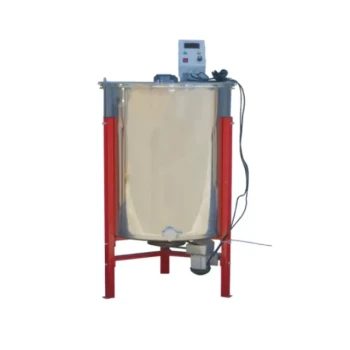
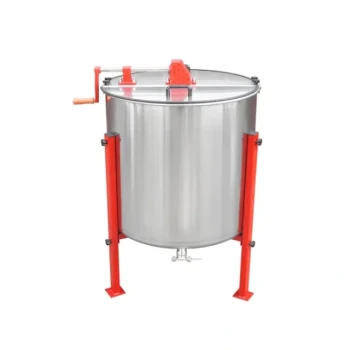
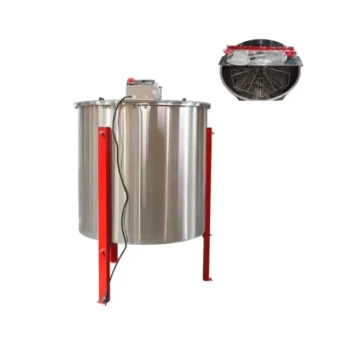
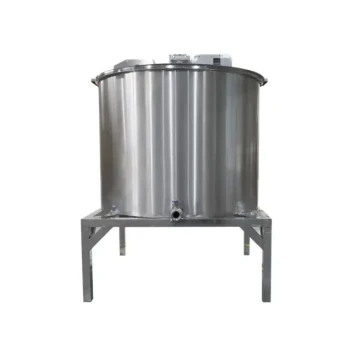
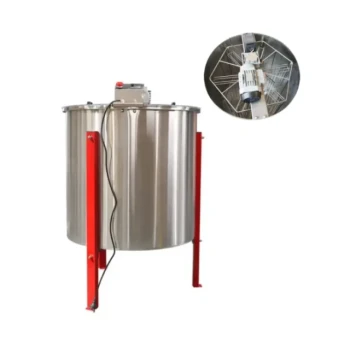
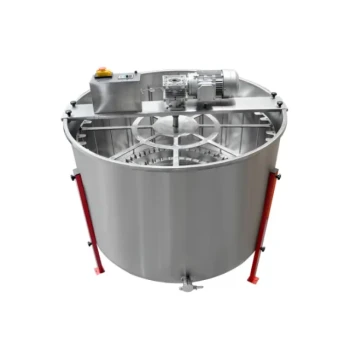
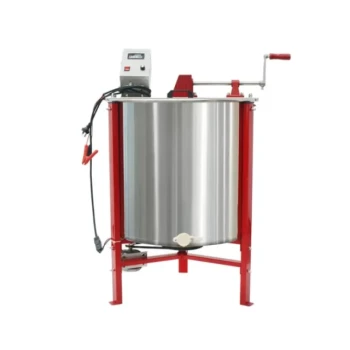
A centrifugal honey extractor fundamentally transforms harvesting by utilizing high-speed rotational force to eject honey. This mechanical process separates liquid honey from the comb without the destructive crushing required by traditional pressing methods. The result is a cleaner, higher-clarity product achieved through precise liquid-solid separation that leaves the wax structure intact.
By preserving the structural integrity of the honeycomb, centrifugal extraction shifts the colony’s energy from reconstruction to production. This allows beekeepers to return empty combs immediately to the hive, eliminating the biological cost of wax secretion and significantly shortening the production cycle.
The Mechanics of Quality Preservation
Non-Destructive Separation
Traditional harvesting often involves crushing the comb to squeeze out honey, which mixes wax debris into the final product. A centrifugal extractor uses rotational force to pull honey out of uncapped cells purely through physics. This ensures the delicate wax walls of the honeycomb remain undamaged during the process.
Superior Clarity and Purity
Because the extraction is achieved through centrifugal motion rather than physical pressure, the introduction of solid impurities is minimized. This method prevents wax particles and debris from mixing with the liquid. Consequently, the harvested honey exhibits higher clarity and purity compared to pressed honey, reducing the need for aggressive filtering.
Optimizing Biological Efficiency
Eliminating the Wax Tax
The most significant efficiency gain occurs inside the hive after extraction. Producing wax is highly energy-intensive for bees; they consume substantial amounts of honey and energy to secrete new wax. By returning intact honeycombs to the hive, you eliminate the need for bees to rebuild their infrastructure from scratch.
Accelerating the Harvest Cycle
When bees are relieved of the burden of wax secretion, they can immediately focus on foraging and nectar storage. This recycling of combs directly shortens the preparation time for the next harvest. The colony resumes production almost instantly, leading to a faster turnover rate and higher overall yields per season.
Understanding the Operational Requirements
The Necessity of Uncapping
While the extractor handles the separation, it operates strictly on uncapped combs. Before the frames can be spun, the wax cappings sealing the honey must be removed. This is a critical prerequisite step; if cells remain capped, the centrifugal force cannot effectively pull the honey out.
Reliance on Honey Maturity
Efficiency is also dictated by the maturity of the honey. The process relies on the honey being fluid enough to be ejected by force. Attempting to extract immature honey or honey that has crystallized within the comb may result in lower extraction rates or require higher speeds that could stress the frame structure.
Maximizing Your Harvest Yield
To get the most out of this technology, align your process with your specific production goals:
- If your primary focus is Volume: Prioritize the immediate return of wet, empty combs to the hive to minimize the energy bees spend on non-productive wax secretion.
- If your primary focus is Quality: Utilize the centrifugal method to reduce solid impurities, ensuring a clear product that requires minimal post-harvest processing.
The centrifugal extractor is not just a harvesting tool; it is a conservation device that converts biological energy into higher honey production.
Summary Table:
| Feature | Traditional Pressing | Centrifugal Extraction |
|---|---|---|
| Comb Integrity | Destroyed/Crushed | Preserved/Intact |
| Honey Clarity | Lower (contains wax debris) | Higher (pure liquid separation) |
| Bee Energy Cost | High (must rebuild wax) | Low (focus on foraging) |
| Production Cycle | Longer (reconstruction phase) | Shorter (immediate reuse) |
| Processing Effort | High filtration needed | Minimal filtration required |
Elevate Your Apiary’s Productivity with HONESTBEE
Are you looking to scale your honey production and ensure market-leading clarity? At HONESTBEE, we specialize in empowering commercial apiaries and distributors with high-performance beekeeping technology.
Our comprehensive wholesale offering includes everything from industrial-grade centrifugal extractors and honey-filling machines to essential consumables and honey-themed cultural merchandise. By choosing our specialized hardware, you can eliminate the 'wax tax,' protect your colony's energy, and maximize your seasonal yield.
Ready to upgrade your harvesting efficiency? Contact us today to discover how our professional beekeeping tools and equipment can transform your business.
References
- Elsamoal Elzaki, Gang Tian. Economic evaluation of the honey yield from four forest tree species and the future prospect of the forest beekeeping in Sudan. DOI: 10.1007/s10457-019-00478-1
This article is also based on technical information from HonestBee Knowledge Base .
Related Products
- electric honey extractor honey centrifuge 3 frame honey extractor stainless steel honey frame extractor
- Manual Hand Crank 4 Frame Honey Extractor Centrifuge for Beekeeping
- Professional 4 Frame Self Reversing Electric Honey Extractor for Beekeeping
- 24 Frame Honey Extractor Commercial Radial Honey Frame Extraction Machine
- Electric 4 Frame Tangential Honey Extractor
People Also Ask
- What are the characteristics of electric honey extractors? Boost Your Apiary Efficiency with Automated Technology
- What are the disadvantages of using an electric honey extractor? Weighing Cost, Power, and Comb Safety
- What are the advantages of an electric honey extractor? Boost Efficiency and Scale Your Honey Production
- What are the technical advantages of electric honey extractors? Maximize Yield and Protect Your Bee Colony
- How does an electric honey extractor affect the quality of honey? Preserve Flavor & Purity with Precision Extraction