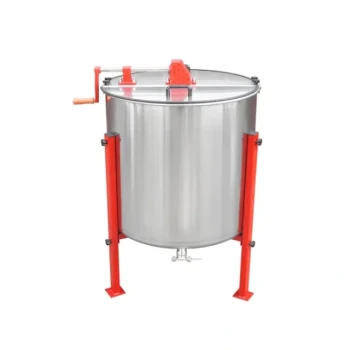
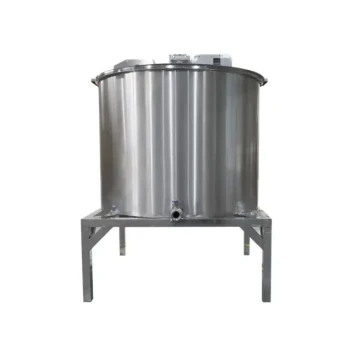
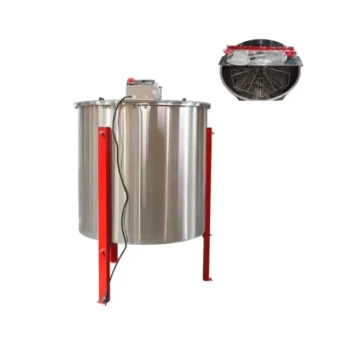
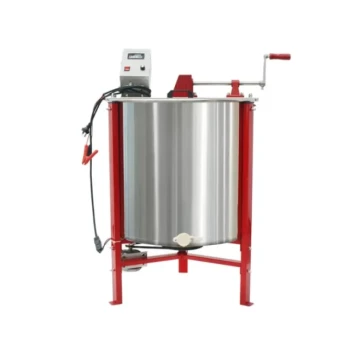
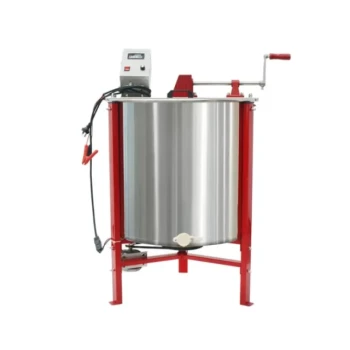
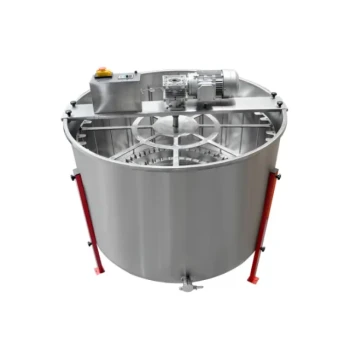
Mechanical honey extractors significantly improve production efficiency by utilizing centrifugal force to separate honey from the comb without destroying the wax structure. Unlike traditional pressing methods that crush the hive, an extractor preserves the honeycomb, allowing it to be immediately returned to the colony for reuse.
The core efficiency gain is not merely mechanical speed, but biological energy conservation. By recycling intact combs, you eliminate the need for bees to consume nectar to produce new wax, allowing the colony to focus entirely on foraging and storage.
The Mechanics of Preservation
Centrifugal Force vs. Crushing
Traditional harvesting involves crushing, squeezing, or melting the honeycomb to release the honey. Mechanical extractors replace this destructive process with high-speed rotation, using centrifugal force to pull liquid honey out while leaving the solid wax structure undamaged.
Immediate Comb Reuse
Because the wax foundation remains intact, the empty combs can be returned to the beehive immediately after extraction. This creates a continuous cycle where the infrastructure for honey storage is always available, rather than needing to be rebuilt after every harvest.
The Biological Efficiency Multiplier
Reducing Metabolic Cost
Bees require a significant amount of energy and food resources to secrete beeswax. By reusing combs, the colony bypasses the energy-intensive process of building new wax foundations, significantly reducing the "overhead cost" of honey production.
Redirecting Colony Energy
When bees are relieved of the burden of construction, they redirect their labor toward nectar collection. This shift in focus allows the colony to maximize the short windows of peak flowering seasons, leading to higher cumulative yields.
Shortening the Production Cycle
Building new comb takes time. Eliminating this construction phase significantly shortens the turnaround time between nectar flow and capped honey, increasing the frequency of harvest cycles within a single season.
Enhancing Quality and Purity
Minimizing Impurities
Traditional crushing methods often mix wax debris, larval fluids, or pollen into the honey. Centrifugal extraction is a cleaner separation process that prevents these contaminants from entering the final product, resulting in higher transparency and purity.
Preventing Spoilage
Mechanized extraction is faster and reduces the honey's exposure to ambient moisture. By minimizing moisture absorption, the process reduces the risk of fermentation and spoilage, thereby improving the commercial grade and shelf life of the honey.
Understanding the Trade-offs
Requirement for Movable Frames
To utilize a mechanical extractor effectively, you must operate within a "Modern Hive" system that uses standardized, movable frames. This equipment is necessary to withstand the centrifugal forces; natural or irregular combs cannot typically be spun without breaking.
Maintenance and Complexity
While efficiency increases, so does the complexity of the operation compared to simple crush-and-strain methods. Extractors require cleaning and maintenance to prevent cross-contamination between harvests and ensure the mechanical parts function smoothly.
Making the Right Choice for Your Goal
While mechanical extraction is the industry standard for efficiency, your specific goals should dictate your approach.
- If your primary focus is Maximum Yield: Prioritize the reuse of drawn comb to minimize the bees' wax production and maximize nectar storage.
- If your primary focus is Market Quality: Rely on centrifugal extraction to produce clear, debris-free honey with lower moisture content and a longer shelf life.
- If your primary focus is Colony Health: Use the extractor to reduce the metabolic stress on the hive, allowing bees to conserve energy for winter survival or brood rearing.
The shift to mechanical extraction transforms beekeeping from a resource-intensive construction cycle into a streamlined production cycle.
Summary Table:
| Feature | Traditional (Crush & Strain) | Mechanical (Centrifugal) |
|---|---|---|
| Comb Preservation | Destroyed/Crushed | Intact and Reusable |
| Bee Energy Usage | High (must rebuild wax) | Low (focus on foraging) |
| Honey Purity | Higher risk of impurities | High clarity and transparency |
| Production Cycle | Slow (rebuilding required) | Fast (immediate reuse) |
| Labor Intensity | High manual effort | High mechanical efficiency |
Scale Your Apiary Operations with HONESTBEE
Maximize your harvest efficiency and honey quality with industry-leading equipment. HONESTBEE provides commercial apiaries and distributors with a comprehensive wholesale range, from high-speed mechanical honey extractors to specialized honey-filling and hive-making machinery.
Our full spectrum of beekeeping tools, equipment, and essential consumables is designed to help you reduce metabolic stress on your colonies and shorten production cycles. Partner with us to access professional-grade hardware and honey-themed cultural merchandise tailored for market success.
Ready to upgrade your production line? Contact our experts today to request a quote!
References
- Eman T. Alropy, Mohamad Alnafissa. Economics of technical efficiency in white honey production: Using stochastic frontier production function. DOI: 10.1016/j.sjbs.2019.09.029
This article is also based on technical information from HonestBee Knowledge Base .
Related Products
- Commercial Electric 12 Frame Honey Extractor Spinner Motorized Honey Extractor
- Stainless Steel Manual 8 Frame Radial Honey Extractor Machine for Beehives
- Stainless Steel 3 Frame Manual Honey Extractor Spinner for Bee Honey Extraction
- Manual Hand Crank 4 Frame Honey Extractor Centrifuge for Beekeeping
- HONESTBEE 72 Frame Industrial Electric Honey Extractor for Beekeeping
People Also Ask
- Who are commercial honey extractors designed for? Scaling Your Industrial Beekeeping Success
- What is a commercial honey extractor? The Essential High-Volume Solution for Large Apiaries
- How is honey extracted commercially? Maximize Your Apiary's Efficiency and Honey Yield
- What are commercial honey extractors used for? Boost Your Apiary's Efficiency & Profitability
- What are the advantages of motorized extractors? Boost Honey Production and Save Time