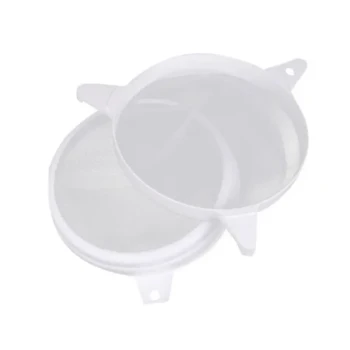
Stainless steel precision mesh is the technical cornerstone of large-scale honey processing and quality control. It facilitates the physical separation of wax fragments, bee parts, and larval remains from liquid honey immediately after centrifugation. In the context of residue analysis, this mesh acts as a critical pre-filtration layer that protects sensitive laboratory instruments from mechanical damage and ensures sample homogeneity for accurate trace chemical testing.
Core Takeaway: Precision mesh serves a dual purpose: it achieves the visual clarity required for commercial distribution while providing the clean, stabilized base necessary for rigorous laboratory residue testing. By leveraging high-grade stainless steel, processors ensure product purity without the risk of metallic contamination.
Enhancing Commercial Value through Physical Purity
Systemic Removal of Particulate Matter
High-precision mesh acts as a definitive physical barrier against wax debris, bee remains, and larval skins. By filtering honey through varying micron ratings, processors can ensure a smooth, consistent texture that meets international trade standards.
Achieving Visual Clarity and Market Grade
Clarity is a primary driver of market value in bulk honey distribution. Multi-stage filtration systems utilize stainless wire mesh to remove fine impurities, resulting in a transparent product that commands higher prices from wholesalers and retailers.
Maintaining Sensory Integrity
Because honey is naturally acidic and high in sugar, the material choice for filtration is critical. Food-grade stainless steel is exceptionally corrosion-resistant, preventing metal ions from leaching into the honey and ensuring no metallic odors or off-flavors compromise the sensory profile.
The Critical Role in Professional Residue Analysis
Protecting Sensitive Extraction Equipment
In modern residue analysis, honey must be processed through complex extraction machinery to detect trace chemicals or antibiotics. Preliminary filtration with precision mesh prevents mechanical interference and clogging, significantly reducing downtime and maintenance costs for laboratory equipment.
Ensuring Sample Homogeneity
For chemical testing to be valid, the sample must be uniform. Precision mesh removes large-scale contaminants that could skew results, providing a clean base sample that allows for the accurate detection of trace substances at the parts-per-billion level.
Supporting High-Volume Throughput
In large-scale operations, speed is as vital as accuracy. Stainless steel’s wear-resistant properties allow for high-pressure filtration cycles, enabling laboratories to process thousands of samples without frequent mesh failures or replacements.
Navigating Operational Trade-offs
Balancing Filtration Speed and Precision
Higher-density meshes provide superior clarity but can lead to slower flow rates and increased pressure within the system. Distributors must help clients select the specific mesh count that balances their need for throughput with their required purity standards.
The Necessity of Regular Maintenance
While stainless steel is durable, "blinding" or clogging can occur if the mesh is not cleaned properly. Utilizing ultrasonic cleaning or back-flushing is essential to maintain the integrity of the precision apertures and ensure long-term reliability.
Material Grading and Compliance
Not all stainless steel is equal. It is vital to source mesh that is strictly food-safe and certified, as lower-grade alloys may react with the honey’s acidity, leading to product rejection and potential legal liabilities for the distributor.
Making the Right Choice for Your Goal
As a technical partner, we offer a full-spectrum product portfolio designed to meet the rigorous demands of global honey supply chains with ultra-fast delivery and expert support.
- If your primary focus is commercial clarity: Implement a multi-stage stainless steel strainer system to progressively remove fine wax particles and maximize visual appeal.
- If your primary focus is laboratory accuracy: Utilize high-precision, fine-micron mesh to pre-filter samples, ensuring the protection of sensitive residue analysis instruments.
- If your primary focus is supply chain efficiency: Partner with a one-stop source that provides rapid fulfillment and technical expertise to minimize downtime and consolidate procurement.
Selecting the correct precision mesh is not merely a technical choice, but a strategic investment in the safety, purity, and marketability of the global honey supply.
Summary Table:
| Feature | Commercial Filtration Benefit | Residue Analysis Benefit |
|---|---|---|
| High-Micron Precision | Removes wax, bee parts, and debris for superior clarity. | Acts as a pre-filter to protect sensitive lab instruments. |
| Food-Grade Stainless | Prevents metallic odors and maintains sensory integrity. | Ensures sample homogeneity for accurate trace testing. |
| Corrosion Resistance | Resists honey acidity for long-term food-safe use. | Eliminates sample contamination from degraded materials. |
| Structural Durability | Supports high-pressure, high-volume throughput. | Reduces laboratory downtime and maintenance costs. |
Scale Your Success with HONESTBEE’s One-Stop Sourcing
Are you looking to enhance your product purity and streamline your supply chain? HONESTBEE specializes in catering to commercial apiaries, distributors, and B2B resellers with a comprehensive, full-spectrum product portfolio. From high-precision filtration mesh and honey-filling machinery to essential consumables, we provide the tools you need to maximize profit margins and ensure market-leading quality.
Why partner with HONESTBEE?
- Deep Industry Expertise: Professional guidance on OEM/ODM and certification requirements.
- Ultra-Fast Fulfillment: Rapid response times and efficient delivery to keep your operations running.
- Premium Trading Services: Exceptional customer support dedicated to your long-term growth.
Ready to elevate your wholesale offering? Contact us today to explore our catalog!
References
- Wim Reybroeck, Els Daeseleire. Transfer of Sulfamethazine from Contaminated Beeswax to Honey. DOI: 10.1021/jf1005275
This article is also based on technical information from HonestBee Knowledge Base .
Related Products
- Professional Stainless Steel Honey Filter with Support Handle
- Stainless Steel Triangle Support Honey Strainer and Filters
- Stainless Steel Double Layer Honey Strainer Sieve Filters
- Professional Stainless Steel Honey Filtering Machine with Water Bath Heating for Beekeeping
- Nylon Honey Strainer Square Filter Cloth for Honey Filters
People Also Ask
- Why are stainless steel filters essential during the initial purification phase of honey processing? Ensure Purity
- What are the benefits of using a high-quality honey filter? Elevate Purity and Preserve Natural Flavor
- What is the primary purpose of honey filters? Achieve Professional Clarity & Pure Honey Quality
- What micron filter should I use for honey? Choose the Right Filter for Sales or Competitions
- Why do people filter honey? For Clarity, Stability, and Consumer Appeal