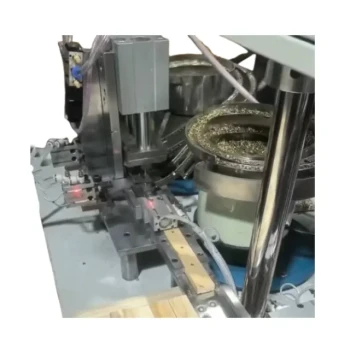
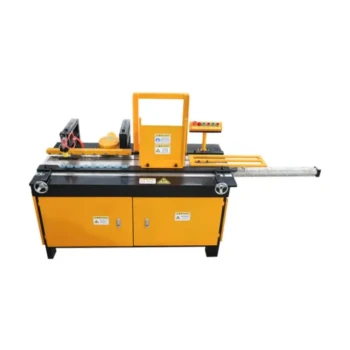
Industrial-grade bee box manufacturing machinery fundamentally transforms apiary construction by enforcing high precision and standardization across all hive components. This machinery moves beekeeping away from artisanal variation, ensuring that critical parts like frames and division boards are fully interchangeable. The result is a system that lowers long-term maintenance costs and enables the mechanization required for modern, industrial-scale operations.
The Core Insight: The true value of industrial manufacturing in apiculture is not just speed, but predictability. By eliminating manual variances, these machines create a standardized hardware ecosystem that serves as the physical foundation for automation, efficient migratory transport, and scalable colony management.
The Foundation of Standardization
For large-scale apiaries, the primary challenge is managing complexity. Industrial machinery solves this by creating a uniform physical environment for the bees and the beekeepers.
Interchangeability of Components
The most immediate operational advantage is the interchangeability of parts. Machinery ensures that internal components, such as frames and division boards, are produced with exact dimensions.
This means a frame from Hive A will always fit perfectly into Hive B. This eliminates the need for custom adjustments during field operations, significantly streamlining hive management.
Precision Assembly and Durability
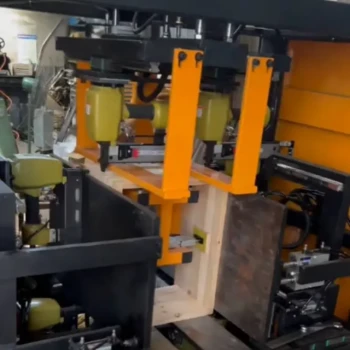
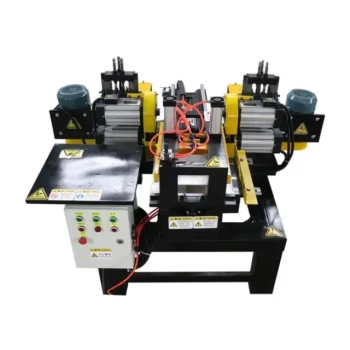
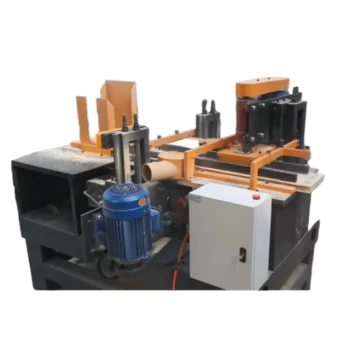
Automated tenoning machines and multi-head drills achieve a level of structural consistency that manual methods cannot match.
This high-repeatability processing ensures that joints fit tighter and structures are more rigid. Consequently, the durability of the hive increases, extending the lifespan of the equipment and reducing the frequency of repairs.
Cost Reduction
Contrary to the assumption that high-tech machinery is purely an expense, it serves to reduce initial construction costs.
By standardizing production, apiaries minimize the waste of raw materials and avoid the costs associated with purchasing mismatched external hardware. The efficiency of the assembly process further drives down the labor cost per unit.
Scaling Operations and Management
As an apiary grows, manual processes become bottlenecks. Industrial machinery provides the hardware infrastructure necessary to break through these ceilings.
Facilitating Mechanization and Automation
Standardized dimensions are a prerequisite for automated honey extraction.
When hive boxes and frames adhere to strict specifications, they can be processed by automated extraction lines without jamming or requiring manual intervention. This integration is critical for commercial enterprises looking to lower operational overhead.
Enabling Migratory Beekeeping
For apiaries that practice migratory beekeeping, the structural integrity of the hive is vital.
Machinery-produced hives ensure a precise fit between frames and boxes, which stabilizes the internal components during transport. This prevents damage to the colony and equipment during remote migration, making large-scale mobility feasible.
Enhancing Biological Management
Precision manufacturing has a direct impact on the biological health of the colony.
Machines guarantee accurate bee spaces—the critical gaps bees need for movement. Correct spacing improves natural thermoregulation and ventilation, while reducing the likelihood of bees building unwanted burr comb, which complicates management.
Critical Considerations for Implementation
While the advantages are clear, relying on industrial machinery requires a commitment to specific standards.
The Necessity of Strict Specifications
Once you adopt a specific machine-produced standard (such as the Nagy-Boczonádi frames mentioned in regional contexts), you are committed to that ecosystem.
Deviating from these standards later negates the benefits of interchangeability. Therefore, the initial selection of the mathematical model and dimensional specifications is a critical, long-term decision.
Reliance on Hardware Quality
The efficiency of large-scale management models, particularly population prediction, relies on the assumption of uniform equipment.
If the manufacturing process drifts or quality varies, it introduces errors into these prediction models. The machinery must be maintained to high standards to ensure it continues to produce the "stable physical carrier" required for data-driven beekeeping.
Making the Right Choice for Your Goal
When evaluating industrial manufacturing for your apiary, align the machinery's capabilities with your specific operational focus.
- If your primary focus is Scalability: Prioritize machinery that guarantees high interchangeability, as this drastically reduces the labor required for maintenance and part replacement across thousands of hives.
- If your primary focus is Automation: Ensure the machinery produces components with strict dimensional tolerances, as this is the foundational requirement for integrating automated honey extraction lines later.
- If your primary focus is Migratory Beekeeping: Focus on machinery that offers precision joint processing (like automated tenoning), which ensures the structural rigidity needed to withstand frequent transport.
Ultimately, industrial-grade machinery is not just a tool for building boxes; it is the strategic enabler that allows an apiary to transition from a manual craft to a scalable, industrialized enterprise.
Summary Table:
| Key Advantage | Impact on Apiary Operations | Operational Benefit |
|---|---|---|
| Interchangeability | Standardized frames and hive components | Faster field maintenance and zero custom adjustments |
| Structural Precision | Tighter joints and rigid assembly | Enhanced durability and longer hive lifespan |
| Lower Unit Cost | Minimized material waste and labor | Reduced initial construction and replacement expenses |
| Automation-Ready | Strict dimensional tolerances | Seamless integration with automated honey extraction lines |
| Structural Integrity | Stabilized internal components | Reduced colony damage during migratory transport |
| Biological Health | Precise bee spaces (ventilation/thermal) | Improved colony health and reduced burr comb formation |
Scale Your Apiculture Business with HONESTBEE
At HONESTBEE, we empower commercial apiaries and distributors with the industrial-grade tools necessary to transition from manual crafts to scalable enterprises. Our comprehensive wholesale portfolio includes:
- Precision Machinery: Advanced hive-making machines, multi-head drills, and automated honey-filling systems.
- Quality Hardware: High-durability beekeeping tools and equipment designed for industrial wear.
- Industry Consumables: A wide array of essential supplies for high-volume operations.
- Cultural Merchandise: Unique honey-themed products to diversify your brand.
Whether you are looking to standardize your hive production or automate your extraction process, our expertise ensures your hardware ecosystem is built for predictability and growth. Contact HONESTBEE Today to discuss how our wholesale solutions can optimize your large-scale operations.
References
- R.Jamolov B.Abduvaliyev Z.Ma'murova. DEVELOPMENT OF BEEKEEPING IN UZBEKISTAN AND ITS SIGNIFICANCE. DOI: 10.5281/zenodo.7398822
This article is also based on technical information from HonestBee Knowledge Base .
Related Products
- High-Efficiency Pneumatic Bee Hive Making Machine for Rapid Box Assembly
- Automatic High-Speed Bee Hive Box Stapling Machine
- Mini Desktop Bee Hive Frame Forming Making Machine
- Frame Punching Hole Puncher Machine for Bee Frame Producing Line
- HONESTBEE Top Bar & Bottom Bar Forming Machine | Bee Frame Machine
People Also Ask
- How does the introduction of professional beehive-making machinery benefit sustainable beekeeping? Scale Your Apiary
- Why is specialized beehive-making machinery critical for low-defense breeding? Enhance Selection with Precision Tools
- How does the introduction of specialized beehive making machinery contribute to increasing the scale of regional beekeeping industries?
- What is the importance of specialized beehive making machinery in a circular bio-economy? Build Local Sustainability
- Why is specialized beehive-making machinery essential? Scale Your Apiary with Precision Industrial Standards