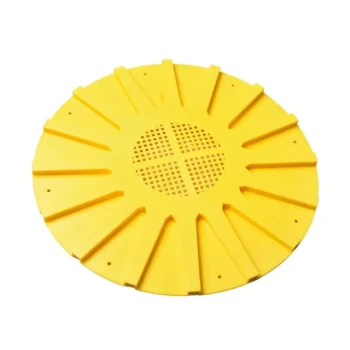
Top feeders are specialized hive management tools positioned directly beneath the outer cover, designed to optimize the feeding process through volume and placement. Their primary mechanical advantage is a high syrup capacity, which significantly reduces the frequency of required refills. Operationally, they allow the beekeeper to replenish food supplies without disturbing the colony, as the bees remain contained within the hive bodies below during the process.
Top feeders bridge the gap between high-volume resource delivery and minimal colony disruption. By utilizing the hive's internal thermal energy and providing a protected interface, they allow for rapid colony buildup while mitigating risks like robbing and brood nest exposure.
Mechanical Advantages: Volume and Placement
High-Capacity Reservoirs
Top feeders are designed to hold substantial quantities of syrup compared to other feeding methods.
This high capacity directly minimizes the labor required from the beekeeper. It reduces the frequency of visits needed to replenish the feed, which is particularly beneficial during periods of heavy feeding for winter preparation or spring buildup.
Integrated Protection
By sitting directly atop the hive under the outer cover, these feeders create a protected interface.
This mechanical positioning effectively prevents external contamination of the food supply. Furthermore, because the feed is enclosed within the hive structure, it significantly reduces the risk of robbing behavior from neighboring colonies.
Operational Impact on Colony Management
Non-Intrusive Refilling
The most significant operational benefit is the ability to feed without exposing the colony.
Beekeepers can remove the outer cover and fill the reservoir without opening the brood nest or smoking the bees. This keeps the bees contained in the boxes below, preventing the stress and temperature loss associated with cracking open the hive bodies.
Thermal Efficiency and Accessibility
Top feeders (often referred to as cover feeders) utilize the internal heat rising from the colony to maintain the temperature of the diet.
This thermal efficiency ensures the syrup remains palatable and accessible, even in cooler weather. It allows nurse bees to access nutrition directly and efficiently, maximizing the uptake of carbohydrates or protein supplements.
Understanding the Trade-offs
Equipment Profile vs. Internal Space
Unlike internal frame feeders, which occupy space intended for brood or storage frames, top feeders add volume to the top of the hive.
While this preserves internal frame space for the bees, it requires the management of an additional, separate piece of equipment. Beekeepers must account for the vertical height added to the hive stack.
Reliance on Colony Warmth
The operational success of a top feeder relies partly on the colony's ability to generate heat.
While the design capitalizes on rising heat, a weak colony in extremely cold conditions may struggle to warm the large volume of syrup located in the headspace. In these specific contexts, the efficiency of the "thermal link" mentioned in the operational benefits can vary based on colony strength.
Making the Right Choice for Your Goal
To determine if a top feeder fits your management strategy, consider your specific operational objectives:
- If your primary focus is labor efficiency: Top feeders are the superior choice due to their high capacity, which reduces the number of trips required to the apiary.
- If your primary focus is minimizing colony stress: These feeders are ideal because they allow you to replenish supplies without disrupting the brood nest or breaking the propolis seal on the hive bodies.
By selecting the right feeding mechanism, you ensure your colonies reach peak foraging capacity exactly when the primary honey flow begins.
Summary Table:
| Feature | Mechanical Advantage | Operational Benefit |
|---|---|---|
| Capacity | High-volume reservoirs (up to several gallons) | Reduces labor and frequency of apiary visits |
| Placement | Enclosed beneath the outer cover | Prevents robbing and protects feed from contamination |
| Access | Internal thermal link to colony heat | Keeps syrup warm and accessible even in cool weather |
| Refilling | Top-access design | Zero colony disruption; no need to open the brood nest |
| Space | External to the brood chamber | Preserves frame space for brood rearing and honey storage |
Scale Your Apiary Operations with HONESTBEE
Are you looking to streamline your feeding protocols and improve colony health? HONESTBEE specializes in providing high-quality, durable beekeeping equipment designed for commercial apiaries and distributors. From high-capacity top feeders and specialized hive-making machinery to honey-filling systems, we supply the full spectrum of tools you need to succeed.
Why Partner with HONESTBEE?
- Comprehensive Wholesale Catalog: One-stop shop for tools, machinery, and essential consumables.
- Built for Professionals: Our equipment is engineered to withstand the rigors of commercial beekeeping.
- Growth Focused: We help you maximize efficiency and minimize labor costs through smarter hive management solutions.
Ready to elevate your production? Contact us today for a wholesale quote and let HONESTBEE empower your beekeeping business.
Related Products
- HONESTBEE Round Hive Top Bee Feeder for Syrup
- HONESTBEE Square Top Hive Bee Feeder Top Bee Feeder
- HONESTBEE Professional Hive Top Bee Feeder Feeding Solution
- Rapid Bee Feeder White Plastic 2L Round Top Feeder for 8 or 10-Frame Bee Hives
- Professional Hive Top Bee Feeder for Beekeeping
People Also Ask
- What can the round hive top feeder be used for? A Guide to Efficient, Safe Bee Feeding
- What is the capacity of the round hive top feeder for syrup and pollen? A Guide to Targeted Apiary Support
- What types of hive boxes is the round hive top feeder compatible with? Universal Fit for 8 & 10-Frame Langstroth Hives
- What types of feed can be used with the round hive top feeder? Versatile Feeding for Optimal Apiary Health
- How do you use a top feeder for bees? Expert Guide to Installation and High-Volume Hive Feeding