A slatted rack is a passive climate control device installed between the bottom board and the lowest brood box of a beehive. Its technical function is to create a static air buffer that insulates the brood nest from direct drafts while simultaneously providing a designated high-volume area for bees to cluster, reducing congestion within the hive.
By creating a "dead air" space at the hive entrance, a slatted rack allows for better ventilation without chilling the brood, effectively increasing the usable laying area for the queen and lowering stress on the colony during temperature extremes.
Optimizing Internal Hive Climate
Creating a Thermal Buffer Zone
The primary technical advantage of a slatted rack is the creation of a static air space at the bottom of the hive.
This buffer zone allows cold air to enter the hive and sink into the rack's open volume rather than hitting the brood frames directly. This stabilizes the temperature in the living quarters above.
Shielding the Colony from Drafts
Direct wind entering the bottom entrance can disrupt the colony's ability to thermoregulate.
The slats serve as a baffle, breaking up air currents before they reach the bees. This protection is critical in winter and early spring when maintaining warmth is vital for survival.
Facilitating Summer Ventilation
During hot weather, the rack assists in cooling the hive by allowing fresh air to enter without creating turbulent flow.
It provides the necessary volume for air exchange, helping the bees regulate humidity and temperature passively.
Biological and Management Benefits
Expanding the Queen’s Laying Pattern
In a standard setup, queens often avoid laying eggs at the very bottom of the frames due to cold drafts entering the hive entrance.
Because the rack moves the brood chamber higher and insulates it from these drafts, the queen is encouraged to lay eggs to the very bottom of the frame. This maximizes the effective population growth of the colony.
Reducing Colony Congestion
In high summer, strong colonies often suffer from overcrowding, leading to "bearding" (bees hanging outside the hive) or swarming.
The slatted rack provides a dedicated "hanging out" zone inside the hive. Forager bees can congregate here during the night or hot days, relieving pressure on the upper brood boxes.
Minimizing Unwanted Comb
Bees have a tendency to build "ladder comb" or burr comb between the bottom frames and the floor to bridge the gap.
The design of the slatted rack discourages this behavior. By aligning the slats with the frames, it maintains "bee space" and keeps the bottom bars cleaner.
Understanding the Trade-offs
Equipment Complexity
While beneficial, a slatted rack is an optional piece of equipment that adds weight and height to the hive stack.
It introduces an additional component that must be purchased, stored, and occasionally cleaned of propolis, which may not be necessary for beekeepers prioritizing minimalist management.
Standardization Variables
Not all slatted racks are built to the same dimensions.
You must ensure the rack dimensions match your specific hive boxes (e.g., 8-frame vs. 10-frame) to ensure the slats align perfectly with the frames above, otherwise, the benefit of comb prevention is lost.
Making the Right Choice for Your Goal
To decide if this equipment serves your management style, consider your primary objectives:
- If your primary focus is Overwintering Success: The rack is highly recommended as it buffers cold air and protects the cluster from direct drafts.
- If your primary focus is Maximizing Brood Yield: The rack is essential for encouraging the queen to utilize the full surface area of the bottom frames.
- If your primary focus is Swarm Management: The rack provides valuable clustering space to reduce congestion-induced swarming impulses.
Implementing a slatted rack is a low-maintenance, high-impact upgrade that stabilizes the hive environment year-round.
Summary Table:
| Feature | Technical Benefit | Management Advantage |
|---|---|---|
| Static Air Buffer | Insulates brood from cold drafts | Enhances overwintering survival rates |
| Slat Baffle System | Breaks up turbulent wind flow | Stabilizes internal hive temperature |
| Internal Cluster Space | Reduces hive overcrowding/congestion | Minimizes swarming and bearding behavior |
| Draft Protection | Warms the bottom of the frames | Encourages full-frame queen laying patterns |
| Bee Space Alignment | Prevents ladder and burr comb | Keeps equipment cleaner and easier to manage |
Elevate Your Beekeeping Operation with HONESTBEE
As a professional distributor or commercial apiary, you need reliable equipment that optimizes colony health and operational efficiency. HONESTBEE specializes in high-quality beekeeping tools, hive-making machinery, and essential consumables designed for large-scale success.
Whether you are looking to source specialized slatted racks, honey-filling machines, or bulk beekeeping hardware, our team provides the comprehensive wholesale support your business deserves. Contact us today to discuss how our portfolio can streamline your production and enhance your market offering.
Related Products
- Stainless Steel Pail Perch Bucket Bench
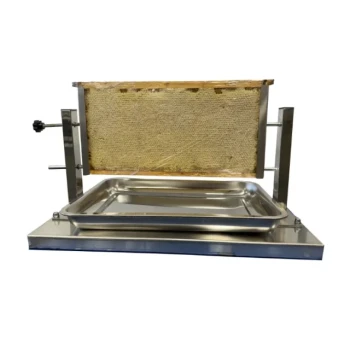
- Professional Adjustable Stainless Steel Honeycomb Display Stand
People Also Ask
- How do professional-grade Pollen Drying Ovens preserve active ingredients? Ensure Bioactive Potency with Precision
- What are the technical requirements for using a constant temperature drying oven for raw propolis? Expert Guide
- How do tipping bucket mechanisms function in apiary rain monitoring? Efficient Magnetic Sensing for Remote Hives
- How do forced circulation drying ovens sterilize beekeeping tools? Efficient Oxidation for Metal Equipment Safety
- What roles do iron sieve basins play in honey filtration and beeswax refining? Essential Two-in-One Processing Guide