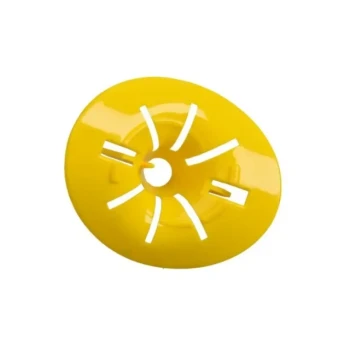
Pollen traps are specialized mechanical devices installed at the hive entrance to intercept and collect pollen pellets from returning forager bees. By utilizing a physical grid or aperture structure, the trap gently scrapes pollen from the bees' hind legs as they enter, retaining a calculated percentage of the haul for analysis or sale.
The primary function of a pollen trap is to enable continuous, long-term monitoring of pollen diversity and quality without disrupting the colony's normal life cycle. It transforms the hive into a sampling tool for agricultural landscapes while offering a method to diversify commercial apiary products.
The Mechanics of Collection
Physical Interception
The trap functions through a precise physical barrier placed at the hive's entry point.
As worker bees return from foraging, they are forced to crawl through a specific grid or aperture structure.
Separation of Pollen Pellets
This grid is sized perfectly to allow the bee to pass but is too narrow for the pollen loads carried on their hind legs.
The friction scrapes the pollen pellets off, causing them to fall into a collection tray below for easy retrieval.
Research and Monitoring Capabilities
Continuous Environmental Monitoring
For researchers, the pollen trap serves as a window into the surrounding agricultural landscape.
By analyzing the collected samples, scientists can assess plant biodiversity and identify exactly which floral resources the colony is utilizing over time.
Quality and Nutritional Analysis
The device provides high-purity samples essential for laboratory analysis.
This allows researchers to track the nutritional quality of available forage and monitor the collection efficiency of specific colonies.
Operational Considerations and Trade-offs
Critical Retention Rates
To function correctly, a pollen trap must not capture every pellet brought back to the hive.
The device is typically designed to retain approximately 10% of the collected pollen.
Preserving Colony Health
Maintaining this specific retention rate is vital to avoid starving the brood or stressing the colony.
The goal is to gather sufficient data or product without disrupting the normal life and biological sustainability of the bee colony.
Economic Implications
While primarily a research tool in this context, traps also allow commercial apiaries to move beyond exclusive honey production.
They enable a "multi-product matrix," significantly enhancing economic efficiency by adding pollen to a product line that may also include propolis and royal jelly.
Maximizing Utility for Your Objectives
If your primary focus is Ecological Research:
- Utilize the trap to gather long-term data on local plant biodiversity and the nutritional value of the landscape for pollinators.
If your primary focus is Commercial Production:
- Leverage the trap to diversify your revenue stream by collecting high-purity pollen for the health food market, ensuring you stick to safe retention limits.
If your primary focus is Colony Management:
- Use the collection data to monitor the foraging efficiency of your hives and assess if the surrounding environment is providing adequate nutrition.
By balancing collection rates with colony needs, pollen traps provide a non-invasive method to unlock critical data about both your bees and their environment.
Summary Table:
| Feature | Function & Impact | Research/Commercial Value |
|---|---|---|
| Physical Interception | Gently scrapes pollen pellets from bees' legs | High-purity sample collection |
| Environmental Monitoring | Tracks floral diversity and plant usage | Biodiversity and landscape assessment |
| Nutritional Analysis | Evaluates forage quality and colony health | Data-driven apiary management |
| Economic Diversification | Enables pollen harvesting alongside honey | Multi-product revenue matrix |
| Retention Control | Maintains ~10% capture rate | Ensures colony biological sustainability |
Elevate Your Apiary Operations with HONESTBEE
Maximize your colony's potential and streamline your production with industry-leading solutions from HONESTBEE. As a premier partner for commercial apiaries and global distributors, we provide more than just equipment—we provide a competitive edge.
Our comprehensive wholesale range includes:
- Specialized Machinery: Advanced hive-making, honey-filling, and processing machines.
- Essential Equipment: Durable pollen traps, high-quality beekeeping tools, and hive hardware.
- Consumables & Merchandise: A full spectrum of industry essentials and honey-themed cultural goods.
Whether you are conducting large-scale ecological research or scaling a commercial production matrix, HONESTBEE delivers the reliability and innovation your business demands.
Contact us today to explore our wholesale offerings and scale your success!
References
- Fabrice Réquier, Vincent Bretagnolle. Honey bee diet in intensive farmland habitats reveals an unexpectedly high flower richness and a major role of weeds. DOI: 10.1890/14-1011.1
This article is also based on technical information from HonestBee Knowledge Base .
Related Products
- Removable Plastic Pollen Trap With Ventilated Tray for Bees Pollen Collector
- 30 cm Plastic Entrance Hole Bee Pollen Trap and Collector
- Plastic Bee Pollen Trap Strips Comb Catcher Collector
- 8 Frame and 10 Frame Propolis Trap Collector Screen for Propolis Collection
- Professional Bucket Style Wasp and Moth Pheromone Trap
People Also Ask
- What are the design principles and advantages of pollen traps in the collection of bee pollen? Boost Your Apiary Yield
- What is the function of professional pollen traps in evaluating honey plants? Quantifying Pollination and Crop Potential
- What functions do pollen traps serve for bee bread production? Optimize Your Raw Material Collection
- What maintenance and pest prevention measures should be taken for pollen traps? Protect Your Hive and Harvest Quality
- How does the use of pollen traps in honeybee hives enhance crop fertilization? Boost Your Yield Through Induced Activity