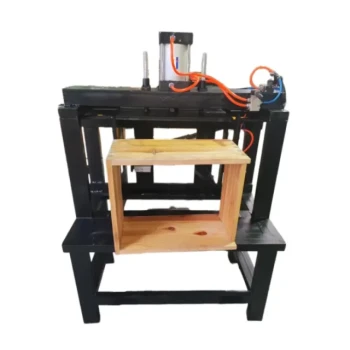
High-efficiency production equipment and mechanization technology primarily serve to automate the labor-intensive aspects of bee colony care, product processing, and general operational management. By integrating these systems, industrial apiaries significantly boost the yield and quality of end products like honey and beeswax while simultaneously driving down unit production costs.
The transition to industrial-scale apiculture relies on using technology to create a competitive advantage. It shifts the focus from manual colony maintenance to optimized, high-volume production that small-scale operations cannot replicate.
The Mechanics of Scalability
Automating Critical Workflows
In a traditional setting, beekeeping is highly manual. Industrial mechanization changes this by automating routine tasks such as colony care and the processing of bee products.
This allows operations to manage a significantly larger number of hives without a linear increase in labor requirements.
Enhancing Product Quality and Yield
Advanced machinery does more than save time; it improves the consistency of the output.
By standardizing processing methods, large-scale apiaries can ensure higher quality honey and beeswax. Furthermore, the efficiency of these systems maximizes the volume of product extracted, directly increasing overall yield.
Creating Competitive Advantage
The ultimate goal of adopting this technology is economic competitiveness.
By reducing the unit production cost, industrial apiaries can operate at margins that are unattainable for small-scale beekeeping. This efficiency is the defining characteristic of modern commercial apiculture.
Data-Driven Operational Management
Precision Measurement and Analysis
Beyond physical processing, mechanization includes industrial-grade weighing equipment.
This technology allows for the accurate measurement of total honey production at the end of a harvest season. This data is not merely for record-keeping; it forms the baseline for input-output analysis.
Optimizing Commercial Protocols
Quantitative feedback allows managers to test and verify specific strategies.
For example, apiaries can measure productivity gains resulting from combined pollen and water feeding compared to standard practices. This data directly guides the development of more efficient feeding and management protocols, ensuring resources are invested only in methods that yield results.
Understanding the Trade-offs
High Capital Investment
While unit costs decrease over time, the upfront cost of high-efficiency equipment is substantial.
Operators must have sufficient capital to acquire industrial-grade machinery before realizing the benefits of reduced operational costs.
Complexity of Management
Introducing advanced mechanization adds a layer of technical complexity to the apiary.
Success requires not just knowledge of bee biology, but also the ability to maintain and optimize complex mechanical systems and interpret data analytics correctly.
Making the Right Choice for Your Goal
To effectively leverage high-efficiency equipment, you must align your technology choices with your specific operational objectives.
- If your primary focus is maximizing volume and margins: Prioritize automation in product processing to standardize quality and aggressively lower unit production costs.
- If your primary focus is optimizing management strategies: Invest in industrial weighing and measurement technology to perform rigorous input-output analysis on your feeding protocols.
True industrial efficiency is achieved when physical automation is paired with data-driven decision-making to create a leaner, more productive operation.
Summary Table:
| Feature | Industrial Mechanization Role | Impact on Apiary Operations |
|---|---|---|
| Workflows | Automates manual colony care & extraction | Reduces labor requirements & enables scalability |
| Product Quality | Standardizes honey & wax processing | Ensures consistent, high-grade output |
| Cost Control | Lowers unit production costs | Increases profit margins and competitive advantage |
| Management | Data-driven weighing & input-output analysis | Optimizes feeding protocols & resource allocation |
| Investment | Integration of high-capital machinery | Requires technical expertise & upfront capital |
Transform Your Apiary into a High-Efficiency Powerhouse
At HONESTBEE, we specialize in empowering commercial apiaries and distributors with the tools needed to dominate the modern market. From automated honey-filling machines and industrial hive-making equipment to essential high-volume consumables, our comprehensive wholesale portfolio is designed to slash your unit costs and maximize yields.
Whether you are scaling your operation or looking to supply the industry's best hardware and honey-themed cultural merchandise, we provide the technical edge your business deserves. Partner with HONESTBEE today to access professional-grade beekeeping machinery and expert solutions tailored for industrial success.
References
- Nadiia Novhorodska, Halyna Lotka. OPTIMIZATION OF CONTINUOUS NECTAR-BEARING CONVEYOR IN BEEKEEPING. DOI: 10.37128/2707-5826-2021-3-6
This article is also based on technical information from HonestBee Knowledge Base .
Related Products
- Economy Small Scale Honey Dryer Dehumidifier Thickening Machine
- High-Efficiency Pneumatic Bee Hive Making Machine for Rapid Box Assembly
- Professional Stainless Steel Pry-Bar Hive Tool
- Heavy-Duty Ergonomic Grip Galvanized Pollen Shovel
- Professional Grade Foldable Beehive Handles
People Also Ask
- What are the benefits of using a honey dryer for honey production? Boost Yield & Quality
- What are the features of the honey dryer? Achieve Premium Quality & Maximize Your Harvest
- What are the key features of the honey dryer? Essential Guide to Advanced Moisture Reduction Technology
- What is the primary construction material of the honey dryer? Durable AISI 304 Stainless Steel for Beekeepers
- How does the design of some honey dryers achieve high drying efficiency without a vacuum system? Boost Your Productivity