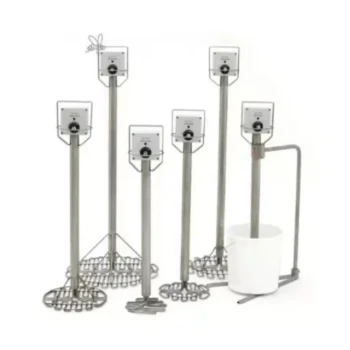
The primary purpose of high-capacity honey ripeners is to purify extracted honey through natural gravity sedimentation. These tanks act as holding vessels that allow the honey to stand undisturbed for an extended period. During this time, trapped air bubbles and residual fine wax particles naturally float to the surface for removal, resulting in a cleaner, higher-quality product.
Ripeners serve as a critical, passive purification stage that enhances honey clarity without harsh mechanical intervention. By isolating the honey in a sealed environment, they prevent contamination and odor absorption while ensuring the product meets strict market standards.
The Mechanics of Sedimentation
Utilizing Gravity for Separation
Ripeners, often referred to as settling tanks, rely on the physical principle of density differences. Because air bubbles and wax particles are lighter than honey, gravity causes them to rise to the top over time.
Removing Fine Impurities
This process targets microscopic debris that might escape initial filtration. By allowing the honey to rest, you facilitate the separation of fine wax particles that would otherwise cloud the final product.
Enhancing Optical Clarity
The immediate result of this settling process is a significant improvement in visual quality. The honey becomes clear and translucent, which is a key indicator of quality for consumers and crucial for meeting market standards.
Material Integrity and Protection
Food-Grade Stainless Steel Construction
To ensure safety and durability, these ripeners are typically constructed from food-grade stainless steel. This material choice prevents chemical contamination and ensures the equipment is easy to clean and sanitize.
Hermetic Sealing
A critical feature of high-quality ripeners is their excellent sealing properties. Honey is hygroscopic and prone to absorbing ambient odors; a tight seal protects the honey from absorbing external smells or moisture during the settling phase.
Preserving Sensory Characteristics
By avoiding aggressive mechanical processing during this stage, the ripener helps preserve the honey's natural structure. This approach aligns with the goal of maintaining the honey's original nutritional components and sensory profile.
Understanding the Trade-offs
Processing Time
The sedimentation process is passive and requires the honey to stand for an extended period. This introduces a necessary pause in the production line, which can slow down overall throughput compared to continuous filtration methods.
Batch vs. Continuous Flow
Ripeners generally operate as a batch process. You must wait for a tank to settle completely before bottling, which requires careful logistical planning if you are managing large volumes of extraction.
Making the Right Choice for Your Goal
To determine how to integrate ripeners into your workflow, consider your specific production priorities:
- If your primary focus is Visual Quality: Prioritize a ripener with high capacity to allow for longer settling times, ensuring maximum removal of micro-bubbles and fine wax.
- If your primary focus is Market Compliance: Ensure the ripener is made of certified food-grade stainless steel to prevent physical or chemical contamination.
- If your primary focus is Flavor Preservation: Rely on the ripener's sealing capabilities to protect the honey from environmental odors and impurities while it settles.
Using a high-capacity ripener is the definitive step for transforming raw extracted honey into a polished, professional-grade product.
Summary Table:
| Feature | Benefit | Purpose in Production |
|---|---|---|
| Gravity Sedimentation | Removes micro-bubbles & fine wax | Enhances optical clarity and purity |
| Stainless Steel Build | Food-grade & corrosion-resistant | Prevents chemical contamination |
| Hermetic Sealing | Moisture & odor protection | Preserves natural sensory profile |
| Passive Purification | No mechanical intervention | Maintains nutritional integrity |
| High Capacity | Supports large batch processing | Ideal for commercial scale operations |
Elevate Your Honey Quality with HONESTBEE
For commercial apiaries and honey distributors, achieving market-leading clarity and flavor is non-negotiable. HONESTBEE provides the professional-grade infrastructure you need to scale your operations efficiently. From high-capacity stainless steel honey ripeners and hive-making machinery to advanced honey-filling systems and cultural merchandise, we offer a comprehensive wholesale portfolio tailored to your success.
Why partner with HONESTBEE?
- Industrial Strength: Durable, food-grade equipment designed for heavy-duty commercial use.
- End-to-End Solutions: We supply everything from essential consumables to complex processing machinery.
- Wholesale Expertise: We understand the unique logistics and quality demands of global distributors.
Ready to optimize your production line? Contact our experts today to discuss how our tools and equipment can grow your beekeeping business!
References
- Alfio Strano, Gıovannı Gulısano. Profitability Analysis of Small-Scale Beekeeping Firms by Using Life Cycle Costing (LCC) Methodology. DOI: 10.3844/ajabssp.2015.116.127
This article is also based on technical information from HonestBee Knowledge Base .
Related Products
- High Quality Honey Dehumidifier Dryer Thickening Machine for Beekeeping
- Honey Concentrating and Filtering Dehumidifier Machine 2T Capacity for Honey
- Double Wall Honey Heating Stirring Homogenizer Mixing Machine with Various Capacity
- Heavy Duty Stainless Steel Honey Processing Machine Decrystallizing Tank
- Commercial Rotary Honey Filling Machine for Production
People Also Ask
- Can you dehumidify honey? A Beekeeper's Guide to Preventing Fermentation
- How to dry up honey? The Safe Guide to Stabilizing Honey and Preventing Fermentation
- How can the moisture content of honey be reduced? A Guide to Safe, Effective Drying Methods
- How to remove humidity from honey? Protect Your Harvest from Fermentation
- What is the process for using a dehumidifier to lower honey's moisture content? Expert Drying Techniques