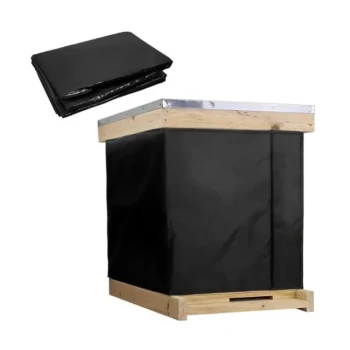
Beehive insulation relies primarily on materials that offer thermal resistance and wind protection. The most common and effective materials include foam insulation boards and specialized bee wraps, usually applied in autumn. Beekeepers also utilize reflective bubble wrap, natural wool, straw wraps, and simple barriers like tar paper or heavy construction paper to shield the colony from harsh winter elements.
Core Takeaway The goal of winterizing is not just heat retention, but stabilizing the internal environment against rapid temperature swings and wind. However, insulation must never come at the cost of ventilation; a hive that is too warm and sealed tight creates fatal condensation.
External Insulation Options
Rigid Foam Insulation
Rigid foam boards are widely regarded for their high R-value (thermal resistance) and durability.
They provide substantial protection against extreme cold. These boards can be cut to fit the exterior of the hive or placed inside the outer cover to reduce heat loss from the top.
Specialized and Reflective Wraps
Specialized bee wraps, often made of vinyl or foam, are designed specifically to surround the hive.
Alternatively, reflective bubble wrap offers a moderate R-value. It is popular because it is lightweight and extremely easy to install around standard hive boxes.
Paper Barriers
In extremely cold regions, tar paper or heavy construction paper is frequently used to wrap Langstroth and Warre hives.
While these offer less insulation than thick foam, they serve as excellent thermal barriers and windbreaks. They are often used to reduce the intake of cold air through hive gaps.
Natural Materials
For a more organic approach, natural wool and straw wraps are viable options.
Wool offers a high R-value but has moderate durability compared to synthetics. Straw provides moderate insulation but tends to have lower durability over a long winter.
Internal and Structural Supports
Quilt Boxes and Slatted Racks
Insulation isn't just about wrapping the outside. Quilt boxes are specialized internal equipment placed at the top of the hive.
They are often filled with absorbent materials like wood shavings or burlap. Slatted racks can also be employed to improve the overall thermal properties of the hive stack.
Cavity Fillers for Top Bar Hives
Top bar hives require a different approach due to their shape.
For these, the internal cavity space can be filled with straw, hay, or woolen blankets. This reduces the volume of air the bees need to heat and improves overall insulation.
Understanding the Trade-offs: Heat vs. Moisture
The Danger of Over-Sealing
A common pitfall is sealing the hive so tightly that it creates a "thermos" effect.
You must avoid completely sealing the hive. If airflow is cut off, moisture from the bees' respiration will condense on the cold inner cover. If this cold water drips back onto the cluster, it can freeze and kill the bees.
Ventilation is Essential
Effective insulation must be paired with ventilation.
Techniques include using a shim (a wooden ring) to create a top entrance or placing small sticks under the outer lid. This allows warm, moist air to escape before it condenses.
Monitoring is Key
Throughout the winter, you should check for signs of excess moisture.
Condensation inside the top cover is a red flag. It indicates that while your insulation might be thick, your ventilation is insufficient.
Making the Right Choice for Your Goal
The "best" material depends on your specific climate and hive type. Apply your insulation around the time of the first hard freeze and remove it once spring warms consistently.
- If your primary focus is maximum heat retention: Choose rigid foam insulation or natural wool for their high R-values and ability to stabilize brood nest temperatures.
- If your primary focus is wind protection on a budget: utilize tar paper or heavy construction paper to create a windbreak without compromising too much ventilation.
- If your primary focus is moisture management: prioritize installing a quilt box alongside your external wraps to absorb excess humidity.
Successful wintering is about balance: keep the bees dry first, and warm second.
Summary Table:
| Insulation Material | Primary Benefit | R-Value / Thermal Resistance | Best Use Case |
|---|---|---|---|
| Rigid Foam Boards | High thermal resistance | Very High | Extreme cold climates |
| Specialized Bee Wraps | Wind protection & UV absorption | Moderate | Standard winterizing |
| Tar Paper | Windbreak & solar heat gain | Low | Budget-friendly wind protection |
| Natural Wool/Straw | Organic insulation | Moderate to High | Eco-friendly beekeeping |
| Quilt Boxes | Moisture management | Variable | Humidity control & internal heat |
| Reflective Bubble Wrap | Ease of installation | Moderate | Quick application & mild winters |
Maximize Your Colony Survival with HONESTBEE
Ensure your apiary thrives through the harshest seasons with professional-grade equipment. HONESTBEE specializes in supporting commercial apiaries and distributors by providing a comprehensive wholesale range of beekeeping tools, specialized machinery, and essential consumables.
Whether you need specialized hardware like hive-making and honey-filling machines to scale your operations, or high-quality insulation supplies to protect your investment, we deliver the value and reliability your business demands.
Ready to upgrade your wholesale supply chain? Contact HONESTBEE Today to explore our full spectrum of beekeeping solutions!
Related Products
- Professional Insulated Plastic Bee Hives
- Professional Insulated Winter Hive Wrap for Beekeeping
- Inner Beehive Cover for Beekeeping Bee Hive Inner Cover
- Stainless Steel Round Beehive Air Vents for Ventilation
- Metal Hive Feet Bee Hive Stand for Ant Protection
People Also Ask
- What are the advantages of plastic bee hives? Boost Efficiency & Durability for Your Apiary
- Are plastic bee hives any good? Unlock Durability & Efficiency for Your Apiary
- How do plastic bee hives compare to wooden hives in handling? Reduce Strain & Boost Efficiency
- Are plastic bee hives good? Durable, Low-Maintenance Hives for Modern Apiaries
- What are the disadvantages of plastic beehives? Key Operational and Environmental Risks Exposed