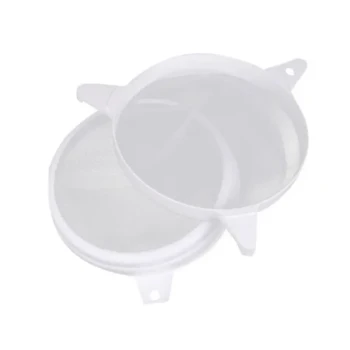
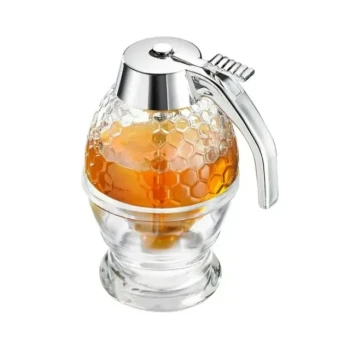
Honey filtration systems and settling tanks are critical processing instruments necessary for elevating raw harvest material into a stable, commercial-grade product. These systems primarily function to eliminate mechanical impurities—such as wax particles, larval debris, and organic matter—while facilitating the natural de-aeration required to ensure the clarity and purity demanded by domestic and export markets.
Core Takeaway Achieving commercial success in honey production requires more than just extraction; it demands physical purification. Filtration and settling are the specific mechanisms used to stabilize the product and ensure visual clarity without compromising the honey's nutritional integrity.
The Mechanics of Purification
Physical Debris Removal
The harvesting process inevitably introduces foreign matter into the honey. Filtration systems utilize specific barriers, often in multi-stage configurations, to intercept macroscopic contaminants.
This includes wax fragments, hive debris, and even bee parts or larvae. By mechanically separating these elements, the system ensures the final liquid is free from physical contaminants that would otherwise result in a lower quality grade.
Gravity Sedimentation and De-aeration
Filtration alone is often insufficient for microscopic clarity. Settling tanks utilize the principle of specific gravity to further purify the product.
During the settling process, honey is allowed to stand undisturbed. This allows air bubbles introduced during extraction to rise to the surface (de-aeration) while heavier fine particles sink. This natural stratification is essential for removing micro-bubbles that cloud the honey's appearance.
Impact on Commercial Viability
Meeting Organoleptic Standards
Modern retail markets have stringent sensory (organoleptic) requirements. Consumers and export regulators equate clarity and transparency with quality.
Filtration and settling ensure the product meets these visual standards. A clear, debris-free product is significantly more competitive in both informal and formal commercial sectors than honey that appears cloudy or contaminated.
Ensuring Data Accuracy
Beyond aesthetics, purity affects production metrics. Unfiltered honey contains non-honey mass (wax, debris) that can skew yield data.
By removing these substances before the final weighing, producers ensure that their yield analysis reflects the true volume of the saleable liquid product. This rigor is vital for accurate business analysis and inventory tracking.
Stability and Shelf Life
Preventing Fermentation
Organic residues, particularly protein-heavy debris like larval remains or pollen clumps, can act as catalysts for spoilage.
If left in the honey, these impurities can encourage fermentation, ruining the batch. Multi-stage filtration removes these organic risks, significantly extending the shelf life and storage stability of the bottled product.
Hygiene Compliance
Adherence to food hygiene standards is non-negotiable for market entry. High-precision equipment ensures that the physical separation of contaminants is consistent and hygienic.
This mechanical processing is superior to traditional manual squeezing methods, which are less efficient and more prone to introducing external contaminants.
Understanding the Trade-offs
Processing Speed vs. Quality
There is an inherent tension between throughput and clarity. Settling tanks require time for gravity to work effectively. Rushing this stage prevents adequate de-aeration, leading to a product that may be pure but visually cloudy due to trapped air.
Nutritional Preservation vs. Clarity
While the goal is high purity, the equipment must be designed to avoid damaging the honey. Professional systems use centrifugal force or gravity rather than heat or excessive pressure. The objective is to remove the "impurities" (wax/debris) while retaining the nutritional components that define the honey's value.
Making the Right Choice for Your Goal
To maximize the value of your harvest, align your processing method with your specific market objectives:
- If your primary focus is Market Competitiveness: Prioritize multi-stage filtration and extended settling times to achieve the high transparency and "sparkle" required for retail shelves.
- If your primary focus is Product Stability: Ensure your filtration nets are of sufficiently high density to remove all organic larval debris, as this is the primary vector for fermentation and spoilage.
The correct application of these systems turns a raw agricultural yield into a refined, reliable, and profitable commodity.
Summary Table:
| Feature | Honey Filtration Systems | Settling Tanks |
|---|---|---|
| Primary Function | Mechanical removal of wax, debris, and larvae | Gravity-based de-aeration and fine particle separation |
| Key Benefit | Prevents fermentation and extends shelf life | Ensures visual clarity and transparency ("sparkle") |
| Mechanism | Multi-stage physical barriers / Mesh screens | Natural stratification and sedimentation over time |
| Market Impact | Ensures hygiene compliance and food safety | Meets organoleptic standards for premium retail |
| Yield Impact | Removes non-honey mass for accurate weighing | Stabilizes product volume for inventory tracking |
Elevate Your Honey Production to Export Standards
At HONESTBEE, we specialize in empowering commercial apiaries and distributors with the professional tools needed to transform raw harvest into premium commodities. Our comprehensive wholesale range includes high-precision honey filtration systems, industrial settling tanks, and honey-filling machines designed to maintain nutritional integrity while achieving flawless clarity.
Whether you are scaling your operation or supplying the industry, our portfolio of beekeeping machinery and essential consumables provides the competitive edge you need. Maximize your honey’s market value and shelf life today—contact our experts for a customized quote!
References
- Piotr Semkiw. Polish Beekeeping Twenty Years After Joining the European Union. DOI: 10.2478/jas-2025-0004
This article is also based on technical information from HonestBee Knowledge Base .
Related Products
- Electric Double Wall Honey Filtering Machine Purifier Equipment for Honey Processing Plant
- Professional Stainless Steel Honey Filtering Machine with Water Bath Heating for Beekeeping
- Professional Honey Filter with Tripod Support Stand
- Professional Stainless Steel Honey Filter with Support Handle
- 0.5T Capacity Honey Dehumidifier Dryer with Vacuum Heating and Thickening Filtering Machine
People Also Ask
- What types of equipment are used in honey filtering? Build an Efficient System for Pure, Marketable Honey
- What is the process of filtering honey? A Guide to Clean, Pure, and Market-Ready Honey
- What is the overall importance of using the right equipment in honey filtering? Boost Quality & Marketability
- What is a potential concern associated with filtering honey? Balancing Clarity and Pollen Preservation
- How should honey filtering equipment be properly maintained? Extend Equipment Life & Protect Honey Purity