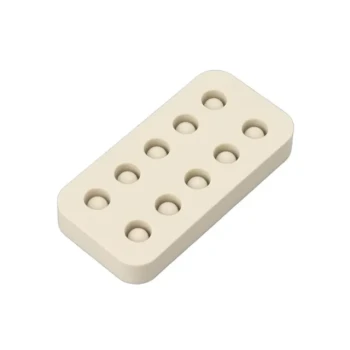
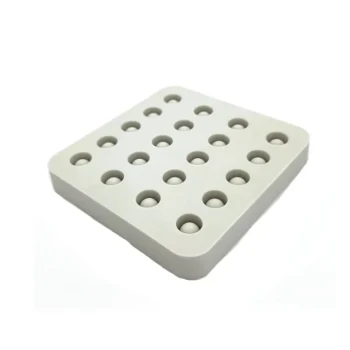
Standard-sized artificial cell cups are the fundamental unit of modern larval grafting because they bridge the gap between biological necessity and industrial efficiency. These cups are engineered to strictly simulate the physical space required for natural queen bee larvae development. By using a standardized geometry, apiarists ensure that every larva receives consistent care from nurse bees, while simultaneously enabling the use of high-efficiency extraction equipment.
Core Takeaway While natural comb construction is variable, commercial success requires predictability. Standardized cell cups enforce spatial consistency across the hive, ensuring uniform larval development and preventing the operational bottlenecks associated with traditional, manual rearing methods.
The Role of Spatial Consistency
Simulating Natural Architecture
Artificial cups are not merely containers; they are designed to simulate the specific physical space found in natural queen cells.
This precise geometry is critical for triggering the correct biological response from the colony. It ensures the larvae have the exact room required for optimal growth.
Facilitating Uniform Feeding
When cell dimensions vary, worker bees may feed larvae inconsistently.
Standardized cups ensure spatial consistency at every rearing point. This encourages worker bees to feed and cap the larvae uniformly, leading to predictable development rates across the entire frame.
Operational Efficiency and Stability
Streamlining Extraction
In royal jelly production, efficiency is dictated by the ability to process frames quickly.
Because every cup is identical, the jelly extraction operations can be streamlined and often automated. Standardized equipment relies on this uniformity to harvest jelly without damaging the cell or the frame.
Ensuring Hive Stability
The physical attachment of the cell to the frame is a critical failure point in grafting.
These cups are typically fixed to the rearing frame using melted beeswax. This provides a stable, vibration-resistant environment necessary for delicate larval development within the bustling hive.
Understanding the Operational Trade-offs
Dependency on Specialized Consumables
The primary downside to this system is a heavy reliance on a stable supply of input accessories.
Modern apiary management depends on the integrity of these specific tools. If the supply of standard cups is interrupted, operators face a high risk of equipment failure or compatibility issues.
The Cost of Reversion
A lack of standardized components forces operators to revert to inefficient traditional methods.
This shift creates immediate operational bottlenecks. It jeopardizes the long-term economic benefits of modern technology by increasing labor time and reducing harvest consistency.
Making the Right Choice for Your Goal
To maximize the effectiveness of your grafting process, align your equipment choices with your specific production targets:
- If your primary focus is Royal Jelly Production: Prioritize cups that are compatible with automated extraction machinery to ensure uniform harvesting and reduced labor costs.
- If your primary focus is Queen Rearing: Focus on the biological accuracy of the cup's internal dimensions to ensure the most natural larval development and highest acceptance rates.
Standardization is not just about convenience; it is the control mechanism that turns a biological variable into a reliable production constant.
Summary Table:
| Key Factor | Benefit of Standardization | Impact on Production |
|---|---|---|
| Spatial Geometry | Simulates natural queen cell architecture | Higher acceptance and optimal larval growth |
| Feeding Consistency | Uniform cell volume for worker bees | Predictable development and capping rates |
| Extraction Process | Compatibility with automated machinery | Faster Royal Jelly harvest and reduced labor |
| Structural Stability | Secure wax-attachment to frames | Vibration resistance and reduced larval loss |
Scale Your Apiary Operations with HONESTBEE Precision
Maximize your production predictability and hive health with HONESTBEE’s professional-grade beekeeping solutions. As a leading partner for commercial apiaries and distributors, we provide a comprehensive wholesale catalog designed for industrial efficiency.
Our value to your business includes:
- High-Precision Consumables: Standardized cell cups and grafting tools that ensure biological accuracy.
- Advanced Machinery: State-of-the-art honey-filling and hive-making machines to automate your workflow.
- Complete Equipment Range: Everything from specialized hardware to honey-themed cultural merchandise.
Don't let inconsistent equipment create bottlenecks in your harvest. Contact HONESTBEE today to access high-volume wholesale pricing and expert support for your commercial beekeeping needs.
References
- O. Mischenko, D. Kryvoruchko. The influence of honey harvest conditions on the production of the royal jelly by queen bees. DOI: 10.31073/agrovisnyk202104-06
This article is also based on technical information from HonestBee Knowledge Base .
Related Products
- JZBZ Push-In Queen Cell Cups for Beekeeping
- Brown Nicot Queen Cell Cups for Breeding Queen Bees Beekeeping
- Clear Black Plain Polystyrene Queen Bee Grafting Cell Cups No Lug for Bee Queen Cup
- JZBZ Type Wide Base Plastic Queen Cell Cups for Base Mounting and Queen Rearing
- 10-Cell Silicone Beeswax Bee Queen Cups Forming Mold
People Also Ask
- What roles do specialized queen cell cups play in royal jelly production? Optimize Your Hive's Secretion and Yield
- What role do specialized queen rearing tools play in developing mite-resistant honeybee stock? Master Genetic Selection
- What materials are used to make artificial queen cell cups for grafting? Beeswax vs. Plastic Guide
- Why is a diluted royal jelly solution applied to queen cell cups? Boost Acceptance in Artificial Grafting
- How does the standardized depth of queen cell cups affect larval acceptance? Boost Success with 6mm Precision