Because Apis cerana cannot be relied upon to seal hive gaps with propolis, the hardware itself must provide the seal. Unlike Apis mellifera, Apis cerana generally does not collect and apply propolis to close cracks in floorboards, hive walls, or frame joints. As a result, even small manufacturing gaps can become entry points for wax moths, ants, and other pests, increasing the risk of infestation and colony absconding.
For Apis cerana, precision hive construction is not merely a quality preference—it replaces a biological defense that the colony does not consistently provide. Tight-fitting woodenware, accurate joints, and mechanical pest barriers must work together to keep vulnerable openings closed.
Why Propolis Behavior Changes the Hardware Requirement
Propolis normally compensates for minor imperfections
In colonies that actively use propolis, bees may coat or seal small openings inside the hive. This can reduce exposed cracks between hive components and provide a degree of protection against invading organisms.
That behavior can mask limited imperfections in woodenware. It does not eliminate the need for quality construction, but it gives the colony an additional maintenance mechanism.
Apis cerana leaves structural gaps functionally exposed
Apis cerana does not reliably use propolis to seal wall gaps, floorboard cracks, or frame joints. A gap that might eventually be sealed in another honeybee system can therefore remain open throughout hive operation.
The result is a direct transfer of responsibility from the colony to the manufacturer, supplier, and beekeeper.
Small gaps can create large management problems
Open crevices provide potential access routes for pests such as wax moths and ants. Once pests enter, they may establish themselves in protected areas that are difficult for the beekeeper to inspect or clean.
Severe pest pressure can weaken the colony and contribute to absconding, making prevention substantially more valuable than corrective treatment.
How the Absence of Propolis Affects Manufacturing
Hive bodies must fit consistently
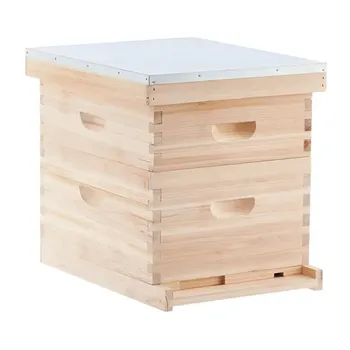
Hive bodies, supers, and bottom boards need accurately machined mating surfaces. Poorly aligned panels, warped boards, and inconsistent joints can create openings that are not naturally closed by the bees.
For commercial buyers, dimensional consistency matters because interchangeable components must fit securely across repeated orders, not just perform well as individual units.
Frame joints require controlled fit
Frame components should be manufactured so that joints close cleanly and remain stable during routine handling. Loose or uneven joints can create sheltered spaces for pests and complicate hive inspections.
Precision woodworking machinery, controlled assembly processes, and appropriate quality checks are therefore central to Apis cerana equipment production.
Bottom boards deserve particular attention
The hive floor is a critical boundary between the colony and ground-level pests. Cracks, poor panel contact, or gaps around the hive body can compromise the entire enclosure.
A well-fitted bottom board also provides a sound platform for entrance reducers, pest traps, and other protective equipment.
Why Pest Management Equipment Becomes More Important
Physical barriers replace natural sealing
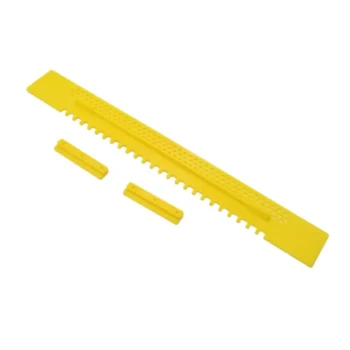
Entrance guards and entrance reducers restrict the size and accessibility of the hive opening. They help prevent unwanted entry while preserving a controlled passage for colony traffic.
These components must be correctly sized and securely fitted. A barrier that leaves side gaps or is poorly matched to the hive entrance can undermine its intended function.
Bottom-board traps support early detection
Bottom-board pest traps provide a mechanical means of monitoring or intercepting pests without relying entirely on chemical intervention. They also give beekeepers a practical inspection point beneath the colony.
Their effectiveness depends on proper integration with the hive floor. Poorly fitted traps can leave bypass routes or reduce the reliability of monitoring.
Equipment must function as a system
Tight woodenware alone is not enough if the entrance remains inadequately protected. Likewise, a high-quality entrance guard cannot compensate for major gaps around the floorboard or hive body.
Apis cerana management therefore calls for a coordinated product portfolio: precision hive parts, entrance-control hardware, bottom-board protection, and maintenance tools that work together.
What This Means for Commercial Suppliers
Tolerances become a commercial specification
For Apis cerana equipment, manufacturing tolerance directly affects pest-exclusion performance. It should be treated as a defined purchasing requirement rather than a vague claim of “good workmanship.”
Distributors and wholesalers should evaluate joint accuracy, component interchangeability, surface straightness, and consistency between production batches.
Quality control must focus on interfaces
The highest-risk areas are not only the individual boards or frames, but the points where components meet. Inspection should focus on hive-body corners, frame joints, floorboard contact surfaces, and entrance assemblies.
A supplier with repeatable machining and assembly controls is generally better positioned to support commercial apiaries than one relying on inconsistent manual fitting.
One-stop sourcing reduces compatibility risk
Sourcing hive bodies, bottom boards, entrance reducers, guards, and traps from a coordinated product range can reduce mismatched dimensions. It also simplifies replenishment, technical communication, and order fulfillment for commercial operations.
For resellers, a full-spectrum portfolio creates value beyond individual product pricing because customers can obtain compatible components through one supply channel.
Understanding the Trade-offs
Tighter construction does not mean zero ventilation
The objective is to eliminate unintended pest-entry gaps, not to make the hive completely airtight. Hive design still requires appropriate, intentional openings and ventilation arrangements.
Manufacturers should distinguish between controlled functional openings and accidental structural crevices.
Precision increases production demands
Higher machining accuracy, better material selection, and more careful assembly can increase manufacturing complexity and quality-control requirements. These costs are justified when failure to control gaps can lead to infestation or colony loss, but they should be reflected realistically in product specifications and pricing.
Barriers require ongoing maintenance
Entrance guards, reducers, and traps can become blocked, damaged, displaced, or contaminated. They are preventive tools, not substitutes for inspections and routine hive maintenance.
Beekeepers must verify that barriers remain secure and that traps continue to function as intended.
“Chemical-free” should not be treated as a universal assumption
The references emphasize mechanical barriers and maintenance tools for operations that avoid chemical treatments. However, management practices vary by apiary and region.
Suppliers should therefore describe equipment according to its actual function—physical exclusion, monitoring, or mechanical control—rather than making broad claims about every Apis cerana operation.
Making the Right Choice for Your Goal
The practical purchasing decision should connect manufacturing precision with the operating conditions of the target apiary.
- If your primary focus is hive durability: Prioritize accurately machined hive bodies, supers, bottom boards, and frames with consistent joints and stable mating surfaces.
- If your primary focus is pest prevention: Combine tight-fitting woodenware with entrance guards, entrance reducers, and compatible bottom-board pest traps.
- If your primary focus is wholesale distribution: Build a coordinated product range with interchangeable dimensions, repeatable quality, and dependable replenishment.
- If your primary focus is fast commercial fulfillment: Work with suppliers that provide one-stop sourcing, responsive technical support, and efficient order processing across both hive hardware and pest-management equipment.
For Apis cerana, manufacturing precision is the practical replacement for a propolis-based defense, making reliable fit, compatible components, and physical pest barriers central to successful hive management.
Summary Table:
| Aspect | Impact of No Propolis | Required Response |
|---|---|---|
| Hive body joints | Gaps remain unsealed | Accurate machining and tight fitting |
| Bottom boards | Pest entry at floor | Critical sealing and fit |
| Frame joints | Hidden spaces for pests | Controlled joinery |
| Entrance hardware | No natural barrier | Properly fitted guards and reducers |
| Pest traps | No compensatory sealing | Integrated with floor design |
| Manufacturing tolerance | Directly affects pest exclusion | Strict tolerances as purchase spec |
Protect your Apis cerana colonies with precision-crafted beehive hardware and pest management equipment. HONESTBEE offers a comprehensive wholesale portfolio—from hive bodies and bottom boards to entrance reducers and traps—all manufactured to strict tolerances that compensate for the absence of propolis. Our one-stop sourcing ensures dimensional consistency across all components, backed by rapid response, OEM/ODM support, and ultra-fast delivery. Safeguard your apiary from pests and absconding—contact us today for tailored solutions for your commercial operation.
Related Products
- Steel Round Disc Entrance Reducer for Flexzion Bee Hive Nuc Box Gate
- Plastic Beetle Blaster Trap Beekeeping Tools and Supplies
- Professional Reversible Beehive Hive Entrance
- Professional Stainless Steel Pry-Bar Hive Tool
- Metal Bee Hive Stand Bee Box Stand for Beekeeping
People Also Ask
- What is the purpose of an entrance reducer for a beehive? Strengthen Colony Defense and Prevent Robbery
- Why are entrance reducers used to counter hornet infestations? Protect Your Hive with Strategic Choke Points
- Why is it critical to maintain a smaller entrance for a newly established bee hive? Boost Colony Growth and Security
- What is the function of an entrance reducer on a beehive? Strengthen Colony Defense and Climate Control
- Under what conditions should a beekeeper adjust the size of a beehive entrance? Seasonal & Defense Management Tips