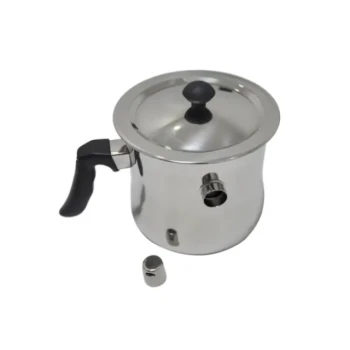
Industrial-grade emulsification equipment is essential for processing botanical oils because these substances are naturally insoluble in water, rendering them ineffective in their raw state. By utilizing high-shear processing, this machinery forces the oil and water to mix, creating a stable oil-in-water emulsion. This transformation is critical for ensuring the active pest-inhibiting compounds can be evenly dispersed and applied effectively.
The core function of this equipment is to convert hydrophobic oils into a stable, penetrating fluid that can reach deep into hive crevices and soil, ensuring the pesticide actually contacts the Small Hive Beetle larvae.
Overcoming the Solubility Barrier
The Nature of Botanical Oils
Botanical oils, such as neem and jatropha, contain powerful active compounds capable of inhibiting pest development. However, these oils are hydrophobic, meaning they naturally repel water and will not mix under normal conditions.
The Limits of Simple Mixing
Without specialized processing, these oils would simply float on top of water or separate rapidly. This separation results in uneven application, where some areas receive too much oil and others receive none, failing to control the pest population.
The Role of High-Shear Processing
Creating Oil-in-Water Emulsions
Industrial-grade equipment utilizes high-shear processing to mechanically break down oil droplets into microscopic sizes. This intense physical force disperses the oil droplets throughout the water phase.
Achieving Formula Stability
The result of this high-shear process is a stable oil-in-water emulsion. Unlike a temporary mixture, this stable state ensures that the active botanical compounds remain suspended and chemically available during application.
Enhancing Pest Control Efficacy
Deep Penetration and Coverage
Small Hive Beetles and their larvae often hide in difficult-to-reach areas, such as beehive crevices, gaps, and the surrounding soil. A stable emulsion has the physical properties required to penetrate these tight spaces rather than sitting on the surface.
Ensuring Larval Inhibition
By ensuring the oil reaches the physical hideouts of the pest, the emulsion maximizes the contact between the active ingredients and the larvae. This thorough coverage is the deciding factor in successfully inhibiting larval development and controlling the infestation.
Understanding the Trade-offs
Equipment Complexity vs. Application Efficacy
While simple stirring is cheaper and easier, it fails to produce the kinetic stability required for these oils to work. The trade-off is that effective biological control requires more sophisticated, energy-intensive machinery to generate the necessary shear force.
The Risk of Separation
If the emulsification process is not performed with sufficient shear, the mixture may destabilize. A destabilized mixture compromises the treatment's ability to penetrate soil and crevices, rendering the botanical oil largely useless against the target pest.
Making the Right Choice for Your Goal
To maximize the effectiveness of botanical oil treatments, consider the following:
- If your primary focus is deep pest eradication: Rely on high-shear emulsions to ensure the treatment penetrates soil and hive gaps where larvae reside.
- If your primary focus is formulation stability: Use industrial-grade processing to prevent oil separation and ensure a uniform dosage across the treated area.
High-shear emulsification turns a raw ingredient into a viable delivery system, bridging the gap between potential chemistry and practical results.
Summary Table:
| Feature | Simple Mixing | Industrial High-Shear Emulsification |
|---|---|---|
| Oil-Water Stability | Temporary, prone to separation | Long-term stable oil-in-water emulsion |
| Droplet Size | Large, uneven droplets | Microscopic, uniform droplets |
| Penetration Power | Surface-level only | Deep penetration into hive crevices & soil |
| Active Delivery | Inconsistent dosage | Uniform application of active compounds |
| Pest Efficacy | Low (fails to reach larvae) | High (inhibits larval development) |
Maximize Your Apiary Productivity with Professional Equipment
At HONESTBEE, we understand that effective pest management requires precision tools. Whether you are a commercial apiary or a distributor, we provide the industrial-grade machinery and beekeeping equipment needed to process high-efficacy treatments and maintain healthy hives.
Our Value to You:
- Comprehensive Wholesale Range: From specialized hive-making and honey-filling machines to essential industry consumables.
- Advanced Processing Solutions: High-performance equipment designed for stable emulsions and efficient honey production.
- Industry Expertise: Tailored hardware and honey-themed cultural merchandise for professional growth.
Ready to upgrade your beekeeping operations or expand your distribution portfolio? Contact us today to explore our full spectrum of tools!
References
- J. T. Ngor, Seyi Ebun Adeboye. The Impact of Aethina tumida Infestation on Apis mellifera Colonies: A Review of Control Measures and Future Prospects. DOI: 10.22161/ijeab.105.15
This article is also based on technical information from HonestBee Knowledge Base .
Related Products
- Fully Automatic Beeswax Embossing Machine Foundation Mill
- Manual Beeswax Flat Sheet Machine for Beeswax Processing
- Economy Manual Beeswax Embossing Mill Wax Foundation Machine Roller
- Electric Beeswax Foundation Machine With Operating Tray and Wax Foundation Roller
- Electric Beeswax Flat Sheet Machine with Operating Tray for Wax Processing
People Also Ask
- What are the advantages of implementing a pulley and belt drive system in beeswax foundation machinery? Master Quality.
- What are the primary technical challenges faced by beeswax foundation production machinery? Tackling Lipophilic Residues
- What is the function of a beeswax foundation machine? Boost Hive Efficiency and Honey Production
- What are the benefits of using a machine to produce beeswax foundation sheets? Achieve Superior Hive Health & Efficiency
- What are the castings of the beeswax foundation machine made of? Precision Engineering for Efficient Beekeeping