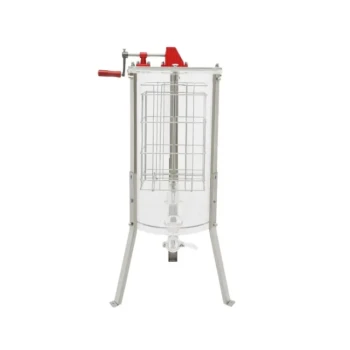
The necessity of industrial-grade stainless steel stems directly from natural honey's inherent acidity, which typically ranges from pH 3.2 to 4.5. This acidic environment aggressively corrodes standard metals, causing them to leach harmful elements like chromium and zinc into the product. Industrial-grade stainless steel provides the chemical resistance required to prevent this contamination, ensuring the honey remains pure and meets international safety standards for export.
Honey is not a passive liquid; it is a chemically active, acidic substance that breaks down inferior materials. Industrial-grade stainless steel is the only viable option to neutralize corrosion risks, preventing heavy metal contamination while ensuring compliance with strict global food safety regulations.
The Hidden Danger of Honey's Acidity
The Acidic Factor
Honey is naturally acidic, with a pH value generally falling between 3.2 and 4.5.
While safe for human consumption, this level of acidity is aggressive toward many materials. It acts as a solvent that can slowly dissolve the surface of containment vessels over time.
The Mechanism of Leaching
When acidic honey contacts non-compliant materials—such as aluminum, galvanized steel, or low-quality alloys—a chemical reaction occurs.
The acid erodes the container walls, triggering the migration of metal ions from the equipment directly into the food product.
Specific Contaminants
This corrosion process releases heavy metal residues that compromise food safety.
Depending on the alloy used, contaminants can include lead, cadmium, aluminum, copper, iron, nickel, and zinc. Once these heavy metals leach into the honey, they cannot be removed.
Why Industrial Stainless Steel is Non-Negotiable
Superior Corrosion Resistance
Industrial grades, specifically 304 and 316 stainless steel, are chemically engineered to withstand acidic environments.
These materials are chemically stable. They prevent the migration of metal ions, ensuring that the honey retains its natural purity without absorbing elements like chromium or zinc.
Ensuring Export Compliance
For large-scale operations, adhering to international food safety standards is critical.
Global markets have strict limits on heavy metal content. Using high-specification stainless steel ensures the honey's physicochemical properties remain within these legal limits, making the product viable for export.
Hygiene and Sanitation
Beyond chemical stability, the physical properties of stainless steel are essential for large-scale processing.
The material offers a smooth surface that facilitates easy cleaning and sterilization. This meets strict hygiene standards and helps maintain the honey's biochemical activity and sensory quality.
Common Pitfalls to Avoid
The False Economy of Lower Grades
It may be tempting to cut costs by using standard carbon steel or lower-grade alloys.
However, the acidic nature of honey will degrade these materials rapidly. This results in pitting and structural failure, leading to expensive equipment replacement and wasted product batches.
Hygroscopic Risks and Sealing
Honey is highly hygroscopic, meaning it rapidly absorbs moisture from the air, which can cause fermentation.
Processing equipment must be capable of forming a perfect seal. Corroded or pitted surfaces on inferior metals compromise these seals, allowing atmospheric moisture to enter and ruin the product's water content levels.
Making the Right Choice for Your Processing Line
To ensure the longevity of your equipment and the safety of your product, you must match the material grade to your operational goals.
- If your primary focus is general processing and storage: Ensure all contact surfaces are at least 304 stainless steel to prevent corrosion and basic metal leaching.
- If your primary focus is high-acid varietals or harsh sterilization: Upgrade to 316 stainless steel, which offers superior resistance to chlorides and acids for maximum durability.
Ultimately, the material of your processing equipment is as critical to the final quality of your honey as the nectar source itself.
Summary Table:
| Feature | Low-Quality Alloys/Metals | Industrial Stainless Steel (304/316) |
|---|---|---|
| Acid Resistance | High risk of corrosion (pH 3.2-4.5) | Excellent chemical stability |
| Food Safety | Leaches heavy metals (Pb, Zn, Cr) | Zero migration of metal ions |
| Durability | Pitting and structural failure | Long-term structural integrity |
| Hygiene | Difficult to sterilize effectively | Smooth surface for easy cleaning |
| Export Readiness | Fails international safety standards | Meets global food safety regulations |
Elevate Your Honey Quality with HONESTBEE
Don't let inferior materials compromise your harvest. HONESTBEE specializes in providing commercial apiaries and distributors with premium, food-grade honey processing solutions. From high-capacity honey-filling machines to durable hive-making equipment and essential consumables, we ensure your operations meet the highest international standards.
Why choose HONESTBEE?
- Wholesale Excellence: Full spectrum of beekeeping tools and industrial machinery.
- Safety Guaranteed: All equipment utilizes industrial-grade stainless steel to prevent contamination.
- Global Support: We cater to the unique needs of large-scale distributors worldwide.
Ready to upgrade your processing line? Contact us today to discover how our expert engineering can protect your brand and boost your productivity.
References
- Abdulwahid Ajibola, Kennedy H. Erlwanger. Nutraceutical values of natural honey and its contribution to human health and wealth. DOI: 10.1186/1743-7075-9-61
This article is also based on technical information from HonestBee Knowledge Base .
Related Products
- Electric Double Wall Honey Filtering Machine Purifier Equipment for Honey Processing Plant
- 0.5T Capacity Honey Dehumidifier Dryer with Vacuum Heating and Thickening Filtering Machine
- Economy Honey Homogenizer Mixer and Melting Machine for Beekeeping
- Double Wall Honey Heating Stirring Homogenizer Mixing Machine with Various Capacity
- Manual Honey Filling Machine Bottling Machine for Honey
People Also Ask
- What is the process of filtering honey? A Guide to Clean, Pure, and Market-Ready Honey
- What types of equipment are used in honey filtering? Build an Efficient System for Pure, Marketable Honey
- What is the overall importance of using the right equipment in honey filtering? Boost Quality & Marketability
- What are the benefits of drying honey filtering equipment after use? Protect Your Honey Quality & Equipment Investment
- What steps are involved in maintaining honey filtering equipment? A Guide to Protecting Your Honey Quality