The Illusion of the Box
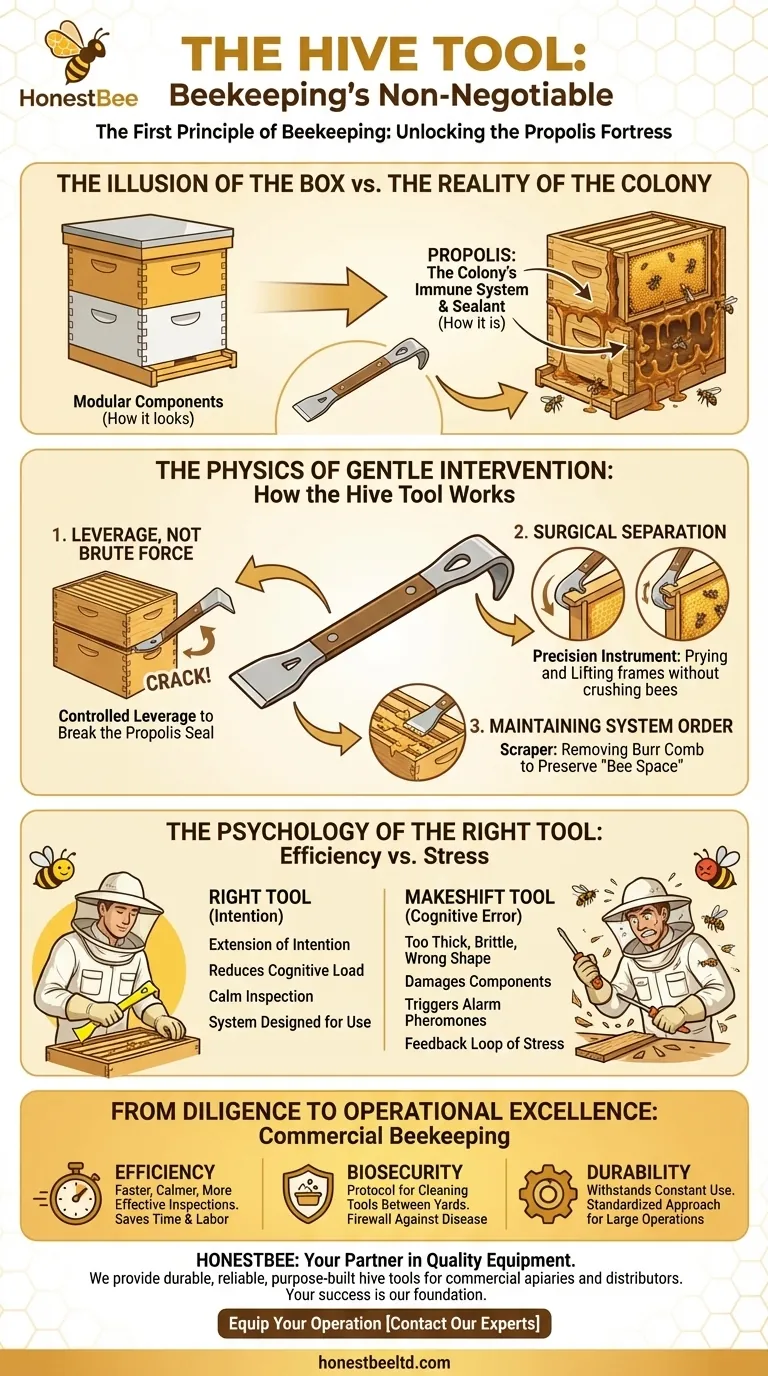
A modern beehive appears to be a simple stack of boxes filled with removable frames. This is an illusion.
To the bees, their home is not a collection of components. It is a single, unified fortress, meticulously sealed from the inside out. Every seam, every crack, every tiny gap is welded shut with a remarkable substance called propolis.
This resinous, anti-microbial glue transforms a beekeeper's modular equipment into a solid, cohesive superorganism. And it presents the first and most fundamental challenge of beekeeping: you cannot simply open the door. You must break the seal.
The Propolis Imperative
Bees are master engineers of environmental control. Propolis is their primary building material for defense and hygiene.
They use it to seal their hive against drafts, moisture, and invaders. It is their immune system made manifest, sterilizing the interior and reinforcing the structure. The colony's survival depends on this hermetic seal.
For the beekeeper, however, this biological imperative creates a physical barrier. The hive lid is not just resting on top; it's glued fast. The frames are not just sitting side-by-side; they are bonded together. Attempting to intervene without the right instrument is like trying to perform surgery with a hammer. It's an act of violence against a delicate system.
The Physics of Gentle Intervention
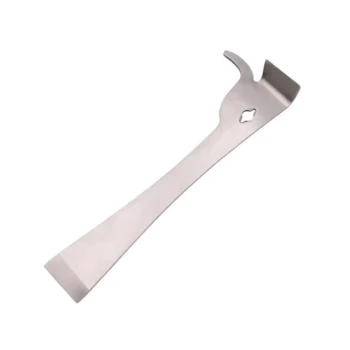
The hive tool is the answer to this paradox. It is a deceptively simple piece of steel designed to apply the right kind of force in the right places, allowing a beekeeper to work with the hive's construction, not against it.
Leverage, Not Brute Force
The first action in any hive inspection is breaking the propolis seal on the lid. A sudden, jarring pull sends shockwaves of panic through the colony.
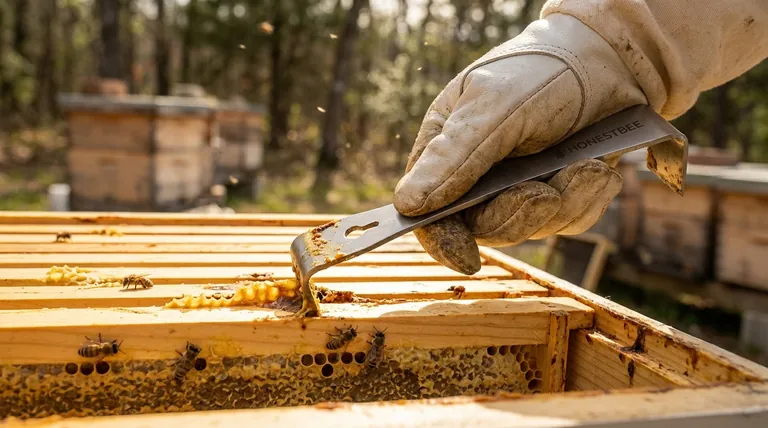
The hive tool acts as a mini crowbar. By inserting its thin, strong edge and applying slow, steady leverage, a beekeeper can pop the seal with a quiet crack. This single, controlled movement is the difference between a calm inspection and a defensive uproar. It's a signal of intent, not an attack.
Surgical Separation
Inside the hive, the challenge continues. Frames are packed tightly, sealed with both propolis and wax. Fingers are useless here.
The hive tool becomes a precision instrument.
- Prying: Its edge is used to gently pry frames apart, creating just enough space to get a grip.
- Lifting: Many tools feature a J-hook, a brilliant piece of design that hooks under the frame's top bar, allowing it to be lifted straight up without crushing bees or damaging the delicate comb.
Maintaining System Order
Propolis and excess burr comb can build up over time, violating the critical "bee space" that allows the colony to function. The flat edge of the hive tool is a scraper, designed to remove this buildup from frames and hive bodies. This isn't just cleaning; it's system maintenance, ensuring the machine's parts continue to fit together as intended.
The Psychology of the Right Tool
It's tempting to grab a screwdriver or a putty knife when a hive tool is misplaced. This is a cognitive error—confusing "available" with "appropriate."
Makeshift tools are almost always too thick, too brittle, or the wrong shape. They damage the wooden hive components, creating splintered entry points for pests and disease. Their clumsy application crushes bees, triggering alarm pheromones that agitate the entire colony. This creates a feedback loop of stress for both the bees and the beekeeper.
The hive tool, by contrast, is an extension of the beekeeper's hand and intention. Its purpose-built design reduces the beekeeper's cognitive load, allowing them to focus on the colony's health, not on struggling with their equipment. This is why experienced keepers paint their tools bright, unnatural colors—it's a simple system designed to counteract the human tendency to lose essential equipment in the grass.
From Diligence to Operational Excellence
For a hobbyist, a single, well-maintained hive tool is a mark of diligence. For a commercial apiary or a beekeeping equipment distributor, it is the bedrock of operational efficiency and biosecurity.
Managing dozens or hundreds of colonies requires a standardized, reliable approach.
- Efficiency: The right tool allows for faster, calmer, and more effective inspections, saving immense amounts of time and labor across an operation.
- Biosecurity: A systemic protocol for cleaning hive tools between yards (e.g., with a washing soda solution) is a critical firewall against the spread of diseases like American Foulbrood.
- Durability: Commercial work demands tools that can withstand constant use.
At this scale, the quality and availability of fundamental equipment are non-negotiable. As a wholesale supplier dedicated to commercial apiaries and distributors, HONESTBEE provides the durable, reliable, and purpose-built hive tools that professional operations depend on. We understand that your success is built on a foundation of quality equipment.
The humble hive tool is more than a piece of metal. It is the key that unlocks the hive, the primary interface between the beekeeper and the colony. It represents a commitment to respectful, effective, and sustainable beekeeping. Equip your operation with the tools designed for the task. Contact Our Experts
Visual Guide
Related Products
- HONESTBEE Professional Long Handled Hive Tool with Precision Cutting Blade
- Professional Multi-Function Stainless Steel Hive Tool
- HONESTBEE Premium Italian Style Hive Tool with Hardwood Handle
- Ergonomic Plastic Frame Spacer Tool for Rapid Hive Management Beekeeping
- Professional Grade Foldable Beehive Handles
Related Articles
- Force and Finesse: The Hive Tool as the Beekeeper's Critical Interface
- The Essential Guide to Hive Tools in Modern Beekeeping
- The Apiary as a System: Why Your Hive Tool is More Than Just Steel
- How to Choose Hive Tools That Match Your Beekeeping Workflow
- The Beekeeper's Scalpel: How a Simple Hive Tool Governs Apiary Health