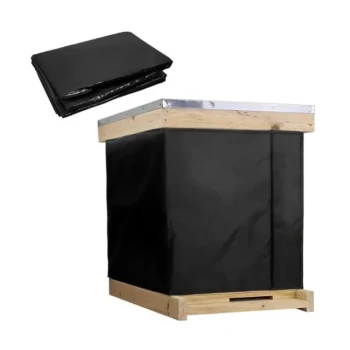
Effective winter hive management requires prioritizing moisture control just as highly as heat retention. To balance these competing needs, you must incorporate specific ventilation methods—such as upper entranceways or moisture-quilt boxes—alongside your insulation, ensuring that warm, moist air can escape vertically before it condenses into deadly liquid water.
The core objective of winterizing is to prevent the hive from becoming a "moisture trap" while still buffering the colony against the cold. By creating a pathway for upward airflow, you remove the humidity generated by the bees without stripping away the essential heat cluster they work so hard to maintain.
The Physics of Winter Airflow
Understanding Natural Convection
Heat naturally rises within the hive structure. As the bees consume honey to generate warmth, they also produce moisture as a metabolic byproduct.
This warm, humid air moves upward toward the top of the hive. If this air has nowhere to go, it will eventually hit a cold surface and condense.
The Danger of the Moisture Trap
The primary reference highlights the risk of turning a hive into a moisture trap. When insulation is applied without accounting for airflow, the hive becomes too sealed.
The rising moisture accumulates at the top, freezes, and eventually drips back down onto the cluster. This combination of cold and wet is far more dangerous to bees than cold alone.
Practical Methods for Balance
Utilizing Upper Entranceways
An upper entrance serves as a crucial exhaust port for the hive. It takes advantage of the natural chimney effect.
By placing an opening near the top, you allow the rising column of moist air to exit the hive. This maintains a drier internal environment while preserving the bulk of the heat lower down in the hive where the bees are clustered.
Installing Moisture-Quilt Boxes
Moisture-quilt boxes offer a dual-purpose solution recommended for maintaining this balance. Placed at the top of the stack, they contain absorbent material (like wood shavings).
These boxes insulate the top of the hive to prevent heat loss while simultaneously absorbing the moisture rising from the cluster. This allows for necessary ventilation without creating a direct draft on the bees.
Common Pitfalls to Avoid
Over-Sealing the Hive
A common mistake is assuming that "warmer is better" and sealing every crack with insulation.
According to the reference, blocking all airflow creates the moisture trap mentioned earlier. You must leave a designated path for air exchange to ensure the hive remains dry.
Ignoring Upward Airflow Dynamics
Ventilation placed solely at the bottom is often insufficient for winter moisture control.
Because warm air rises, bottom vents do not effectively remove the humidity gathering at the top bars. You must focus on strategies that facilitate upward airflow to guide exhaust out of the hive.
Making the Right Choice for Your Goal
Balancing insulation and ventilation depends on your specific environmental conditions, but the principles remain constant.
- If your primary focus is preventing condensation: Prioritize the installation of moisture-quilt boxes or absorbent top layers to catch rising dampness.
- If your primary focus is air exchange: Ensure you have an upper entranceway open to allow the natural chimney effect to vent stale air.
By aligning your strategy with the physics of upward airflow, you create a dry, thermally stable environment where your colony can thrive.
Summary Table:
| Feature | Purpose in Winter Management | Key Benefit |
|---|---|---|
| Upper Entrance | Facilitates the "chimney effect" for air exhaust | Prevents moisture buildup at the top bars |
| Moisture-Quilt Box | Absorbs rising metabolic humidity | Insulates while keeping the cluster dry |
| Insulation Layers | Buffers the colony against external cold | Reduces the energy required for thermoregulation |
| Upward Airflow | Directs warm, moist air out of the hive | Prevents cold water from dripping on the bees |
Secure Your Apiary's Winter Survival with HONESTBEE
Protecting your colony from the winter "moisture trap" requires the right tools and professional-grade equipment. At HONESTBEE, we specialize in supporting commercial apiaries and distributors with high-quality beekeeping machinery and essential hardware designed for durability and hive health.
Whether you are looking for specialized hive-making machines to produce precision-vented boxes or need a reliable wholesale supplier for industry consumables, our comprehensive portfolio has you covered. From honey-filling machines to honey-themed cultural merchandise, we deliver the value your business needs to grow.
Ready to scale your beekeeping operations? Contact us today to explore our wholesale solutions!
Related Products
- Professional Insulated Winter Hive Wrap for Beekeeping
- Professional Insulated Plastic Bee Hives
- Wholesales Dadant Size Wooden Bee Hives for Beekeeping
- HONESTBEE Premium Italian Style Hive Tool with Hardwood Handle
- Premium Comfort Grip Spring-Loaded Hive Handles
People Also Ask
- What are the steps to properly wrap a beehive for winter? Ensure Your Colony Survives the Cold
- When is the best time to wrap a beehive for winter? A Guide to Perfect Winterization Timing
- How do professional insulation wraps provide protection for bee colonies? Optimize Winter Survival & Energy Efficiency
- What are the technical benefits of using winter wraps for beehive insulation? Boost Colony Survival & Hive Health
- What are the benefits of using insulated covers for hives? Ensure Colony Survival and Health