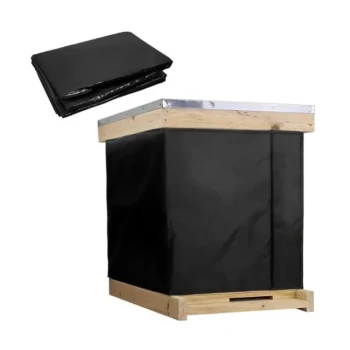
Effective winter management relies on a dual strategy of climate control and physical barriers. To protect colonies, you must balance adequate insulation with proper ventilation to prevent condensation, while simultaneously reducing hive entrances to block intruders like mice before cold weather sets in.
The Core Insight: Cold rarely kills honeybees, but wet cold does. The primary goal of winter preparation is to create an environment that remains dry through ventilation and insulation, while physically securing the hive against pests that seek warmth.
Managing Moisture: The Silent Killer
Moisture accumulation is often more dangerous to a colony than low temperatures. When bees consume honey to generate heat, they exhale water vapor. If this moisture is trapped, it condenses and freezes, potentially destroying the colony.
Prioritize Proper Ventilation
You must ensure airflow is sufficient to carry moist air out of the hive. Without a release point, the metabolic moisture generated by the cluster will accumulate on cold surfaces.
Use Insulation to Prevent Condensation
Insulation does more than retain heat; it prevents the hive walls and inner cover from becoming cold enough for water to condense. By keeping the interior surfaces warm, you reduce the risk of "raining" cold water back onto the bee cluster.
Minimize Internal Dead Space
Reducing the extra space inside the hive helps the bees maintain their thermal environment more efficiently. By removing unnecessary supers or using follower boards, you allow the colony to heat a smaller volume of air, which stabilizes internal humidity and temperature.
Managing Pests: Physical and Parasitic
Winter hives are attractive targets for pests seeking shelter and warmth. Additionally, parasitic threats must be neutralized before the colony enters dormancy.
Install Entrance Reducers
Mice look for warm, dry places to nest during winter and can destroy combs and disturb the cluster. You must reduce the hive entrance before the onset of cold weather to a size that allows bee traffic but physically blocks rodents.
Address Varroa Mites Early
While physical pests like mice are a threat, Varroa mites weaken the colony's ability to overwinter. Inspect and treat colonies immediately after the late summer honey harvest.
Use Non-Invasive Treatments
In deep winter, opening the hive can be fatal due to heat loss. A professional-grade oxalic acid sublimator is recommended for mid-winter mite control, as it converts treatment into a vapor that penetrates the cluster without requiring you to open the brood box.
Understanding the Trade-offs
Beekeeping often involves balancing opposing forces. It is critical to understand the risks involved in your winter preparations.
Ventilation vs. Heat Retention
There is a delicate balance between too much airflow and too little. Excessive ventilation can draft out all the heat the bees work hard to generate, while too much insulation without airflow creates a damp mold box.
Disturbance vs. Assessment
While it is important to monitor food stores, opening a hive in sub-50°F temperatures breaks the propolis seal and releases critical heat. Rely on the "lift test" (tilting the hive to gauge weight) rather than visual inspection to check honey reserves without exposing the bees to the cold.
Making the Right Choice for Your Goal
Winter success depends on preparation done in the fall.
- If your primary focus is Moisture Control: Prioritize upper ventilation and insulate the top cover to prevent condensation from dripping onto the cluster.
- If your primary focus is Pest Prevention: Install mouse guards or entrance reducers immediately after the first frost or when foraging slows.
- If your primary focus is Colony Health: Use a lift test to ensure the hive weighs between 130–150 pounds and apply oxalic acid vapor if mite levels persist.
A dry, undisturbed hive with a defended entrance is the surest way to see your colony fly in the spring.
Summary Table:
| Protection Category | Key Strategy | Primary Benefit |
|---|---|---|
| Moisture Management | Upper Ventilation & Insulation | Prevents condensation and "wet cold" from killing the cluster. |
| Pest Control | Entrance Reducers & Mouse Guards | Physically blocks rodents from nesting and destroying honeycomb. |
| Parasite Control | Oxalic Acid Sublimation | Neutralizes Varroa mites in winter without opening the brood box. |
| Health Monitoring | "Lift Test" (Tilting Hive) | Assesses honey stores without breaking the thermal propolis seal. |
Secure Your Apiary’s Future with HONESTBEE
Winterizing large-scale apiaries requires precision and the right tools. At HONESTBEE, we specialize in supporting commercial apiaries and distributors with high-performance beekeeping machinery and essential supplies.
Whether you need specialized hive-making machines to build insulated structures, honey-filling equipment for your harvest, or professional-grade oxalic acid sublimators for winter mite control, we provide the full spectrum of hardware and consumables to ensure your business thrives.
Maximize your colony survival rates and operational efficiency—Contact HONESTBEE today for wholesale solutions!
Related Products
- Professional Insulated Winter Hive Wrap for Beekeeping
- Beekeeping Jacket with Hood and Veil for Beekeepers
- White Cotton Beekeeping Jacket and Veil for Bee Keepers
- Vented Beekeeping Jacket with Hood and Veil for Beekeepers
- Premium Cotton Beekeeper Suit with Reinforced Fencing Veil
People Also Ask
- What are the steps to properly wrap a beehive for winter? Ensure Your Colony Survives the Cold
- When is the best time to wrap a beehive for winter? A Guide to Perfect Winterization Timing
- How do professional insulation wraps provide protection for bee colonies? Optimize Winter Survival & Energy Efficiency
- What are the technical benefits of using winter wraps for beehive insulation? Boost Colony Survival & Hive Health
- What are the benefits of using insulated covers for hives? Ensure Colony Survival and Health