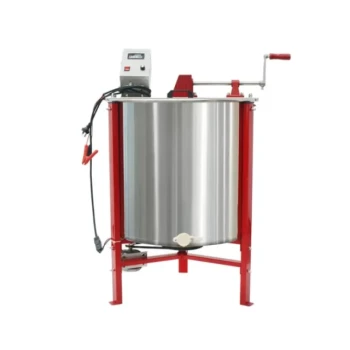
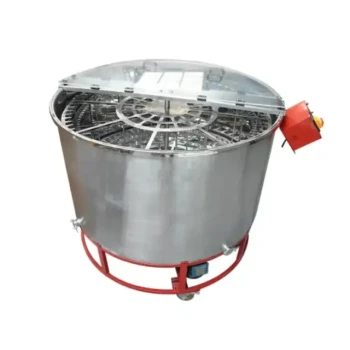
The machinery you select for honey processing does far more than automate labor; it fundamentally dictates the physical form, purity, and chemical integrity of the final product. Centrifugal extractors maximize yield and purity by preserving the honeycomb structure, while precision filter presses determine the visual clarity and commercial grade of the honey, all while temperature regulation systems work to preserve sensitive bioactive ingredients.
Core Takeaway Modern honey processing is a balance between physical refinement and chemical preservation. The right equipment removes impurities and stabilizes the product for storage, but its most critical function is maintaining the levels of vitamins, phenols, and flavonoids that give mono-floral honey its unique value.
The Mechanics of Extraction
Centrifugal Force and Purity
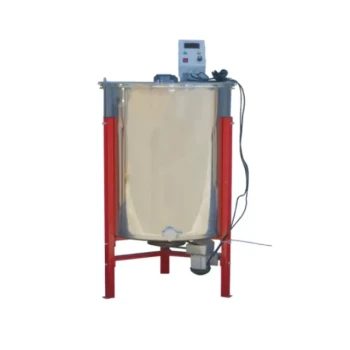
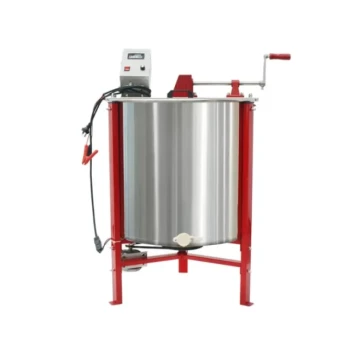
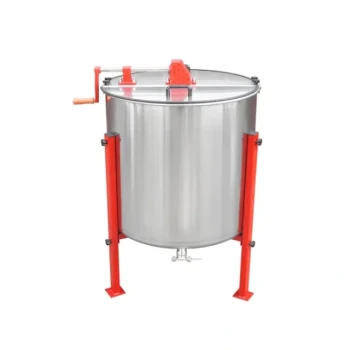
Industrial centrifugal extractors operate by spinning frames at high speeds, using centrifugal force to expel honey from the cells.
This mechanical separation allows for the rapid removal of honey without the need for crushing or destructive heating. The result is a cleaner initial harvest with fewer physical contaminants that would otherwise require aggressive downstream filtration.
Preserving the Honeycomb Structure
A critical advantage of centrifugal extraction is the preservation of the honeycomb integrity.
Because the comb structure remains undamaged, it can be immediately returned to the hive for reuse. This significantly improves production efficiency, as bees expend less energy rebuilding wax and more energy collecting nectar, directly boosting the next cycle's yield.
Refining Clarity and Value
The Role of Filter Presses
Once extracted, honey often contains wax debris, larval fragments, and other hive impurities.
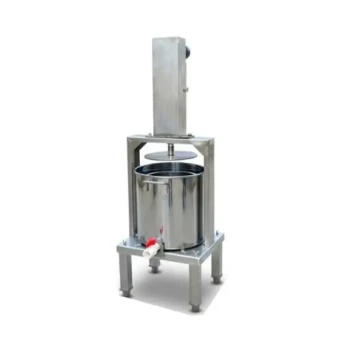
Specialized filter presses and settling tanks employ physical clarification processes to remove these particulates. This equipment is essential for achieving the high degree of transparency and purity expected in the commercial market.
Elevating Market Grade
The clarity achieved through filtration directly impacts the grading evaluation and financial value of the product.
By removing visible impurities, producers can meet stricter food safety standards and command a higher selling price. This physical refinement provides the "guarantee of purity" that drives consumer trust and purchase decisions.
Preserving Bioactive Integrity
Retaining Active Ingredients
The deepest value of honey lies in its bioactive components, specifically vitamins, phenols, and flavonoids.
Primary processing sources indicate that specialized machinery is designed to maximize the retention of these ingredients unique to mono-floral honey. Unlike rudimentary methods, modern equipment ensures that the health benefits associated with the product remain intact during the transition from hive to bottle.
Temperature and Mechanical Control
The preservation of these compounds is achieved through precise mechanical control and temperature regulation.
Advanced processing units, including automatic filling machines, manage viscosity and flow without subjecting the honey to thermal degradation. This ensures that the chemical profile remains stable and the nutrient density is not compromised during bottling.
Understanding the Trade-offs
The Risk of Over-Processing
While filtration improves clarity, aggressive processing can inadvertently strip honey of its unique character.
There is a delicate balance between removing impurities and filtering out pollen grains that verify the honey's floral origin. Over-filtration can result in a generic product that lacks the specific sensory characteristics defined by local nectar sources.
Moisture Reduction vs. Aroma Loss
Processing equipment often utilizes heat to dehydrate honey, reducing moisture content to prevent fermentation and improve storage stability.
However, if temperature controls are not precise, volatile aromatic compounds can be lost. Producers must carefully calibrate their equipment to stabilize the honey physically without degrading the volatile chemicals that provide its distinct flavor and aroma.
Making the Right Choice for Your Goal
To select the right processing setup, you must align your equipment with your specific production objectives.
- If your primary focus is Commercial Scale and Stability: Prioritize robust filtration and dehydration systems to ensure high clarity, consistent moisture content, and long shelf life.
- If your primary focus is Boutique or Raw Quality: Prioritize centrifugal extractors and low-temperature filling systems to maximize the retention of phenols, flavonoids, and volatile aromatics.
- If your primary focus is Operational Efficiency: Focus on centrifugal extractors that preserve comb integrity, reducing the biological load on your bees and speeding up hive turnover.
True quality control is achieved not just by harvesting honey, but by managing the physics of its extraction to protect its chemistry.
Summary Table:
| Equipment Type | Primary Impact on Quality | Key Benefit |
|---|---|---|
| Centrifugal Extractor | Maintains purity and honey chemistry | Preserves honeycomb structure for hive reuse |
| Filter Press | Enhances visual clarity and market grade | Removes wax debris and hive impurities |
| Thermal Control Systems | Protects bioactive compounds | Prevents degradation of vitamins and phenols |
| Dehydration Units | Adjusts moisture content | Prevents fermentation and extends shelf life |
Elevate Your Honey Production with HONESTBEE
At HONESTBEE, we specialize in empowering commercial apiaries and distributors with the precision machinery needed to maintain the delicate balance between honey purity and chemical integrity. From high-efficiency centrifugal extractors that preserve your combs to advanced filter presses and honey-filling machines that ensure market-leading clarity, our comprehensive wholesale portfolio is designed for your success.
Our value to you:
- Complete Solutions: We supply the full spectrum of beekeeping tools, specialized hardware, and essential industry consumables.
- Industrial Power: Our machinery is built for scale, helping you maximize yield while protecting sensitive bioactive ingredients.
- Market Versatility: Whether you focus on bulk commercial supply or boutique raw honey, we provide the tools to meet your specific quality standards.
Ready to upgrade your processing line and boost your product's market value? Contact HONESTBEE today to explore our wholesale offerings!
References
- Mária Babošová. Quality and Composition of Rapeseed and Sunflower Honey Originating from the Territory of the Slovak Republic. DOI: 10.15414/afz.2025.28.02.171-177
This article is also based on technical information from HonestBee Knowledge Base .
Related Products
- electric honey extractor honey centrifuge 3 frame honey extractor stainless steel honey frame extractor
- Stainless Steel Jack Type Honey Comb Press Machine Wax and Honey Separator
- 10L Stainless Steel Electric Honey Press Machine
- Stainless Steel Manual Honey Press with Guard for Pressing Honey and Wax
- Manual Hand Crank 4 Frame Honey Extractor Centrifuge for Beekeeping
People Also Ask
- What are the characteristics of electric honey extractors? Boost Your Apiary Efficiency with Automated Technology
- What are the disadvantages of using an electric honey extractor? Weighing Cost, Power, and Comb Safety
- What are the advantages of an electric honey extractor? Boost Efficiency and Scale Your Honey Production
- What are the technical advantages of electric honey extractors? Maximize Yield and Protect Your Bee Colony
- How does an electric honey extractor affect the quality of honey? Preserve Flavor & Purity with Precision Extraction