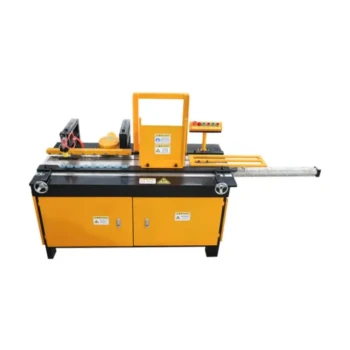
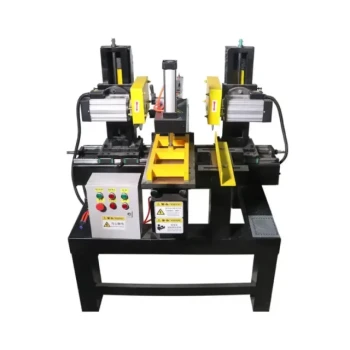
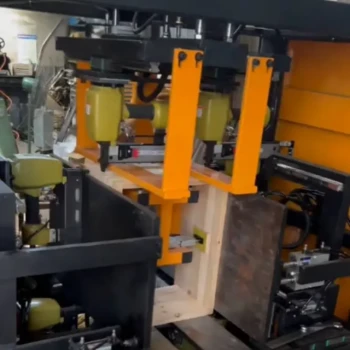
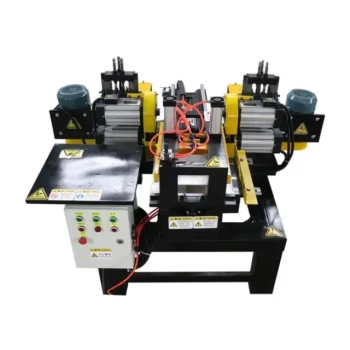
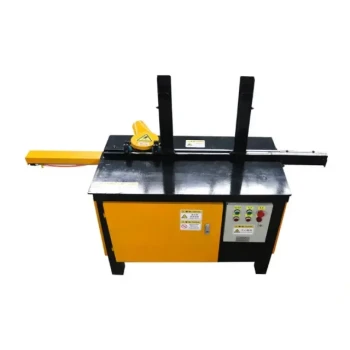
Specialized machinery drives global honey yields by industrializing two critical phases: housing construction and harvest efficiency. Hive-making machines ensure the precise standardization required for colony health and automation compatibility, while advanced extraction equipment utilizes centrifugal force to harvest honey without destroying the comb, allowing bees to immediately focus on refilling stores rather than rebuilding wax.
The Core Insight High honey yields are not just about the number of bees, but about energy management. By using standardized hives and non-destructive extraction methods, apiarists convert the bees' biological energy from "infrastructure building" (wax secretion) to "resource gathering" (nectar collection), significantly boosting total output.
The Foundation: Hive-Making Machinery
Standardization is the prerequisite for scalability. Hive-making machines do not just build boxes; they create a uniform ecosystem that supports modern management practices.
Enforcing Structural Standardization
Manual hive construction often leads to slight variations in dimensions. Specialized hive-making machines guarantee that every brood box and frame meets exact specifications. This uniformity is essential for the seamless operation of downstream automation, such as uncapping and extraction lines.
Improving Colony Health and Survival
Precision-manufactured hives provide an optimal physical environment for the colony. Tighter tolerances improve insulation and ventilation, which directly influences overwintering survival rates. A colony that survives the winter in strong condition is ready to forage immediately when the season begins, maximizing the production window.
Facilitating Rapid Expansion
The use of uniform frame specifications reduces the friction and cost associated with expanding an apiary. When equipment is interchangeable, beekeepers can manage more colonies with less effort. This scalability allows operations to grow quickly to meet global demand without sacrificing management quality.
The Accelerator: Extraction and Filtration Technology
Once the hives are productive, the focus shifts to harvesting. Advanced extraction equipment changes the harvest from a destructive process into a renewable cycle.
Preserving Energy via Centrifugal Force
Professional extraction machines use centrifugal force to spin honey out of the frames rather than crushing them. This preserves the structural integrity of the honeycomb. Because bees consume significant amounts of energy (honey/nectar) to secrete wax and rebuild combs, preserving existing combs allows that energy to be directed solely toward honey production.
Shortening the Production Cycle
By keeping the comb intact, machinery significantly shortens the turnaround time between harvests. Bees can immediately begin refilling the empty combs returned to the hive. This efficiency often allows for multiple extractions in a single season, exponentially increasing the total yield per hive.
Stimulating Foraging Motivation
Bees have a biological drive to fill available space; a full hive leads to "idleness." Rapid, high-volume extraction clears storage space quickly. This release of space triggers the colony's foraging instinct, maintaining high activity levels and preventing production plateaus.
Maximizing Saleable Yield
Raw yield means nothing if the product is contaminated. Modern filtration equipment uses closed-loop mechanical systems to remove impurities without the hygiene risks of manual pressing. This ensures that a higher percentage of the harvested honey meets strict international food safety standards, effectively increasing the volume of market-ready product.
Understanding the Trade-offs
While mechanization boosts volume, it introduces new variables that must be managed to ensure long-term sustainability.
The Risk of Disease Transmission
Standardization allows frames to be swapped easily between hives, which improves efficiency but creates a vector for disease. If a hive-making machine produces thousands of compatible frames, a single infected comb moved during extraction can spread pathogens rapidly across an apiary. Rigorous hygiene protocols are mandatory.
Capital Intensity vs. Operational Flexibility
High-volume extraction lines require significant upfront capital and continuous maintenance. For smaller operations, the cost of this machinery may not result in a positive Return on Investment (ROI) compared to manual methods. Furthermore, heavily automated systems are less adaptable to small, irregular batches of varietal honeys.
Making the Right Choice for Your Operation
To leverage these technologies effectively, align your equipment choices with your specific production goals.
- If your primary focus is Volume Maximization: Prioritize centrifugal extraction lines that preserve drawn comb, as this directly reduces the metabolic tax on bees and shortens harvest intervals.
- If your primary focus is Operational Scalability: Invest in hive-making machinery or pre-standardized equipment to ensure all components are interchangeable, reducing labor costs during inspection and harvest.
- If your primary focus is Market Access: Ensure your processing line includes automated filtration and filling, as this closed-loop hygiene is often the deciding factor for passing international export standards.
Ultimately, machinery contributes to global yields not by replacing the bees, but by removing the physical and biological barriers that slow them down.
Summary Table:
| Technology Type | Key Function | Impact on Honey Yield |
|---|---|---|
| Hive-Making Machines | Precise structural standardization | Improves colony survival and enables large-scale automation. |
| Centrifugal Extractors | Non-destructive honey removal | Preserves wax combs, allowing bees to focus on nectar gathering. |
| Filtration Systems | Closed-loop impurity removal | Increases the percentage of market-ready, export-grade honey. |
| Automated Filling | High-speed processing | Reduces labor costs and minimizes product waste during packaging. |
Scale Your Honey Production with HONESTBEE
At HONESTBEE, we empower commercial apiaries and distributors with the high-performance tools needed to dominate the global market. Our comprehensive wholesale catalog includes:
- Precision Machinery: Hive-making and honey-filling machines designed for seamless automation.
- Advanced Equipment: High-capacity centrifugal extractors and filtration systems that maximize output while maintaining honey quality.
- Complete Supplies: A full spectrum of beekeeping tools and essential industry consumables.
Ready to eliminate production bottlenecks and enhance your operation's efficiency? Contact us today to discuss your wholesale equipment needs and see how our industrial solutions can drive your success.
References
- Bernard J. Phiri, Arata Hidano. Uptrend in global managed honey bee colonies and production based on a six-decade viewpoint, 1961–2017. DOI: 10.1038/s41598-022-25290-3
This article is also based on technical information from HonestBee Knowledge Base .
Related Products
- High-Efficiency Pneumatic Bee Hive Making Machine for Rapid Box Assembly
- Mini Desktop Bee Hive Frame Forming Making Machine
- Beehive Handle and Frame Rest Cutting Machine: Your Specialized Hive Machine
- Beehive Machine Double End Saw for Precision Hive Component Manufacturing
- Automatic High-Speed Bee Hive Box Stapling Machine
People Also Ask
- How does the introduction of professional beehive-making machinery benefit sustainable beekeeping? Scale Your Apiary
- Why is specialized beehive-making machinery critical for low-defense breeding? Enhance Selection with Precision Tools
- How does the introduction of specialized beehive making machinery contribute to increasing the scale of regional beekeeping industries?
- What is the importance of specialized beehive making machinery in a circular bio-economy? Build Local Sustainability
- Why is specialized beehive-making machinery essential? Scale Your Apiary with Precision Industrial Standards