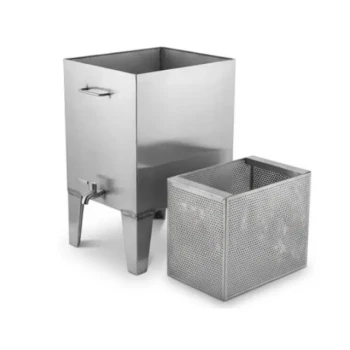
The primary distinction lies in the capability to separate inorganic soil from organic resin. While standard propolis processing focuses on separating wax from resin, Geopropolis equipment requires specialized mechanisms to handle abrasive minerals and soil components without degrading sensitive chemical compounds.
Core Takeaway Geopropolis is not just resin; it is a complex matrix of plant material and earth. Successful processing requires equipment capable of "grading" and high-efficiency filtration to remove this soil content while preserving unique bioactives like triterpenoids and saponins.
The Composition Challenge
Understanding the Material Difference
Standard propolis is primarily a mixture of plant resins and beeswax. It is sticky but generally free of heavy inorganic particulate.
The Geopropolis Complexity
Geopropolis, created by stingless bees, incorporates soil, clay, and minerals into the resin matrix. This results in a product with a significantly higher mineral content and a more complex physical structure.
The Equipment Implication
Machinery designed for standard propolis often lacks the durability or precision to handle this grit. Processing Geopropolis requires equipment that can withstand abrasion and effectively separate dense inorganic matter from lighter organic compounds.
Critical Equipment Features
Specialized Grading Functions
Standard filtration is often a single-step process of straining solids from liquids. Geopropolis requires specialized grading functions.
Separating the Inorganic
This equipment must distinguish between the "good" solids (waxes, resins) and the "bad" solids (soil, minerals). Simple mesh filters are often insufficient, as they may either clog with mud or allow fine silt to pass through into the final product.
High-Efficiency Filtration
To achieve a pure extract, the filtration system must be high-efficiency. It must be capable of capturing fine inorganic soil components that would otherwise contaminate the final extract's texture and purity.
Preserving Bioactive Integrity
Sensitive Chemical Compounds
Geopropolis contains distinct bioactive components, specifically triterpenoids and saponins. These compounds are chemically different from the flavonoids typically prioritized in standard propolis.
The Gentle Processing Requirement
The challenge is removing the soil without using harsh methods that destroy these compounds. The equipment must balance aggressive filtration (to remove dirt) with gentle handling to ensure these sensitive bioactives remain intact.
Understanding the Trade-offs
Complexity vs. Cost
Implementing high-efficiency filtration and grading systems significantly increases initial equipment costs compared to standard propolis setups.
Maintenance Requirements
The abrasive nature of the soil and minerals in Geopropolis accelerates wear and tear on machinery. Operators must anticipate more frequent maintenance intervals and potential part replacements compared to processing standard, non-abrasive propolis.
Process Speed
Achieving high purity with Geopropolis often requires a slower, more multi-stage filtration process. Attempting to rush this grading process usually results in a product contaminated with fine grit or low bioactive yields.
Making the Right Choice for Your Goal
To ensure you select the correct processing line, evaluate your specific end-product requirements:
- If your primary focus is Purity and Texture: Prioritize equipment with multi-stage high-efficiency filtration to ensure zero soil grit remains in the final product.
- If your primary focus is Bioactive Potency: Select equipment explicitly designed to preserve triterpenoids and saponins, avoiding systems that generate excessive heat or shear force.
- If your primary focus is Equipment Longevity: Invest in machinery featuring hardened components designed to resist the abrasive wear caused by high mineral content.
The success of Geopropolis processing depends entirely on your ability to mechanically remove the earth without chemically removing the medicine.
Summary Table:
| Feature | Standard Propolis Processing | Geopropolis Processing |
|---|---|---|
| Primary Goal | Separate wax from resin | Separate inorganic soil/minerals from resin |
| Key Components | Standard mesh filters | Specialized grading & high-efficiency filtration |
| Material Durability | Standard food-grade stainless | Hardened components to resist abrasive minerals |
| Target Bioactives | Flavonoids & Phenolics | Triterpenoids & Saponins |
| Process Complexity | Lower; simpler filtration | Higher; multi-stage separation required |
Maximize Your Extract Purity with HONESTBEE
Transitioning from standard propolis to Geopropolis requires the right technical partner. At HONESTBEE, we specialize in providing commercial apiaries and distributors with advanced beekeeping machinery and tools designed to handle the toughest processing challenges. Whether you need high-efficiency filtration systems to remove inorganic silt or specialized hardware to preserve delicate triterpenoids, our comprehensive wholesale portfolio has you covered.
From honey-filling machines to specialized processing lines, we help you deliver premium results to your customers. Contact our expert team today to discuss your equipment needs and see how we can optimize your production efficiency!
References
- Perez Rojas Jazmin M. Advances in Chemical Composition and Biological Activity of Mexican Propolis. DOI: 10.32474/lojpcr.2020.02.000137
This article is also based on technical information from HonestBee Knowledge Base .
Related Products
- Manual Beeswax Flat Sheet Machine for Beeswax Processing
- Electric Beeswax Flat Sheet Machine with Operating Tray for Wax Processing
- Steam Beeswax Melter Wax Warmer for Wax Processing
- Professional Honey Filter with Tripod Support Stand
- Fully Automatic Beeswax Embossing Machine Foundation Mill
People Also Ask
- What is the primary function of the double-roller extrusion system? Master Precision Beeswax Foundation Production
- How do cultural merchandise processing machines contribute to the economic value chain? Boosting Apiary Profitability
- What are some practical tips for managing equipment and workspace when processing beeswax? Essential Studio Setup Tips
- How do specialized beeswax processing machines maximize the value of beekeeping by-products? Boost Your Apiary's ROI
- What role does beeswax processing equipment play in development of by-products? Turn Apiary Waste into High-Value Profit