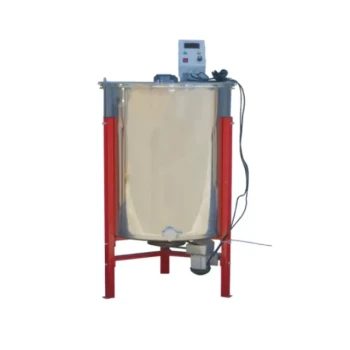
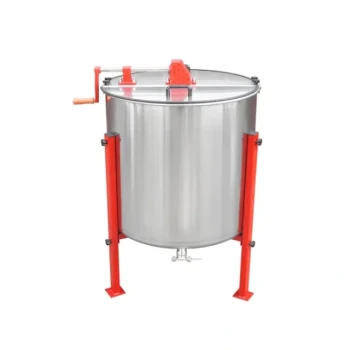
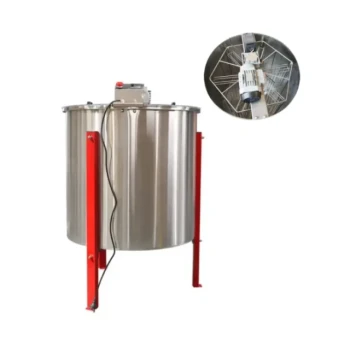
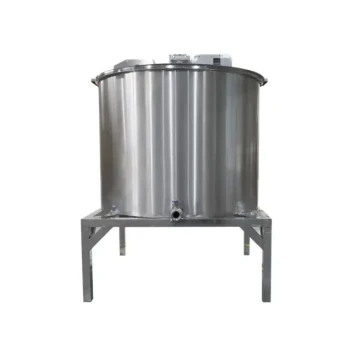
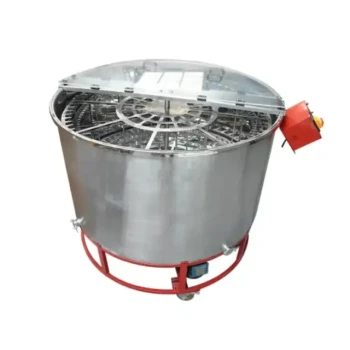
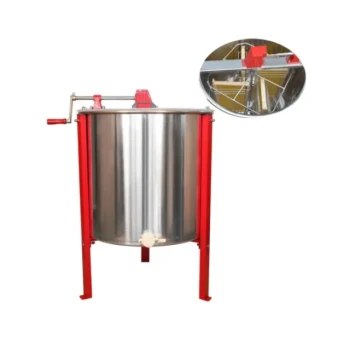
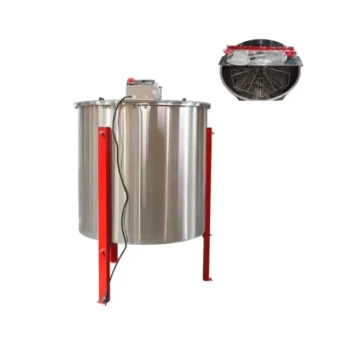
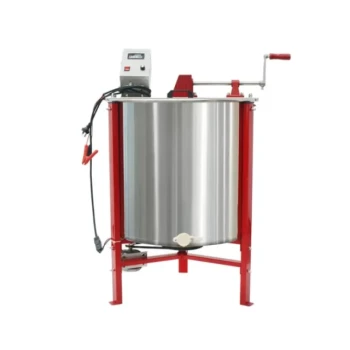
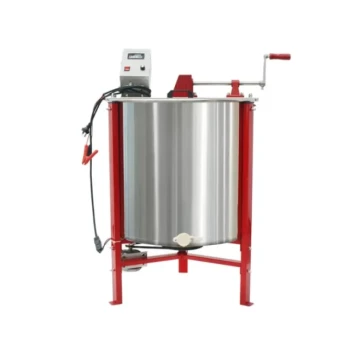
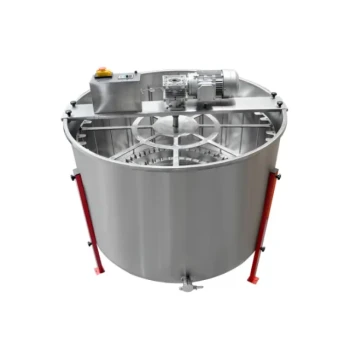
A centrifugal Honey Extractor optimizes production efficiency by harnessing high-speed rotation to separate honey from the honeycomb while leaving the wax structure completely intact. This mechanical preservation allows the empty combs to be immediately returned to the hive, bypassing the time-consuming and energy-intensive process of natural comb rebuilding.
Core Insight: The true efficiency of a centrifugal extractor is biological, not just mechanical. By preserving the wax comb, you prevent the bee colony from consuming 8 to 10 kilograms of honey just to produce a single kilogram of wax, thereby maximizing the harvestable yield.
The Mechanics of Extraction
The fundamental value of the centrifugal extractor lies in its ability to harvest without destruction. Unlike crushing methods, this machine balances force and structural integrity.
Utilizing Centrifugal Force
The extractor spins the honey frames at high speeds. This generates sufficient force to pull the viscous honey out of the cells and onto the walls of the tank, where it drains for collection.
Preserving Structural Integrity
Because the frames are spun rather than crushed, the delicate wax cells remain undamaged. This is the critical differentiator from traditional harvesting methods that require the destruction of the nest to access the honey.
The Biological Efficiency Multiplier
The most significant gain in production efficiency occurs after the extraction process, when the frames are returned to the hive.
Eliminating the "Wax Tax"
Beeswax production is metabolically expensive for a colony. According to the primary data, bees must consume between 8 to 10 kilograms of honey to secrete enough wax to build just 1 kilogram of comb.
Redirecting Colony Energy
When an extractor is used, the bees receive "ready-to-fill" storage. This eliminates the need for reconstruction, allowing the colony to redirect its energy from secretion and construction back to nectar and pollen collection.
Shortening the Production Cycle
By removing the construction phase, the turnaround time for a hive to refill its stores is drastically reduced. This allows for increased harvest frequency within a single flowering season.
Understanding the Trade-offs
While centrifugal extractors offer superior efficiency, they require precise operation to realize these benefits.
Risk of Comb "Blowout"
If the rotational speed is too high, particularly with new or soft wax, the centrifugal force can tear the comb apart. This negates the primary benefit of the machine, as the bees will still have to rebuild the destroyed sections.
Maintenance and Hygiene
Mechanized extraction introduces equipment that must be meticulously cleaned to prevent the spread of disease between hives. The efficiency of the harvest can be compromised if the equipment becomes a vector for contamination.
Making the Right Choice for Your Goal
To fully leverage a centrifugal extractor, align your operational procedures with your specific production targets.
- If your primary focus is maximizing volume: Prioritize the careful handling of frames during spinning to ensure zero damage to the wax, preventing the 8:1 honey-to-wax loss ratio.
- If your primary focus is rapid turnover: Implement a system for the immediate return of wet, extracted frames to the hive to stimulate rapid refilling behavior in the colony.
By treating the wax comb as a permanent asset rather than a disposable resource, you transform the efficiency of your entire apiary.
Summary Table:
| Efficiency Factor | Centrifugal Extraction Benefit | Biological/Economic Impact |
|---|---|---|
| Comb Preservation | Leaves wax cells 100% intact | Prevents 8-10kg honey loss per 1kg wax |
| Colony Energy | Redirects bees to nectar collection | Faster hive turnaround and higher yields |
| Production Cycle | Enables immediate reuse of empty frames | Increased harvest frequency per season |
| Product Quality | Separates honey without crushing cells | Maintains honey purity and comb structure |
Scaling Your Apiary Operations with HONESTBEE
At HONESTBEE, we specialize in empowering commercial apiaries and distributors with high-performance beekeeping solutions. Whether you are looking to upgrade your harvesting line with precision honey-filling machines or require heavy-duty centrifugal extractors that protect your valuable wax assets, we provide the full spectrum of professional tools and machinery.
Our comprehensive wholesale offering includes everything from specialized hardware to essential industry consumables and honey-themed cultural merchandise. Partner with us to eliminate the "wax tax" and streamline your production efficiency today.
Ready to optimize your harvest? Contact our expert team at HONESTBEE today to discuss your wholesale equipment needs.
References
- Alemayehu Abebe, Alebachew Habtamu. Analysis of honey production systems in three agro-ecologies of Benishangul-Gumuz, Western Ethiopia. DOI: 10.5897/jaerd2015.0705
This article is also based on technical information from HonestBee Knowledge Base .
Related Products
- electric honey extractor honey centrifuge 3 frame honey extractor stainless steel honey frame extractor
- Manual Hand Crank 4 Frame Honey Extractor Centrifuge for Beekeeping
- Professional 4 Frame Self Reversing Electric Honey Extractor for Beekeeping
- Electric 4 Frame Tangential Honey Extractor
- 24 Frame Honey Extractor Commercial Radial Honey Frame Extraction Machine
People Also Ask
- What are the characteristics of electric honey extractors? Boost Your Apiary Efficiency with Automated Technology
- What are the disadvantages of using an electric honey extractor? Weighing Cost, Power, and Comb Safety
- What are the advantages of an electric honey extractor? Boost Efficiency and Scale Your Honey Production
- What are the technical advantages of electric honey extractors? Maximize Yield and Protect Your Bee Colony
- How does an electric honey extractor affect the quality of honey? Preserve Flavor & Purity with Precision Extraction