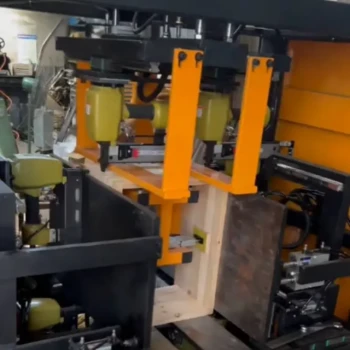
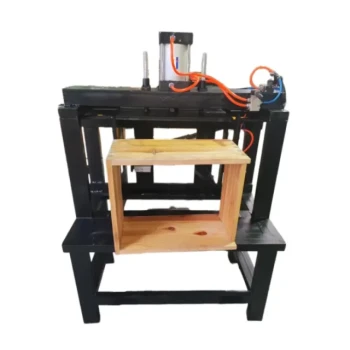
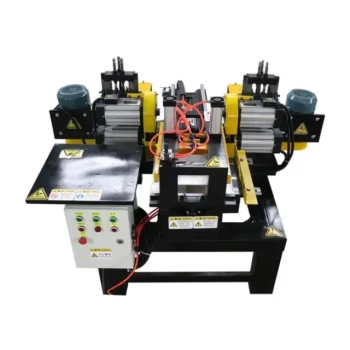
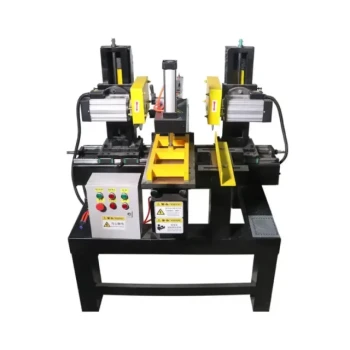
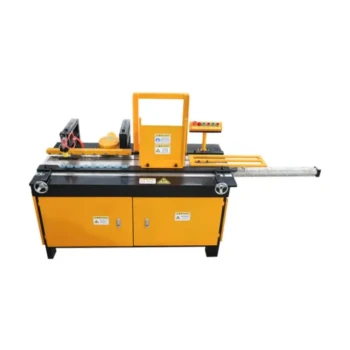
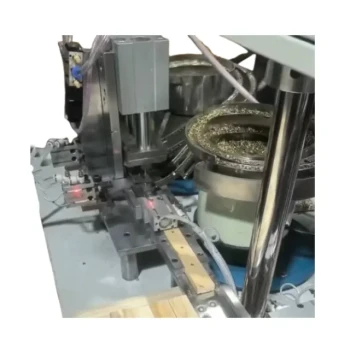
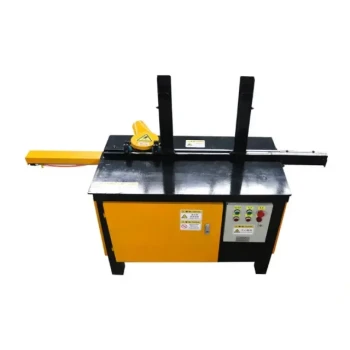
Automated beehive manufacturing equipment supports the scaling of organic beekeeping industries by enabling the mass production of standardized hive components that strictly adhere to organic material regulations. This machinery allows apiaries to rapidly increase production capacity and reduce hardware costs while ensuring hives are constructed without the toxic adhesives or non-compliant materials often found in manual or non-standardized production.
By replacing variable hand-construction with high-precision automation, beekeepers can achieve the component interchangeability and biosecurity required for large-scale operations without compromising the material purity essential for organic certification.
Achieving Organic Compliance at Scale
Eliminating Toxic Adhesives
Organic beekeeping standards strictly prohibit the use of paints, glues, or adhesives containing toxic substances that could migrate into beeswax or honey. Specialized manufacturing equipment allows for the creation of high-precision joints and physical connections. This mechanical precision ensures structural integrity without relying on chemical bonding agents, keeping the hive environment chemically neutral.
Enhancing Natural Disease Resistance
Scaling an organic operation requires managing disease without synthetic chemical medications. Precision-manufactured hives provide superior ventilation and uniform thermal insulation properties compared to manual construction. This optimizes the hive's microclimate, reducing the colony's susceptibility to illness and minimizing the need for intervention, which is critical when chemical treatments are restricted.
Utilizing Untreated Materials
Automated machinery is capable of processing natural, chemically untreated wood or compliant composites with high efficiency. This ensures that even at high production volumes, the raw materials used for the bees' habitat remain consistent with organic certification requirements.
Operational Efficiency and Standardization
Ensuring Component Interchangeability
For an apiary to scale, hive parts must be universally compatible. Automated equipment produces frames and hive bodies with uniform specifications, ensuring every part fits every hive. This interchangeability significantly reduces maintenance costs and labor, as beekeepers do not have to waste time fitting mismatched components.
Enabling Downstream Automation
Standardized hive dimensions are the prerequisite for further industrialization in the supply chain. Uniform hives enable the use of automated honey extraction machinery and processing lines. Without the precise dimensions provided by manufacturing equipment, downstream automation is impossible, creating a bottleneck in harvesting.
Facilitating Migratory Logistics
Large-scale beekeeping often involves moving hives to different geographical locations. Mechanically produced hives are more durable and feature uniform dimensions that stack efficiently. This standardization streamlines the logistics of migratory beekeeping, reducing labor costs and minimizing stress on the colonies during transport.
Economic Implications of Automation
Reducing Hardware Investment
The primary barrier to expansion is often the cost of infrastructure. Industrial-grade machinery introduces economies of scale, significantly lowering the unit cost of hive production. This reduction in capital expenditure allows organic beekeepers to allocate resources toward expanding colony count rather than overspending on infrastructure.
Maximizing Energy Efficiency for Production
Standardized structures provide better sealing and insulation. This reduces the energy honeybees must expend on regulating nest temperature. Consequently, the colony can redirect that energy toward collecting pollen and nectar, effectively increasing the yield per hive without additional inputs.
Understanding the Trade-offs
High Initial Capital Expenditure
While unit costs decrease over time, the upfront investment for industrial-grade automated woodworking or composite processing machinery is substantial. Smaller operations may find the return on investment too slow unless they are aggressively scaling or forming a cooperative.
Flexibility Limitations
Automated equipment excels at repetition but struggles with variation. If a specific micro-climate or bee subspecies requires a non-standard hive modification, re-tooling automated machinery can be costly and time-consuming compared to manual adjustment.
Making the Right Choice for Your Goal
To determine if automated manufacturing aligns with your operational strategy, consider your primary constraints:
- If your primary focus is rapid expansion: Prioritize equipment that guarantees component interchangeability to streamline logistics and reduce labor during harvest.
- If your primary focus is strict organic compliance: Select machinery capable of high-precision joinery to eliminate the need for chemical adhesives and ensure superior natural ventilation.
Automated manufacturing transforms the beehive from a variable handcrafted vessel into a precision-engineered asset, providing the structural foundation necessary for organic beekeeping to thrive at an industrial scale.
Summary Table:
| Key Feature | Impact on Organic Scaling | Benefit to Apiary Operations |
|---|---|---|
| Precision Joinery | Eliminates need for toxic adhesives | Ensures chemical-neutral hive environments |
| Standardized Dimensions | Enables downstream automation | Reduces labor costs and simplifies maintenance |
| Material Processing | Handles untreated wood efficiently | Maintains strict organic certification at scale |
| Microclimate Optimization | Enhances natural disease resistance | Reduces reliance on synthetic chemical treatments |
| Logistical Uniformity | Streamlines migratory beekeeping | Lowers transport costs and reduces colony stress |
Scale Your Organic Apiary with HONESTBEE
Transitioning to large-scale organic beekeeping requires infrastructure that never compromises on purity or precision. HONESTBEE specializes in supporting commercial apiaries and distributors with high-performance beehive manufacturing equipment, honey-filling machinery, and a full spectrum of professional beekeeping tools.
Whether you are looking to manufacture standardized, chemical-free hives in-house or require industrial-grade consumables to support your distribution network, our expertise ensures your operations achieve maximum efficiency and full organic compliance.
Ready to industrialize your production?
Contact HONESTBEE Today to explore our comprehensive wholesale solutions and hardware portfolio.
References
- Melike Kübra Ekiz Bozdemir, Selen AVCI. Regional Analysis of Organic Agriculture, Husbandry, and Beekeeping Efficiency in Türkiye. DOI: 10.15832/ankutbd.1521005
This article is also based on technical information from HonestBee Knowledge Base .
Related Products
- Automatic High-Speed Bee Hive Box Stapling Machine
- High-Efficiency Pneumatic Bee Hive Making Machine for Rapid Box Assembly
- Mini Desktop Bee Hive Frame Forming Making Machine
- HONESTBEE Top Bar & Bottom Bar Forming Machine | Bee Frame Machine
- Beehive Machine Double End Saw for Precision Hive Component Manufacturing
People Also Ask
- How is the Bee Box machine adjusted for different box sizes? Maximize Your Woodworking Versatility and Precision
- How is the Bee Box machine operated? Optimize Your Commercial Hive Production with Scalable Staffing Solutions
- How was the Bee Box machine designed? Industrial Engineering for High-Volume Beekeeping Production
- What is the production capacity of the Bee Box machine? Boost Output up to 1,000 Boxes Daily
- What are the power requirements and control system for the Bee Box machine? Optimize Your Apiary Equipment Production