A Pollen Trap leverages precise geometry to separate biological samples from their carriers.
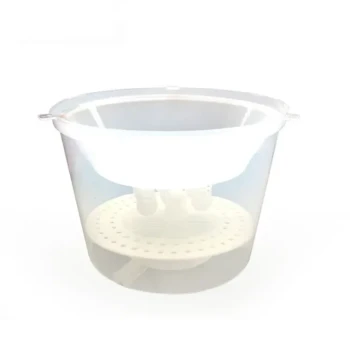
It consists of three primary components: a pollen plate, a mesh screen, and a collection tray. As foraging bees return to the hive, they are forced to pass through the narrow grids of the pollen plate, which mechanically scrapes pollen pellets from their hind legs. These pellets fall through a mesh screen into an isolated tray, securing the sample before it enters the hive's internal environment.
The trap's design does more than harvest; it acts as a biological firewall. By capturing pollen at the entrance, it prevents cross-contamination from inside the hive, ensuring the sample reflects the external environment's pollutant levels accurately.
The Mechanics of Sample Isolation
To understand why this structure is effective for environmental monitoring, you must look at how each component ensures sample integrity.
The Pollen Plate (The Scraper)
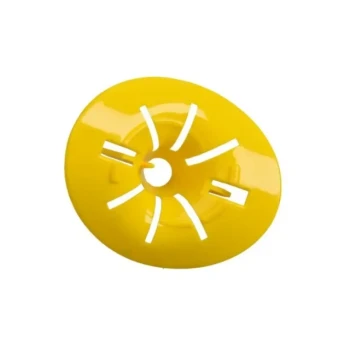
The core of the device is the pollen plate, installed directly at the hive entrance. It features precision-designed grids or apertures.
These openings are sized specifically to allow a worker bee to pass through, but with very little clearance.
As the bee squeezes through, the grid creates mechanical friction against the bee's hind legs, effectively stripping off the pollen pellets without injuring the insect.
The Mesh Screen (The Filter)
Once the pollen is dislodged, gravity takes over.
The pellets fall immediately onto a mesh screen positioned beneath the entry grid.
This screen is the critical boundary line; its weave is large enough to let pollen pellets pass through but too small for the bees to follow or retrieve them.
The Collection Tray (The Vault)
Beneath the mesh lies the collection tray, which serves as the final isolation chamber.
Because the tray is physically separated from the main hive body, the pollen is protected from the hive's internal atmosphere and biological activity.
This prevents the bees from contaminating the pollen with hive-specific substances, ensuring the collected material remains a pure representation of the environmental pollutants found in the foraging area.
Critical Environmental Controls
Beyond simple mechanical separation, the physical structure plays a vital role in biochemical preservation.
Moisture and Contamination Control
The design of industrial-grade traps often includes specific features to maintain a dry collection environment.
By isolating the tray from the hive's humidity, the trap prevents the degradation of biochemical activity.
This structural dryness is essential for monitoring, as it prevents microbial contamination that could alter the chemical composition of the pollutants being studied.
Understanding the Trade-offs
While the physical structure is excellent for data collection, it introduces specific operational constraints.
Interference with Normal Passage
The trap relies on precise geometric control to intercept pollen without stopping the bees.
However, if the apertures are poorly designed or damaged, they can impede the bees' movement, potentially stressing the colony or affecting breeding rates.
Nutritional Deficits
The trap is extremely efficient at removing pollen, which is the colony's primary protein source.
Continuous use of the trap can lead to nutritional deficiencies within the hive.
For long-term environmental monitoring, the schedule of trap usage must be balanced against the colony's health needs.
Making the Right Choice for Your Goal
When utilizing pollen traps, your operational strategy should depend on your specific objective.
- If your primary focus is Environmental Monitoring: Prioritize traps with dry collection trays and sealed designs to ensure the chemical profile of the pollen remains unaltered by hive humidity or microbes.
- If your primary focus is Sustainable Sampling: Implement a rotation schedule (e.g., active for 2 days, inactive for 5) to allow the colony to replenish its own nutritional stores while still gathering sufficient data.
The pollen trap turns the beehive into a passive environmental sensor, strictly purely through its clever physical architecture.
Summary Table:
| Component | Primary Function | Role in Environmental Monitoring |
|---|---|---|
| Pollen Plate | Mechanical stripping of pellets | Ensures high-volume collection at the source |
| Mesh Screen | Physical filtration & barrier | Prevents cross-contamination from the hive interior |
| Collection Tray | Isolated storage vault | Preserves chemical integrity of environmental pollutants |
| Ventilation/Seal | Moisture control | Prevents microbial degradation of the biological sample |
Maximize Your Research with HONESTBEE Precision Equipment
Are you looking to scale your environmental monitoring or commercial apiary? HONESTBEE specializes in serving commercial apiaries and distributors with high-performance beekeeping tools and industrial machinery.
Our extensive portfolio includes:
- Advanced Hive Hardware: Hive-making machines and precision-engineered pollen traps.
- Processing Solutions: Professional-grade honey-filling and extraction machinery.
- Industry Consumables: A complete spectrum of high-quality essentials for modern beekeeping.
Whether you are conducting environmental studies or managing a large-scale distribution network, our wholesale offerings provide the durability and precision you need. Contact us today to discuss your bulk equipment needs and see how HONESTBEE can empower your business.
References
- Żaneta Bargańska, Jacek Namieśnik. Honey bees and their products: Bioindicators of environmental contamination. DOI: 10.1080/10643389.2015.1078220
This article is also based on technical information from HonestBee Knowledge Base .
Related Products
- Removable Plastic Pollen Trap With Ventilated Tray for Bees Pollen Collector
- 30 cm Plastic Entrance Hole Bee Pollen Trap and Collector
- Plastic Bee Pollen Trap Strips Comb Catcher Collector
- High-Efficiency Diamond Maze Bee Escape for Clearing Supers
- Professional Bucket Style Wasp and Moth Pheromone Trap
People Also Ask
- What are the design principles and advantages of pollen traps in the collection of bee pollen? Boost Your Apiary Yield
- What is the function of professional pollen traps in evaluating honey plants? Quantifying Pollination and Crop Potential
- What functions do pollen traps serve for bee bread production? Optimize Your Raw Material Collection
- What maintenance and pest prevention measures should be taken for pollen traps? Protect Your Hive and Harvest Quality
- How does the use of pollen traps in honeybee hives enhance crop fertilization? Boost Your Yield Through Induced Activity