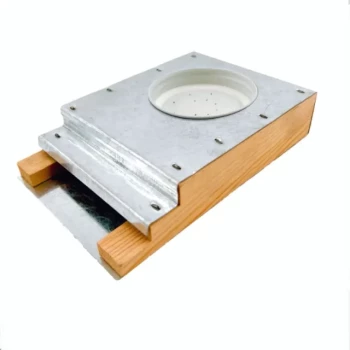
Professionally designed colony feeders are engineered to optimize supplemental feeding by combining high volume capacity with biological safety mechanisms. They allow worker bees to access large quantities of syrup freely without the risk of drowning, ensuring that nutrients are distributed efficiently to mimic natural nectar intake.
The core value of professional feeders lies in their ability to stabilize the colony's nutritional intake during environmental gaps, facilitating the immediate conversion of supplements into winter stores or larval food without disrupting the hive's internal ecosystem.
Biological Optimization and Safety
Eliminating Mortality Risks
One of the most critical design features of professional feeders is the prevention of bee drowning. Unlike improvised solutions, these feeders are engineered to allow bees to access liquid feed safely. This ensures that the colony does not lose valuable workforce numbers while attempting to access essential nutrients.
Mimicking Natural Nectar Intake
These feeders are designed to simulate the natural flow of nectar. By allowing bees to feed freely and consistently, the equipment encourages the natural behaviors associated with foraging. This facilitates the efficient distribution of nutrients throughout the colony.
Efficient Nutrient Conversion
Because the feeding mechanism is stable, bees can process supplements more effectively. The colony can immediately direct nutrients where they are needed most, whether that is the direct feeding of larvae for brood rearing or converting the syrup into food stores for future use.
Operational Advantages for Commercial Apiaries
High-Volume Capacity
Commercial operations require efficiency, and professional feeders are engineered to hold large volumes of syrup. This high capacity reduces the labor intensity required for frequent refilling. It ensures the colony has sustained access to food without constant human intervention.
Protection Against Robbing
Internal designs, such as frame feeders, place the syrup directly within the reach of the bee cluster inside the hive. This internal placement significantly reduces the risk of robbing by external bees or pests, which is a common issue with external feeding methods.
Performance in Adverse Conditions
Professional internal feeders allow bees to consume syrup even during low temperatures when the cluster is tight. This is critical for overwintering or cold snaps, ensuring bees can process starch or sucrose syrups and quickly store them in cells before conditions worsen.
Resilience During Nectar Gaps
Migratory beekeeping often involves periods of nectar shortage due to transport or discontinuous flowering. High-concentration feeding via these devices maintains basic metabolism. This prevents colony collapse or absconding caused by starvation during these critical transition periods.
Understanding the Trade-offs
Space Allocation
Internal feeders, such as frame feeders, occupy physical space within the hive body. By taking the place of a standard frame, they reduce the total surface area available for brood rearing or natural honey storage. This requires careful management of hive volume to ensure the queen has sufficient space to lay.
Maintenance and Sanitation
While large capacity is a benefit, it introduces a maintenance variable. Large volumes of syrup, if not consumed quickly by a weak colony, can ferment or become a breeding ground for mold. Professional feeders require monitoring to ensure the syrup remains fresh and the equipment remains clean.
Making the Right Choice for Your Goal
To maximize the utility of your feeding equipment, align your choice with your specific operational phase:
- If your primary focus is rapid winter preparation: Prioritize internal frame feeders that allow bees to process and store high-concentration syrup quickly, even as temperatures drop.
- If your primary focus is migratory stability: Utilize high-volume feeders to bridge nutritional gaps during transport, preventing starvation and absconding when natural nectar is unavailable.
Success in commercial beekeeping relies not just on feeding, but on using equipment that integrates seamlessly with the colony's natural biological rhythms.
Summary Table:
| Feature | Benefit for Commercial Apiaries | Impact on Colony Health |
|---|---|---|
| Drowning Prevention | Reduces workforce loss during feeding | Ensures high survival rates of worker bees |
| High-Volume Capacity | Lowers labor costs and refill frequency | Provides consistent access to vital nutrients |
| Internal Placement | Minimizes robbing risks from pests/other bees | Protects hive resources and stability |
| Climate Resilience | Enables feeding during low temperatures | Prevents starvation during winter or nectar gaps |
| Natural Flow Design | Enhances nutrient distribution efficiency | Promotes healthy brood rearing and larval growth |
Scaling Your Commercial Apiary? Partner with HONESTBEE Today
At HONESTBEE, we understand that for commercial apiaries and distributors, efficiency is the foundation of profitability. Our professionally engineered colony feeders are just one part of our comprehensive wholesale catalog. We provide the full spectrum of beekeeping tools, from hive-making and honey-filling machinery to high-durability hardware and essential industry consumables.
Whether you are managing thousands of colonies or supplying the next generation of beekeepers, our specialized equipment is designed to enhance your operational productivity and biological safety. Let us help you optimize your yields and streamline your workflow.
Contact our expert team today to explore our wholesale solutions
References
- Silvie Dostálková, Jiří Danihlík. Fine-scale assessment of Chlorella syrup as a nutritional supplement for honey bee colonies. DOI: 10.3389/fevo.2022.1028037
This article is also based on technical information from HonestBee Knowledge Base .
Related Products
- In-Hive Dual Compartment Frame Bee Feeder for Targeted Colony Nutrition
- HONESTBEE Entrance Bee Feeder Professional Hive Nutrition Solution for Beekeeping
- White Plastic 0.5L Beekeeping Entrance Feeder for Bees
- Professional Hive Front Entrance Bee Feeder
- HONESTBEE Entrance Bee Feeder Efficient Hive Front Liquid Feeding Solution for Beekeeping
People Also Ask
- What are the advantages of using a frame feeder for bee colonies? Boost Growth and Prevent Robbing Efficiently
- Why should sugar syrup or dry sugar not be left out in the open when feeding bees? Avoid a Dangerous Feeding Frenzy
- What precautions should be taken when feeding bees inside the hive? Safeguard Your Colony from Robbing and Leaks
- How do in-hive feeders support honey bee colonies during autumn? Ensure Overwintering Success for Your Apiary
- What are the advantages of in-hive feeders vs external methods? Boost Colony Health with Precise Spring Feeding