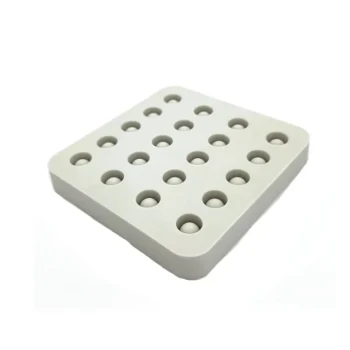
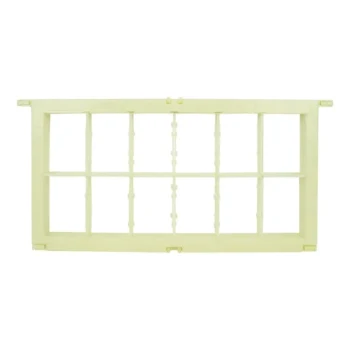
Cup cells and grafting frames function as the critical hardware interface that allows researchers to manipulate and measure honey bee biology with precision. Specifically, cup cells act as artificial vessels that mimic natural conditions to trigger the secretion of royal jelly, while grafting frames provide the high-density structural support required to standardize the environment and turn that biological process into quantifiable data.
By leveraging the bee's natural instinct to rear queens, this hardware system allows researchers to isolate specific variables—such as protein diet—and quantitatively evaluate their direct impact on the glandular secretory function of nurse bees.
The Role of Cup Cells: Inducing Secretion
The cup cell is the primary point of contact between the researcher's intervention and the bee's biological response. Its design is not merely structural; it is psychological, intended to trigger specific behaviors in the colony.
Simulating the Natural Environment
Cup cells are designed to replicate the physical geometry and environment of a natural queen cell. Often made from materials like natural wax, these cups offer high biocompatibility.
Triggering the Nursing Instinct
When a larva is manually transferred (grafted) into a cup cell within a queenless colony, nurse bees perceive it as a potential queen. This triggers an immediate instinct to feed the larva copiously. The result is the secretion of large amounts of royal jelly directly into the cup.
Serving as a Collection Vessel
Beyond biological stimulation, the cup cell serves a practical function as a containment unit. It holds the secreted jelly in a confined space, creating a physical foundation that allows for the precise extraction and weighing of the product without contamination.
The Role of Grafting Frames: Standardization and Scale
While the cup cell triggers the behavior, the grafting frame is the infrastructure that allows for mass data collection. It transforms individual biological events into a statistically significant dataset.
High-Density Production
A dedicated grafting frame acts as a central carrier, allowing researchers to arrange hundreds of queen cell cups within a single unit. This multi-bar design maximizes the production potential of the colony by concentrating nurse bee activity in a specific area.
Ensuring Environmental Uniformity
For testing to be valid, conditions must be identical across all samples. The grafting frame ensures that every cup cell is maintained at a uniform temperature, humidity, and nursing position.
Enhancing Statistical Accuracy
By fixing the position of the cups, the frame minimizes spatial variables within the hive. This uniformity is crucial for calculating accurate queen cell acceptance rates and ensuring that variations in jelly weight are due to experimental variables (like diet) rather than hive position.
Integrating Hardware for Quantitative Analysis
The combination of these two components enables the shift from observation to measurement. This is the core "deep need" of royal jelly testing.
Facilitating Diet Evaluation
The primary research application of this system is to test protein diets. By weighing the jelly collected in the cups, scientists can directly correlate nutritional input with glandular secretory output.
Enabling Modular Harvesting
The use of wooden cell bars within the frames creates a modular system. This allows for the efficient removal of entire sets of cells for harvesting or measurement without disrupting the rest of the colony, streamlining the workflow for large-scale operations.
Understanding the Trade-offs
While this system is the standard for royal jelly testing, it relies on human intervention that introduces specific risks.
Mechanical Precision Requirements
The process of grafting larvae and subsequently removing them to harvest jelly is delicate. High-precision equipment is required to avoid mechanical damage to the jelly's composition, which could compromise its purity or commercial value.
Dependence on Colony State
The effectiveness of the hardware is entirely dependent on the biological state of the colony. The system only works effectively in queenless colony experiments, where the absence of a queen creates the biological urgency required to accept the artificial cups.
Making the Right Choice for Your Goal
To maximize the utility of these components, you must align your usage with your specific objective.
- If your primary focus is Scientific Research: Prioritize the uniformity of the grafting frame placement to ensure that temperature and humidity variations do not skew the statistical accuracy of your diet evaluations.
- If your primary focus is Commercial Production: Focus on the multi-bar density of the frames to maximize the total yield of royal jelly per collection cycle.
Success in royal jelly testing lies in using these tools not just to house larvae, but to create a standardized environment where biological output becomes measurable data.
Summary Table:
| Component | Primary Function | Key Benefit for Testing |
|---|---|---|
| Cup Cells | Simulates natural queen cells | Triggers nursing instinct and facilitates precise jelly collection |
| Grafting Frames | Structural support & standardization | Ensures environmental uniformity and enables high-density data sampling |
| Cell Bars | Modular harvesting unit | Streamlines workflow and minimizes colony disruption during measurement |
| Wax Materials | Biocompatibility interface | Enhances queen cell acceptance rates through natural mimicry |
Elevate Your Apiary's Productivity with HONESTBEE
At HONESTBEE, we specialize in empowering commercial apiaries and distributors with the high-precision tools necessary for professional royal jelly production and bee research. Whether you are conducting nutritional diet evaluations or scaling up commercial yields, our comprehensive wholesale portfolio offers everything from specialized grafting frames and biocompatible cup cells to advanced honey-filling and hive-making machinery.
Partner with HONESTBEE to access:
- High-Quality Hardware: Durable beekeeping tools designed for rigorous industrial use.
- Global Wholesale Reach: Reliable supply chains for essential industry consumables and equipment.
- Expert Solutions: Specialized machinery that transforms biological processes into quantifiable profit.
Ready to optimize your beekeeping operation? Contact us today to explore our full spectrum of equipment and tools!
References
- El Ghbawy A., Elhosseny E. Nowar. The Novelty of Azolla pinnata As a Promising Alternative Feed for Honeybee, Apis mellifera (L.). DOI: 10.21608/eajbsa.2022.241766
This article is also based on technical information from HonestBee Knowledge Base .
Related Products
- Clear Black Plain Polystyrene Queen Bee Grafting Cell Cups No Lug for Bee Queen Cup
- JZBZ Type Wide Base Plastic Queen Cell Cups for Base Mounting and Queen Rearing
- Brown Nicot Queen Cell Cups for Breeding Queen Bees Beekeeping
- JZBZ Push-In Queen Cell Cups for Beekeeping
- Premium Nicot Style Cell Bar Holder and Queen Cell Cup Holder System
People Also Ask
- What materials are used to make artificial queen cell cups for grafting? Beeswax vs. Plastic Guide
- What role do specialized queen rearing tools play in developing mite-resistant honeybee stock? Master Genetic Selection
- What roles do specialized queen cell cups play in royal jelly production? Optimize Your Hive's Secretion and Yield
- What types of cell cups are commonly used in grafting? Plastic vs. Wax for Queen Rearing Success
- Why is a diluted royal jelly solution applied to queen cell cups? Boost Acceptance in Artificial Grafting