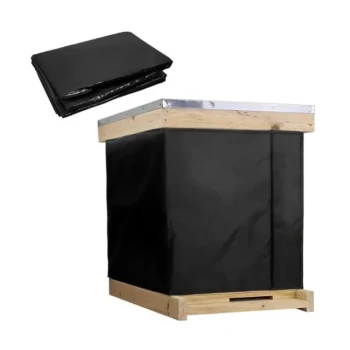
An insulated moisture-management system fundamentally alters the climate dynamics within a beehive by decoupling ventilation from heat loss. By installing a specialized wooden super containing internal insulation and wire mesh boundaries atop the hive body, you create a controlled mechanism that actively transports moisture out of the colony while retaining critical warmth.
The core advantage of this system is its ability to simultaneously provide thermal protection and cross-flow ventilation. It solves the lethal problem of condensation by allowing rising vapors to pass through an insulated zone to a moisture board, where humidity is captured and evaporated rather than dripping back onto the bees.
The Physics of Hive Climate Control
Regulating Vapor Movement
Standard hive setups often trap moisture, leading to condensation. An insulated moisture-management system functions as a vapor transport engine.
It allows warm, moist air generated by the bees to rise naturally out of the brood chamber. These vapors travel through the wire mesh boundaries and into the insulated box, moving away from the colony cluster.
The Capture and Evaporation Cycle
Once the vapors enter the system, they encounter a moisture board. This component is critical for processing the humidity.
Instead of hitting a cold outer cover and condensing into liquid water, the moisture is absorbed by the board. The system's design then facilitates evaporation, effectively scrubbing humidity from the internal environment.
Thermal Benefits and Structure
Internal Insulation
The system is not merely a vent; it is a thermal barrier. The internal insulation within the wooden super prevents the rapid heat loss associated with open ventilation.
By keeping the upper cavity warm, the system prevents the "dew point" from occurring directly above the bees. This ensures the internal environment remains not just dry, but temperature-stable.
Cross-Flow Ventilation
The reference identifies cross-flow ventilation as a key feature of this design. This airflow is essential for the evaporation process at the moisture board level.
It ensures that the moisture captured by the board is carried away efficiently. This continuous cycle prevents the insulation from becoming saturated and losing its R-value.
Understanding the Trade-offs
System Height and Weight
Adding a wooden super with insulation increases the physical stack height of the hive.
This requires additional equipment management compared to a standard telescopic cover. You must account for the extra weight and component storage when the system is not in use.
Dependence on Correct Assembly
The efficacy of the system relies on the precise interaction between the wire mesh, the insulation, and the moisture board.
If the moisture board is omitted or the wire mesh is blocked, the system cannot capture and evaporate vapors effectively. Incorrect assembly can lead to the very moisture buildup you are trying to prevent.
Making the Right Choice for Your Goal
- If your primary focus is Overwintering Survival: Prioritize this system to prevent the freezing condensation that is often more lethal to bees than the cold itself.
- If your primary focus is Internal Climate Stability: Use this setup to maintain a consistent "dry and warm" atmosphere, reducing the caloric energy bees must burn to regulate humidity.
By effectively managing the transition of water vapor from the hive body to an external evaporation point, you protect the colony’s thermal integrity.
Summary Table:
| Feature | Technical Benefit | Impact on Bee Colony |
|---|---|---|
| Internal Insulation | Maintains thermal barrier above brood | Prevents dew point formation and heat loss |
| Vapor Transport | Moves warm, moist air away from cluster | Keeps bees dry and reduces caloric energy expenditure |
| Moisture Board | Captures and evaporates rising humidity | Prevents lethal cold condensation from dripping on bees |
| Cross-Flow Vent | Facilitates continuous airflow in upper super | Ensures insulation stays dry and maintains R-value |
Maximize Your Apiary Productivity with HONESTBEE
Effective climate management is the cornerstone of healthy overwintering and high-yield honey production. At HONESTBEE, we specialize in empowering commercial apiaries and distributors with the high-performance tools needed to scale successfully. From insulated hive components to advanced hive-making and honey-filling machinery, our comprehensive wholesale portfolio covers your entire operational spectrum.
Partner with HONESTBEE to benefit from:
- Expert Sourcing: A full spectrum of beekeeping tools and essential industry consumables.
- Scalable Solutions: Specialized hardware and honey-themed cultural merchandise for diverse market needs.
- Reliable Support: Wholesale offerings tailored to the demands of large-scale beekeeping operations.
Ready to upgrade your equipment and safeguard your colonies? Contact us today to discuss your wholesale requirements!
Related Products
- Professional Insulated Winter Hive Wrap for Beekeeping
- Professional Insulated Plastic Bee Hives
- Inner Beehive Cover for Beekeeping Bee Hive Inner Cover
- In-Hive Dual Compartment Frame Bee Feeder for Targeted Colony Nutrition
- Stainless Steel Round Beehive Air Vents for Ventilation
People Also Ask
- What are the steps to properly wrap a beehive for winter? Ensure Your Colony Survives the Cold
- When is the best time to wrap a beehive for winter? A Guide to Perfect Winterization Timing
- How do professional insulation wraps provide protection for bee colonies? Optimize Winter Survival & Energy Efficiency
- What are the technical benefits of using winter wraps for beehive insulation? Boost Colony Survival & Hive Health
- What are the benefits of using insulated covers for hives? Ensure Colony Survival and Health