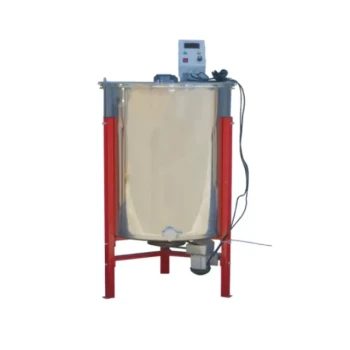
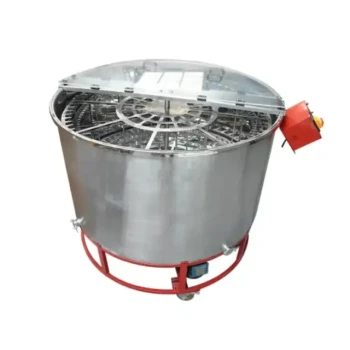
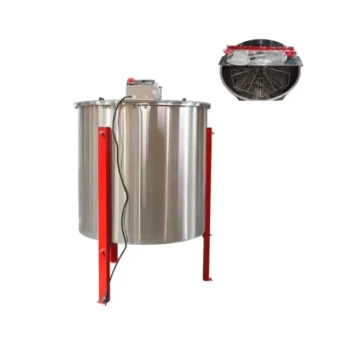
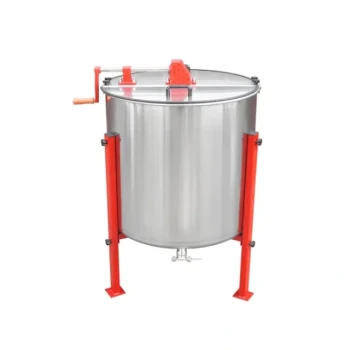
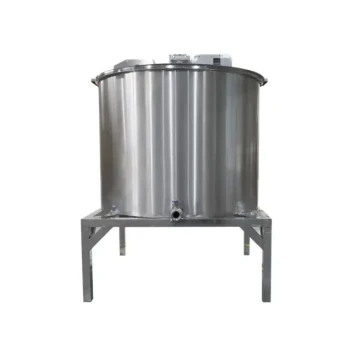
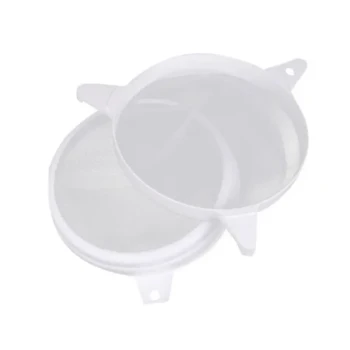
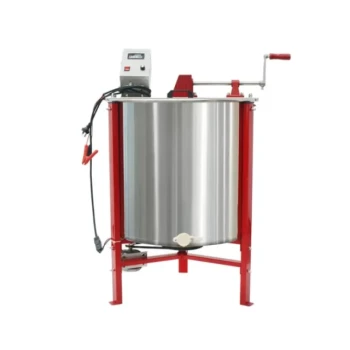
The primary function of industrial-grade centrifugal extraction and filtration equipment is to mechanically separate honey from the honeycomb and purify it for commercial standards without degrading the raw product. By utilizing high-speed centrifugal force, this machinery extracts liquid honey while leaving the delicate honeycomb structure intact, followed immediately by multi-stage filtration to remove physical impurities. This dual process is the industry standard for achieving the clarity, purity, and safety compliance required for international export.
Core Takeaway Industrial extraction moves beyond simple harvesting; it is a mechanism for standardization. It automates the separation and purification process to produce high-volume, contaminant-free honey that meets rigorous food safety and pharmaceutical regulations while minimizing material loss.
The Mechanics of Efficient Extraction
Harnessing Centrifugal Force
The core mechanism of industrial extraction relies on high-speed rotation. Unlike crushing methods that destroy the hive's internal architecture, centrifugal force pulls the honey out of the cells through inertia.
This non-destructive approach preserves the honeycomb structure. By keeping the comb intact, beekeepers can return the frames to the hive, allowing bees to refill them immediately rather than expending energy rebuilding wax.
Multi-Stage Filtration
Once extracted, the honey passes through a multi-stage filtration system. This acts as a critical barrier against physical contaminants that naturally occur during harvest.
The system is designed to remove wax debris, pollen clusters, and foreign matter. This step is non-negotiable for ensuring the final product possesses the optical clarity and texture expected by consumers and retailers.
Maximizing Material Recovery
Industrial equipment is engineered to minimize product loss. Automated systems ensure that the maximum amount of honey is separated from the wax cappings and frames.
This efficiency directly impacts unit product cost accounting. By reducing waste during the separation phase, commercial operations significantly improve their yield per hive compared to manual methods.
Standardization and Quality Assurance
Meeting International Safety Standards
The transition from traditional beekeeping to modern industrial operations is driven by the need for compliance. Industrial filtration ensures honey meets international food safety standards.
This equipment provides the consistency necessary for export-grade qualification. It safeguards against adulteration and physical contamination, satisfying the strict requirements of both the food and pharmaceutical industries.
Preserving Bioactive Components
Modern equipment is designed to process honey at its optimal maturity. This ensures that biochemical markers, such as proline, remain at levels indicating full ripening by the bees.
Mechanical separation and high-efficiency filtration remove impurities while preserving essential bioactive components. This balance allows producers to scale up volume without sacrificing the nutritional profile that defines natural honey.
Understanding the Trade-offs
Operational Complexity
While automation improves efficiency, it introduces technical complexity. Industrial systems involve high-speed moving parts and filtration consumables that require regular, skilled maintenance compared to simple gravity straining.
Capital vs. Labor
Investing in this equipment represents a shift from variable labor costs to fixed capital costs. While it significantly reduces the manual labor required for harvesting, the initial financial outlay for industrial-grade machinery is substantial and requires high-volume production to justify the return on investment (ROI).
Making the Right Choice for Your Goal
When evaluating industrial extraction and filtration technology, consider your primary operational objectives:
- If your primary focus is Export Compliance: Prioritize systems with advanced multi-stage filtration to guarantee the removal of all foreign matter and ensure clarity meets international standards.
- If your primary focus is Production Efficiency: Focus on high-speed centrifugal units with automated feeding systems to maximize throughput and minimize the turnaround time for returning frames to the hive.
- If your primary focus is Brand Purity: Select equipment that emphasizes low-impact mechanical separation to preserve specific biochemical markers and bioactive compounds.
True commercial viability relies on balancing high-velocity extraction with the delicate preservation of the honey's natural properties.
Summary Table:
| Feature | Primary Function | Commercial Benefit |
|---|---|---|
| Centrifugal Force | Separates honey while preserving the comb | Higher yield and faster hive turnaround |
| Multi-Stage Filtration | Removes wax debris, pollen, and impurities | Ensures optical clarity and export compliance |
| Automated Separation | Minimizes product loss from wax cappings | Reduces unit costs and maximizes recovery |
| Mechanical Processing | Standardizes honey purity and consistency | Meets international food and pharma standards |
Elevate Your Honey Production with HONESTBEE
Transitioning to industrial-scale beekeeping requires more than just machinery; it requires a partner who understands the complexities of commercial honey processing. HONESTBEE empowers commercial apiaries and distributors with a comprehensive suite of high-performance tools, including specialized hive-making machines, precision honey-filling systems, and industrial-grade extraction equipment.
Whether you are looking to scale your output, ensure international export compliance, or diversify your brand with honey-themed cultural merchandise, we provide the wholesale solutions and technical expertise needed to maximize your ROI.
Ready to modernize your operations? Contact us today to discuss our full spectrum of beekeeping hardware and consumables.
References
- Gökhan Akdeniz, Ali Kantar. Analysis of Honey Export Potential and Competitiveness of Türkiye. DOI: 10.51458/bstd.2022.29
This article is also based on technical information from HonestBee Knowledge Base .
Related Products
- electric honey extractor honey centrifuge 3 frame honey extractor stainless steel honey frame extractor
- Electric Double Wall Honey Filtering Machine Purifier Equipment for Honey Processing Plant
- Manual Hand Crank 4 Frame Honey Extractor Centrifuge for Beekeeping
- Honey Concentrating and Filtering Dehumidifier Machine 2T Capacity for Honey
- Professional 4 Frame Self Reversing Electric Honey Extractor for Beekeeping
People Also Ask
- What are the characteristics of electric honey extractors? Boost Your Apiary Efficiency with Automated Technology
- What are the disadvantages of using an electric honey extractor? Weighing Cost, Power, and Comb Safety
- What are the advantages of an electric honey extractor? Boost Efficiency and Scale Your Honey Production
- What are the technical advantages of electric honey extractors? Maximize Yield and Protect Your Bee Colony
- How does an electric honey extractor affect the quality of honey? Preserve Flavor & Purity with Precision Extraction