The primary purpose of adding activated carbon during beeswax purification is to function as a high-efficiency adsorbent that removes specific chemical residues. Unlike standard physical filtration, which targets solid debris, activated carbon utilizes its vast surface area and porous structure to capture organic phosphorus acaricides on a molecular level.
Core Takeaway While mechanical filters remove physical impurities, activated carbon is essential for chemical safety. It specifically adsorbs toxic pesticide residues like chlorfenvinphos and coumaphos, enabling beeswax to meet the rigorous purity standards required for food-grade and pharmaceutical-grade applications.
The Mechanism of Purification
The Power of Adsorption
Activated carbon is not a mechanical filter; it is a chemical adsorbent. It possesses a highly developed pore structure and an immense specific surface area.
When introduced to molten beeswax, these pores act like a microscopic sponge. They trap specific organic molecules within their internal structure, effectively locking them away from the liquid wax.
Targeting Specific Residues
The primary targets of this process are organic phosphorus acaricide residues. Beekeepers often use these chemicals to control mites in hives.
Two common examples of these residues are chlorfenvinphos and coumaphos. Without activated carbon, these chemical traces would remain in the wax, rendering it unsuitable for sensitive uses.
Achieving High-Grade Purity
The reduction of these pesticide residues is the critical step in upgrading raw beeswax.
By stripping out these toxins, the wax moves beyond industrial grade. It becomes viable for sectors with strict safety compliance, such as food production (coatings, additives) and pharmaceuticals (creams, encapsulations).
Distinguishing Carbon from Mechanical Filtration
The Role of the Beeswax Filter
It is important to distinguish between chemical adsorption (carbon) and physical interception (filters).
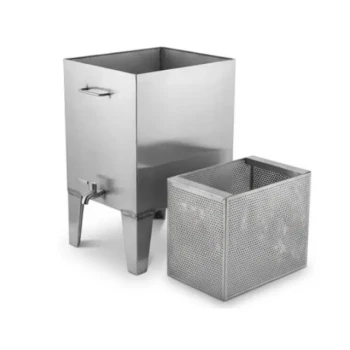
As noted in the supplementary context, a specialized Beeswax Filter is responsible for intercepting fine residues and solid impurities. This improves color consistency and removes visible debris.
A Two-Step Synergy
For optimal purification, these two processes often work in tandem.
The activated carbon addresses invisible chemical threats (pesticides), while the mechanical filter addresses visible physical threats (debris). Together, they ensure the wax is both chemically safe and visually clean.
Understanding the Trade-offs
Specificity Limitations
Activated carbon is highly effective against specific organic compounds, but it is not a "cure-all."
It is tuned specifically for organic phosphorus residues. It may not be as effective against other types of chemical contaminants that do not share similar molecular properties or polarity.
Processing Complexity
Using activated carbon adds a step to the purification workflow.
Once the carbon has adsorbed the toxins, the carbon itself becomes a solid impurity. It must be subsequently removed—typically through the high-precision filtration mentioned earlier—to prevent the carbon dust from contaminating the final wax block.
Making the Right Choice for Your Goal
To determine the appropriate level of processing for your beeswax, consider your end-use requirements:
- If your primary focus is pharmaceutical or food safety: You must integrate activated carbon treatment to adsorb invisible pesticide residues like coumaphos and ensure regulatory compliance.
- If your primary focus is visual aesthetics for candles or industrial raw materials: High-precision physical filtration may be sufficient to remove fine residues and improve color without the need for chemical adsorption.
Success in beeswax processing lies in matching the purification method to the strictness of the safety standards you must meet.
Summary Table:
| Feature | Physical Filtration | Activated Carbon Adsorption |
|---|---|---|
| Target Contaminants | Solid debris, dust, and fine particles | Organic phosphorus acaricides (e.g., Coumaphos) |
| Mechanism | Mechanical interception (size exclusion) | Molecular adsorption (porous structure) |
| Primary Benefit | Visual clarity and color consistency | Chemical safety and regulatory compliance |
| Resulting Grade | Industrial / Cosmetic Grade | Food / Pharmaceutical Grade |
Elevate Your Beeswax Quality with HONESTBEE Professional Solutions
At HONESTBEE, we understand that commercial apiaries and distributors require more than just basic tools—you need precision-engineered systems to meet global safety standards. Whether you are producing pharmaceutical-grade wax or premium candles, our comprehensive wholesale portfolio has you covered.
How we add value to your business:
- Advanced Machinery: From high-precision beeswax filters to honey-filling and hive-making machines, we provide the hardware for industrial success.
- Total Equipment Supply: We offer a full spectrum of beekeeping tools and essential consumables tailored for large-scale operations.
- Cultural & Retail Support: Enhance your brand with our wide array of honey-themed cultural merchandise.
Ready to scale your production and ensure chemical-free purity for your customers?
Contact HONESTBEE Today for a Wholesale Quote
References
- María D. Navarro‐Hortal, José L. Quiles. Industrial-Scale Decontamination Procedure Effects on the Content of Acaricides, Heavy Metals and Antioxidant Capacity of Beeswax. DOI: 10.3390/molecules24081518
This article is also based on technical information from HonestBee Knowledge Base .
Related Products
- Beeswax Machine Press Embosser Wax Foundation Mold Printer Bee Hive Equipment Making Sheet
- Beeswax Foundation Sheets Beehive Foundation for Wholesale
- Colorful Silicone Beeswax Foundation Mold Mould for Beekeeping
- Economy Manual Beeswax Embossing Mill Wax Foundation Machine Roller
- Electric Beeswax Flat Sheet Machine with Operating Tray for Wax Processing
People Also Ask
- What equipment is needed to make beeswax foundation? A Guide to DIY Wax Sheet Production
- What miscellaneous equipment is needed for making foundation? A Guide to the Essential Tools
- What miscellaneous equipment is useful when making beeswax foundation? Essential Support Tools for Beekeepers
- What specific equipment is required for making beeswax foundation? Essential Tools for High-Quality Production
- What is the recommended temperature for melting beeswax to make foundation sheets? Master the 70°C-80°C Ideal Range