Specialized honey emulsification equipment is essential for transforming raw honey into a stable, spreadable product known as creamed honey. By utilizing controlled mechanical stirring and precise temperature management, this machinery fundamentally alters the natural crystallization structure of honey. It converts what would otherwise be a gritty or hard substance into a fine, uniform cream that does not separate or layer over time.
Natural crystallization often results in coarse, irregular granules and phase separation. Specialized equipment interrupts this process to engineer microscopic crystals, ensuring a permanently smooth texture and creating a high-value, spreadable commodity for the premium market.
The Physics of Texture Modification
Altering Crystallization Structure
Raw honey naturally tends to crystallize into large, coarse structures that feel gritty on the tongue.
Specialized emulsification equipment uses controlled mechanical stirring to physically break down these developing crystals.
This process forces the honey to form fine, uniform micro-crystals rather than large granules, resulting in a velvety "creamed" mouthfeel.
The Role of Temperature Management
Mechanical action alone is insufficient; precise thermal control is equally critical.
High-precision refrigeration systems are often employed to maintain a stable environment, typically around 5±1°C, during resting phases between stirring cycles.
This cold environment is vital for guiding the formation of dense micro-crystal nuclei, accelerating the thickening process while preventing the crystals from growing too large.
Commercial and Stability Advantages
Ensuring Product Stability
Without specialized processing, crystallized honey often separates, with a liquid layer forming on top of a solid sugar mass.
Emulsification equipment creates a uniform and stable structure that prevents this layering.
This stability ensures the product remains consistent on the shelf for long periods, which is a requirement for retail distribution.
Expanding Market Competitiveness
This technology allows producers to enter high-end markets by offering a product that meets consumer demand for spreadable convenience.
It enables the creation of diverse flavor profiles and textures that command higher price points than standard liquid honey.
By utilizing this equipment, apiaries can elevate their product from a raw ingredient to a sophisticated branded commodity.
Understanding the Trade-offs
Equipment Complexity and Cost
Unlike simple filtration or bottling, creamed honey production requires a significant investment in specialized machinery.
Producers must invest in motors capable of handling high viscosity and refrigeration units for precise thermal cycling.
Processing Time
The creation of creamed honey is not instantaneous; it requires time for the "resting phases" where crystal nuclei form.
This contrasts with liquid honey processing, which focuses primarily on rapid filtration and filling to maximize throughput.
Making the Right Choice for Your Goal
To determine if this equipment is necessary for your operation, consider your specific production objectives:
- If your primary focus is Premium Market Positioning: You must utilize emulsification equipment to guarantee the "melt-in-your-mouth" texture required to justify higher price points.
- If your primary focus is Product Shelf-Life: You should prioritize this equipment to stabilize the honey's structure and prevent unsightly separation or layering during storage.
Ultimately, specialized emulsification equipment is the bridge between raw agricultural honey and a refined, shelf-stable consumer delicacy.
Summary Table:
| Feature | Specialized Emulsification Equipment | Traditional Crystallization |
|---|---|---|
| Crystal Size | Micro-crystals (Smooth/Velvety) | Large, coarse granules (Gritty) |
| Temperature Control | Precision cooling (approx. 5±1°C) | Ambient/Uncontrolled |
| Product Stability | Uniform, no phase separation | Frequent layering and liquid separation |
| Texture | Spreadable and consistent | Hard or unevenly crystallized |
| Market Value | Premium branded commodity | Standard raw ingredient |
Transform Your Apiary Output with HONESTBEE
Elevate your honey production from raw ingredients to premium, shelf-stable delicacies. HONESTBEE specializes in supporting commercial apiaries and distributors with high-performance honey emulsification machinery and a full spectrum of beekeeping tools. Whether you are looking to master creamed honey production with specialized hardware or need a comprehensive wholesale partner for honey-filling and hive-making equipment, we provide the technical expertise and machinery you need to scale your business.
Ready to dominate the premium market? Contact us today to discover how our specialized equipment and industrial consumables can enhance your product quality and brand value.
References
- Ivan Svynous, Nadia Svynous. Development of cooperation as the basis of forming a product offer on the honey market in Ukraine. DOI: 10.35774/econa2023.02.265
This article is also based on technical information from HonestBee Knowledge Base .
Related Products
- Double Wall Honey Heating Stirring Homogenizer Mixing Machine with Various Capacity
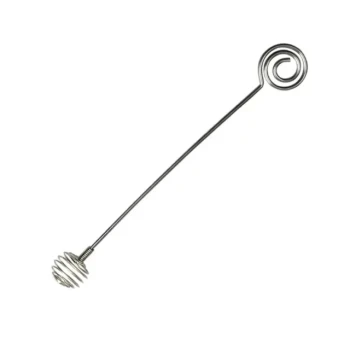
- Modern Stainless Steel Honey Dipper Stirrer
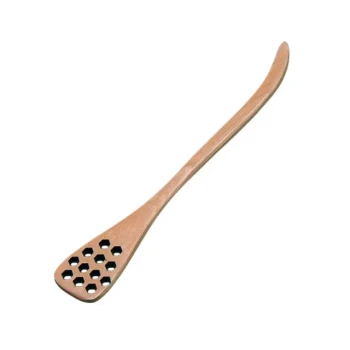
- Modern Honeycomb Pattern Wooden Honey Dipper for Stirring and Drizzling
- Professional Plastic Honey Dipper for Easy Honey Drizzling
- Natural Wood Honey Dipper for Tea Coffee and Desserts
People Also Ask
- What impact do homogenizers or oscillating equipment have on honey microbial detection? Ensure Testing Accuracy
- Why is thorough mechanical stirring and homogenization emphasized in honey processing? Ensure Sample Accuracy
- How do heating equipment and homogenizers liquefy crystallized honey? Expert Guide to Professional Honey Processing
- How does the honey mixer handle different types of honey? Master Viscosity for Perfect Blends
- What are the main components of the honey mixer? Engineered for Gentle, Efficient Honey Processing