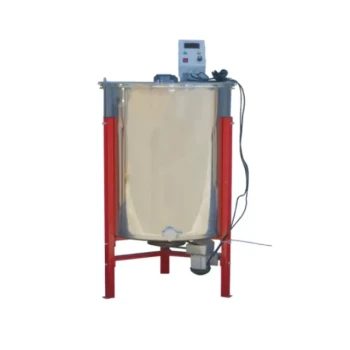
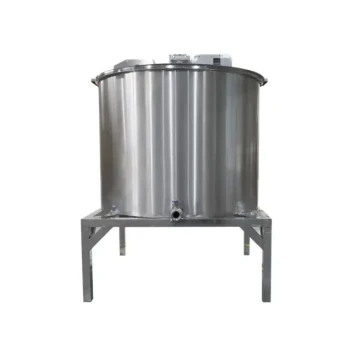
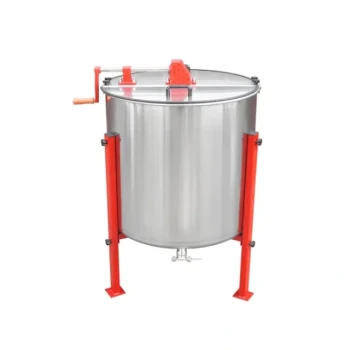
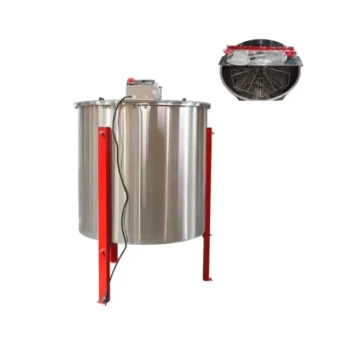
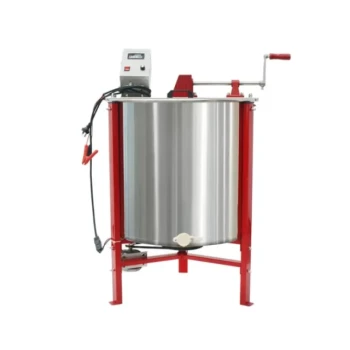
The integration of industrial centrifugal extraction with precise weighing capabilities fundamentally transforms beekeeping from a manual harvest into a data-driven science. These units are essential because they maximize immediate honey yield through non-destructive extraction while simultaneously generating the critical phenotypic data required to breed superior, high-performing bee colonies.
Core Takeaway Industrial processing units serve a dual purpose: they optimize current production by preserving honeycomb structure for reuse, and they secure future productivity by using integrated scales to identify and select the highest-yielding bee genetics.
Optimizing Production Efficiency
The primary operational advantage of industrial units is the use of centrifugal force. This technology shifts the focus from simple extraction to sustainable colony management.
Preserving the Honeycomb Structure
Traditional extraction methods often damage or destroy the wax comb. Centrifugal extractors spin the honey out of the cells while keeping the wax frames intact.
Reducing Colony Energy Expenditure
Bees consume significant amounts of energy and honey to secrete new wax. By returning intact, empty combs to the hive, you eliminate the need for bees to rebuild. This allows the colony to immediately focus on nectar collection rather than construction.
Shortening the Production Cycle
Because the bees do not need to rebuild the comb, the turnaround time between harvests is drastically reduced. This allows apiaries to align production cycles with the peak flowering periods of specific plants, such as Eucalyptus or Acacia, significantly increasing annual frequency and output.
Ensuring Quality and Market Viability
Beyond speed, industrial units are critical for meeting the stringent standards of the global honey market.
Moisture Content Control
Industrial units are designed to handle mature, capped combs efficiently. This process ensures the final product maintains a low moisture content, typically between 17% and 18%. Proper moisture control is the single most important factor in preventing fermentation and spoilage.
Hygiene and Purity
Automated uncapping and closed-loop extraction systems minimize human contact and environmental exposure. This maintains high hygiene standards and preserves the honey’s natural nutritional content and flavor profile, which is essential for entering high-end international markets.
The Critical Role in Breeding (The "Why" of Weighing)
While extraction speed improves today's harvest, the integrated weighing capability secures the future of the apiary. This is the differentiator between standard farming and scientific breeding.
Data-Driven Genetic Selection
To breed better bees, you must know which colonies perform best. Integrated scales provide precise, automated data on the honey output of specific frames and hives.
Capturing Phenotypic Data
This weight data serves as a phenotypic record. By correlating weight with specific colonies, producers can objectively identify high-yield bee populations.
Long-Term Yield Improvement
Using this data, apiary managers can select queens from the highest-performing colonies for breeding. Over time, this selective pressure results in bee populations that are genetically predisposed to higher production and better health.
Understanding the Trade-offs
While these systems offer immense benefits, they represent a shift in operational complexity that must be managed.
High Initial Capital Expenditure
Industrial units with integrated electronics and weighing sensors are significantly more expensive than standard mechanical extractors. The ROI relies on volume and the long-term value of genetic improvements, rather than immediate cash flow.
Requirement for Uniformity
These machines operate best with standardized frame sizes and mature, fully capped combs. Attempting to process uncapped (unripe) honey to speed up production will result in high moisture content and spoilage, regardless of the machine's quality.
Making the Right Choice for Your Goal
To determine if this technology aligns with your operation, consider your primary objectives:
- If your primary focus is Volume and Efficiency: Prioritize the centrifugal aspect to maximize comb reuse, which minimizes bee energy waste and shortens production cycles.
- If your primary focus is Genetic Improvement: Prioritize units with integrated weighing systems to capture the phenotypic data necessary for selecting superior queens and increasing long-term stock quality.
Ultimately, these units bridge the gap between simple agricultural production and scientific apiary management, turning honey extraction into a precision industry.
Summary Table:
| Feature | Benefit to Production | Impact on Breeding |
|---|---|---|
| Centrifugal Extraction | Preserves wax combs for reuse; reduces bee energy expenditure. | Maintains colony health for stable breeding stock. |
| Integrated Weighing | Ensures precise harvest tracking and moisture control. | Provides phenotypic data to identify high-yield genetics. |
| Automated Uncapping | Increases hygiene and shortens the production cycle. | Enables large-scale data collection across colonies. |
| Data Logging | Optimizes harvest timing with peak flowering periods. | Allows for selective queen breeding based on objective performance. |
Transform Your Apiary with Scientific Precision
At HONESTBEE, we empower commercial apiaries and distributors with the advanced technology needed to transition from manual harvesting to data-driven production. Our industrial honey processing units combine efficient centrifugal extraction with precision weighing to maximize your current yields while securing future productivity through genetic selection.
How we add value to your business:
- Comprehensive Wholesale Offering: Access a full spectrum of beekeeping tools, machinery, and essential consumables.
- Specialized Hardware: From high-capacity extraction lines to honey-filling and hive-making machines, we supply the hardware that scales operations.
- Targeted Solutions: Whether you are a large-scale producer or a distributor serving the global market, our equipment ensures high hygiene standards and market-ready honey.
Ready to upgrade your production capabilities?
Contact HONESTBEE today to discuss your equipment needs
References
- Regina Conceição Garcia, Maricéia Ana Pickler. Honey and propolis production, hygiene and defense behaviors of two generations of Africanized honey bees. DOI: 10.1590/s0103-90162013000200003
This article is also based on technical information from HonestBee Knowledge Base .
Related Products
- electric honey extractor honey centrifuge 3 frame honey extractor stainless steel honey frame extractor
- Manual Hand Crank 4 Frame Honey Extractor Centrifuge for Beekeeping
- Professional 4 Frame Self Reversing Electric Honey Extractor for Beekeeping
- HONESTBEE 72 Frame Industrial Electric Honey Extractor for Beekeeping
- Honey Concentrating and Filtering Dehumidifier Machine 2T Capacity for Honey
People Also Ask
- What are the characteristics of electric honey extractors? Boost Your Apiary Efficiency with Automated Technology
- What are the disadvantages of using an electric honey extractor? Weighing Cost, Power, and Comb Safety
- What are the advantages of an electric honey extractor? Boost Efficiency and Scale Your Honey Production
- What are the technical advantages of electric honey extractors? Maximize Yield and Protect Your Bee Colony
- How does an electric honey extractor affect the quality of honey? Preserve Flavor & Purity with Precision Extraction