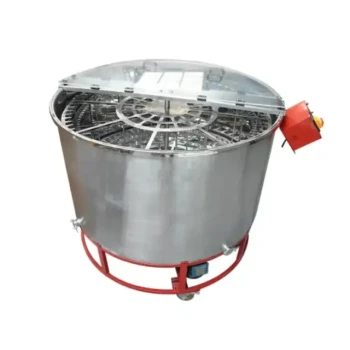
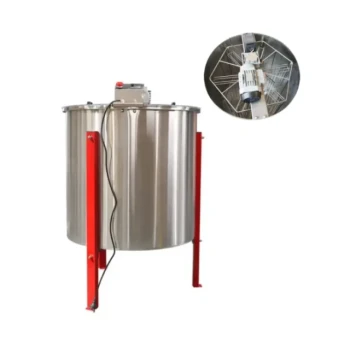
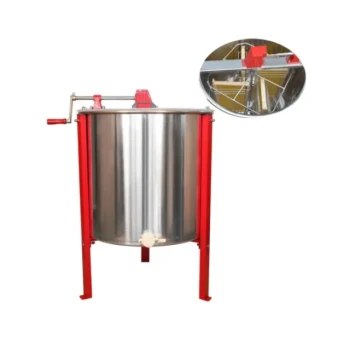
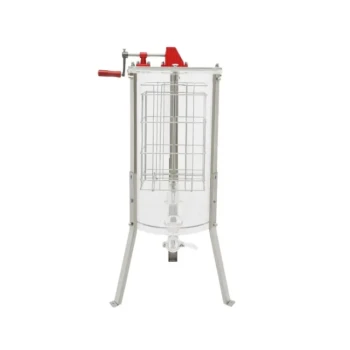
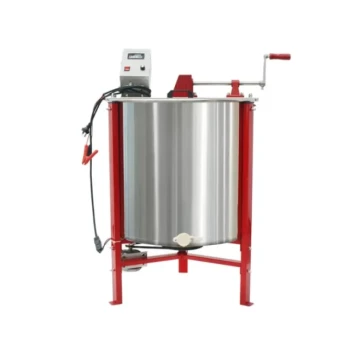
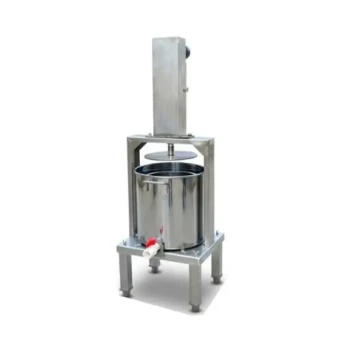
Honey extractors and stainless steel filters form the backbone of modern sanitary processing, utilizing mechanical precision to isolate pure honey while adhering to strict food safety standards. Extractors employ centrifugal force to separate liquid honey from the comb without damaging heat, while industrial-grade filters systematically remove water-insoluble matter such as wax debris, pollen clumps, and bee fragments.
Core Takeaway While extraction is the mechanism of separation, filtration is the determinant of market grade. The synergy between precise centrifugal separation and non-reactive stainless steel filtration ensures the final product retains its biological activity while achieving the visual transparency and chemical stability required for premium pricing and regulatory compliance.
The Mechanics of Extraction and Purity
Centrifugal Separation
Professional extractors utilize centrifugal force to spin honey out of the comb. This mechanical process separates the liquid efficienty without requiring the application of heat.
Preserving Biological Activity
By avoiding heat during separation, the extractor protects the honey's heat-sensitive compounds. This preserves unique aromatic properties, antibacterial components, and trace elements, maintaining the product's natural nutritional profile.
Controlling Water-Insoluble Matter
The primary role of the extraction and filtration workflow is controlling water-insoluble matter. Removing solid contaminants is the critical factor in determining whether the honey's cleanliness grade meets international food safety standards.
The Critical Role of Material Science
Combating Acidity
Honey is naturally acidic. Standard metals react poorly in this environment, potentially leading to corrosion and contamination.
Preventing Chemical Leaching
Food-grade stainless steel is chemically inert, meaning it remains stable even when in contact with high-sugar, acidic honey. This prevents metal ions from leaching into the product, ensuring the honey's physicochemical stability and sensory purity are never compromised.
Surface Hygiene and Sanitation
The smooth surface of industrial stainless steel facilitates thorough cleaning and chemical disinfection. This structural advantage allows processors to eliminate pathogen residues that might hide in the crevices of porous materials.
Filtration and Market Grading
Enhancing Visual Transparency
Physical clarification through sedimentation and filtration directly impacts the aesthetic quality of the honey. Equipment that successfully removes fine impurities results in higher transparency, which is a key metric for grading evaluation and higher final selling prices.
Building Consumer Confidence
Professional filters use multi-layered precision mesh to capture microscopic contaminants like forest debris and larval fragments. This level of clarity signals professionalism to the consumer and ensures compliance with modern food processing safety regulations.
Understanding the Trade-offs: Biosecurity Risks
The Risk of Cross-Contamination
Even with high-quality equipment, the machinery itself can become a vector for disease if not managed correctly. Processing equipment contacts honey from multiple hives, creating a risk of spreading diseases like foulbrood between apiaries.
The Necessity of Standardized Workflows
Buying the equipment is not enough; it must be paired with hygienic processing workflows. Without a standardized cleaning protocol between batches, the excellent surface properties of stainless steel are wasted, and biological safety is compromised.
Making the Right Choice for Your Goal
To select the right processing setup, you must align your equipment choices with your specific production objectives.
- If your primary focus is Market Value: Prioritize multi-layered precision filtration systems to maximize transparency, as visual clarity directly correlates to higher grading and pricing.
- If your primary focus is Product Stability: Ensure all contact surfaces are high-grade stainless steel to prevent acidic corrosion and metal ion leaching that alters flavor and shelf life.
- If your primary focus is Biosecurity: Select equipment with smooth, seamless designs that allow for rapid, thorough chemical disinfection to prevent cross-contamination between batches.
The quality of your processing equipment does not just change how the honey looks; it dictates the chemical integrity and safety of the food you sell.
Summary Table:
| Feature | Role in Quality Control | Benefit to Final Product |
|---|---|---|
| Centrifugal Extraction | Heat-free mechanical separation | Preserves aromatic properties and biological activity |
| Stainless Steel Material | Chemically inert and non-reactive | Prevents metallic leaching and acidic corrosion |
| Multi-layer Filtration | Removal of wax, pollen, and debris | Increases visual transparency and market grading |
| Surface Hygiene | Smooth, non-porous construction | Facilitates disinfection and prevents cross-contamination |
Elevate Your Honey Production with HONESTBEE
At HONESTBEE, we understand that the purity of your honey is the foundation of your brand. We provide commercial apiaries and distributors with a comprehensive range of high-performance beekeeping tools, from food-grade honey extractors and precision filtration systems to specialized honey-filling machines.
Our equipment is designed to maximize market value and ensure strict biosecurity, helping you deliver premium, contaminant-free honey to your customers. Whether you need industrial machinery or essential consumables, our wholesale solutions are tailored to scale your operations efficiently.
Ready to upgrade your processing standards? Contact us today to explore our full equipment catalog!
References
- Nishant Ghode. Evaluating the Physico-chemical Properties of Forest Honey. DOI: 10.53550/eec.2023.v29i03s.038
This article is also based on technical information from HonestBee Knowledge Base .
Related Products
- HONESTBEE 72 Frame Industrial Electric Honey Extractor for Beekeeping
- Commercial Electric 12 Frame Honey Extractor Spinner Motorized Honey Extractor
- HONESTBEE 3-Frame Manual Acrylic Honey Extractor
- electric honey extractor honey centrifuge 3 frame honey extractor stainless steel honey frame extractor
- HONESTBEE 6 Frame Self Reversing Electric Honey Extractor for Beekeeping
People Also Ask
- What is the importance of balancing honeycomb frames within a honey extractor? Ensure Stability and Protect Machinery
- How is honey separated from the frames after they are uncapped? Efficient Extraction Methods for High Yields
- What are the main benefits of using a honey extractor? Maximize Yields and Protect Your Honeycomb
- What are the recommended methods for removing honey from the honeycomb? Top Extraction Techniques for Maximum Efficiency
- How do manual honey extractors compare to electric honey extractors? Choosing the Right Tool for Your Apiary Growth