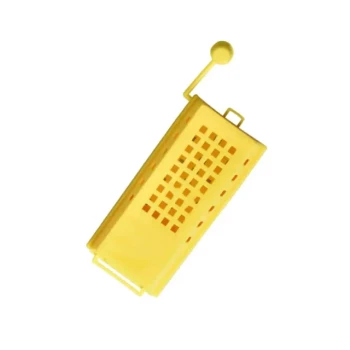
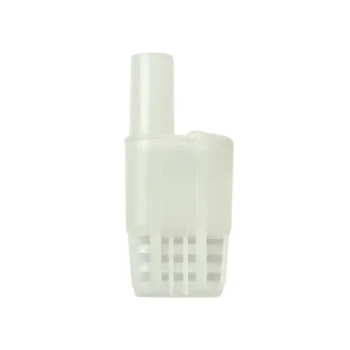
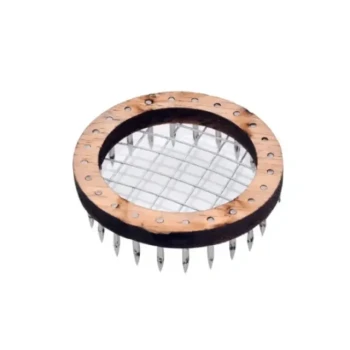
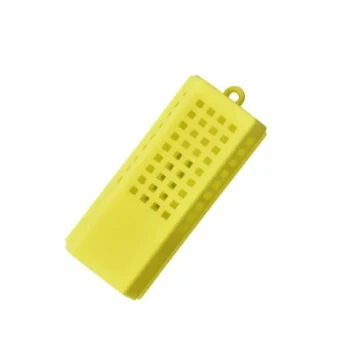
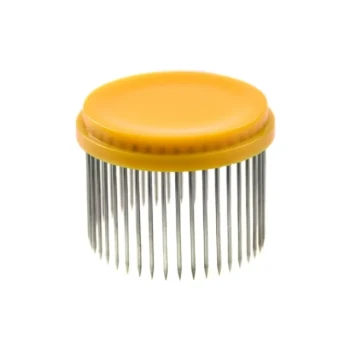
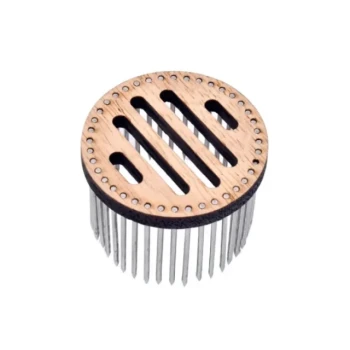
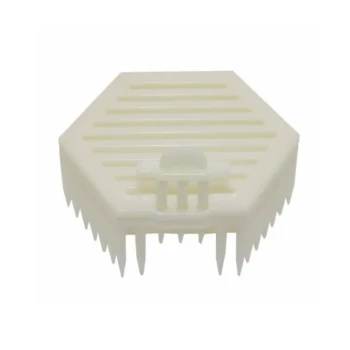
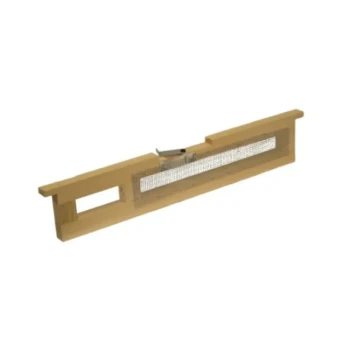
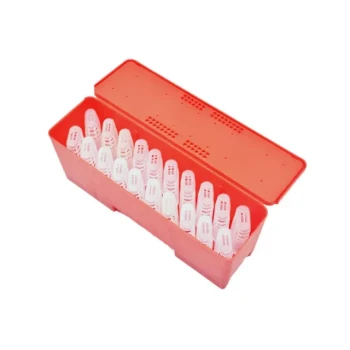
Queen caging equipment functions as a physical interrupter of the Varroa mite life cycle. By restricting the queen bee within a cage, you temporarily halt her egg-laying activity, which eventually creates a colony environment devoid of capped brood. Since Varroa mites require sealed brood cells to reproduce, this equipment eliminates the biological conditions necessary for the mite population to grow.
By imposing an artificial brood-less period, queen caging forces mites out of protective cells and into an exposed state. This converts a complex infestation into a vulnerable one, significantly amplifying the success rate of follow-up treatments.
The Mechanism of Disruption
Creating an Artificial Brood-Break
The primary function of the cage is to isolate the queen while keeping her within the hive environment.
This isolation physically prevents her from laying eggs. Over time, as existing brood hatches and no new eggs are laid, the colony enters a state known as an artificial brood-break.
Eliminating Reproductive Habitat
Varroa mites are biologically dependent on capped brood cells (sealed larvae) to reproduce.
By preventing the queen from laying eggs, you systematically remove the supply of larvae. Without capped cells, the mites have nowhere to hide and nowhere to breed, effectively pausing their reproductive cycle.
Strategic Advantages for Pest Management
Forcing the Phoretic Phase
When brood cells are unavailable, mites are forced to exist solely on the bodies of adult bees.
This is technically referred to as the phoretic phase. Instead of being shielded behind a wax capping, the entire mite population becomes exposed in the open environment of the hive.
Maximizing Treatment Efficacy
The effectiveness of many physical and chemical treatments is often limited because they cannot penetrate capped brood cells where mites hide.
By utilizing queen caging to force mites into the phoretic phase, you create an optimal window for intervention. References indicate this significantly increases the kill rate of subsequent treatments, such as contact-based miticides or organic acids (e.g., oxalic acid).
Understanding the Trade-offs
Equipment is a Catalyst, Not a Cure
It is critical to understand that the queen cage itself does not kill the mites.
The cage is a preparatory tool that alters the hive environment to make the mites vulnerable. It must be paired with a subsequent physical or chemical treatment to effectively reduce the mite load.
Timing is Critical
The success of this method relies on precise timing.
You must allow enough time for all existing brood to hatch before applying treatment. However, the restriction period must be managed carefully to ensure the colony remains healthy and the queen is not isolated longer than necessary.
Making the Right Choice for Your Goal
To utilize queen caging effectively in your Varroa management plan, consider your specific objectives:
- If your primary focus is maximizing treatment kill rates: Use the cage to ensure the colony is completely brood-less before applying a contact-based treatment like oxalic acid.
- If your primary focus is minimizing harsh chemicals: Utilize the cage to synchronize the mite population, allowing you to use "soft" miticides or biological controls with much higher efficiency than usual.
Mastering the use of queen caging allows you to target Varroa mites when they are most vulnerable, turning a difficult battle into a manageable process.
Summary Table:
| Mechanism | Impact on Varroa Mites | Benefit to Beekeeping |
|---|---|---|
| Queen Isolation | Halts egg-laying and larval supply | Creates a controlled artificial brood-break |
| No Capped Brood | Eliminates reproductive habitat | Forces mites into the vulnerable phoretic phase |
| Phoretic Exposure | Mites must stay on adult bees | Increases kill rate of organic acids & treatments |
| Timed Treatment | Prevents mites from hiding in cells | Optimizes chemical efficiency and colony health |
Maximize Your Colony Productivity with HONESTBEE
Take control of Varroa infestations and protect your investment with professional-grade solutions. HONESTBEE is dedicated to supporting commercial apiaries and distributors by providing a comprehensive wholesale range of high-performance beekeeping tools.
Whether you need specialized queen caging equipment, honey-filling machines, or durable hive-making hardware, our portfolio is designed to enhance your operational efficiency. From essential industry consumables to honey-themed cultural merchandise, we offer the full spectrum of equipment to help your business thrive.
Ready to scale your apiary or restock your distribution center? Contact HONESTBEE today to discuss your wholesale needs!
References
- Peter Njukang Akongte, Dongwon Kim. Diversity of Honeybee Behavior Is a Potential Inbuilt Trait for Varroa Tolerance: A Basic Tool for Breeding Varroa-Resistant Strains. DOI: 10.3390/agriculture14112094
This article is also based on technical information from HonestBee Knowledge Base .
Related Products
- Professional Queen Cage with Sliding Gate and Feeder Plug
- Multi-Function Queen Roller Cage and Catcher
- Professional Queen Bee Introduction and Transport Cage
- Professional Queen Catcher and Introduction Queen Cage
- Professional Multi-Functional Queen Bee Cage
People Also Ask
- Why are specialized queen bee cages used for the banking of mated queen bees? Maximize Commercial Apiary Storage Efficiency
- What is the mechanism of action for using temporary queen bee cages? Master Successful Queen Introduction
- How is a queen bee released from a queen cage? Ensure Safe Colony Integration & Hive Success
- What is the step-by-step process for installing a queen bee's cage onto a frame? Ensure Hive Acceptance Safely
- What technical precaution must be taken regarding the mesh or grill side of a queen bee cage? Ensure Queen Survival