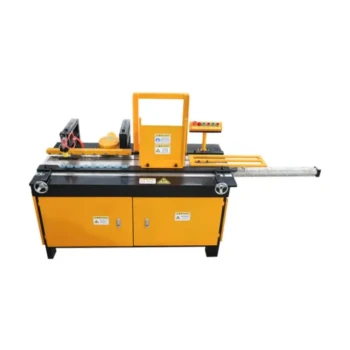
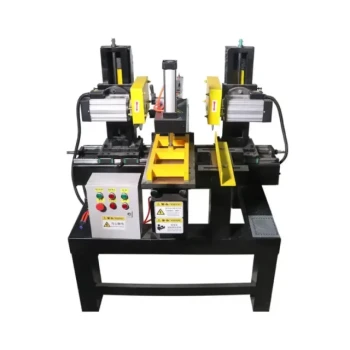
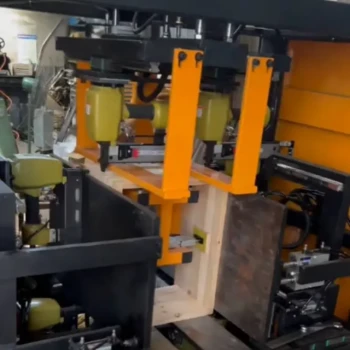
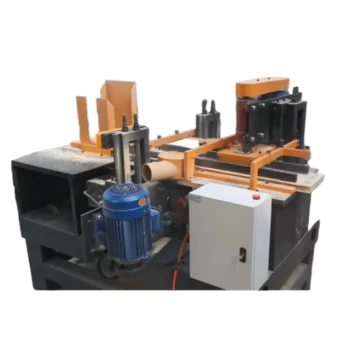
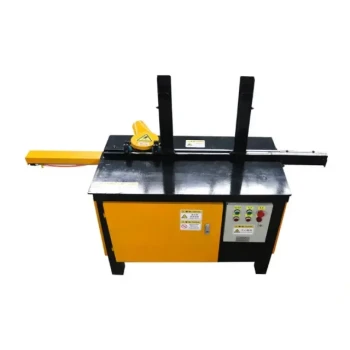
By enforcing strict dimensional precision during fabrication, standardized beehive manufacturing machinery indirectly optimizes output by transforming the hive from a simple shelter into a biologically and operationally efficient production unit.
At the surface level, this machinery ensures that every internal dimension, specifically the critical "bee space," is exact. This physical consistency stabilizes the internal temperature and humidity, allowing the colony to redirect energy from climate regulation to the production of high-quality royal jelly and honey. Furthermore, these standardized dimensions create the necessary hardware foundation for compatible collection devices and automated mechanized harvesting.
The Core Insight Precision machinery does not produce honey; it produces an energy-efficient infrastructure. By minimizing the biological energy bees waste on hive maintenance and climate control, the colony can maximize the metabolic energy available for foraging and synthesis, while simultaneously enabling humans to scale operations through automation.
The Biological Impact of Precision
Standardized manufacturing is not merely about aesthetics; it is about respecting the biological requirements of the superorganism.
Mastering the "Bee Space"
The primary reference highlights that machinery ensures precise consistency in internal hive dimensions.
This is critical for maintaining the "bee space"—the exact gap required for bees to move freely. If this space is inaccurate, bees waste time and wax building "burr comb" to fill gaps or gluing distinct parts together with propolis.
Energy Redirection
When manufacturing machinery guarantees tight seals and uniform wall thickness, the hive offers superior insulation and ventilation control.
This reduces the metabolic cost of thermoregulation. Instead of consuming honey to generate heat or exhausting themselves fanning wings to cool the hive, bees can dedicate that energy to collecting nectar and pollen.
Environmental Stability for Product Quality
High-value products like royal jelly require specific environmental conditions to maintain potency.
By creating a structure that holds constant internal temperature and humidity, standardized hives provide the stable microclimate necessary for optimal glandular secretion and honey maturation.
The Operational Impact of Standardization
Beyond the biology of the bee, precision machinery optimizes the logistics of the beekeeper.
The Foundation for Mechanized Harvesting
The primary reference notes that standardized structures facilitate the seamless installation of collection devices.
Automated honey extraction lines require frames and boxes with strict dimensional tolerances. If a frame is warped or sized irregularly, it cannot be processed by machines. Precision manufacturing is the prerequisite for removing the bottleneck of manual harvesting.
Interchangeability and Scalability
Machinery ensures that components—frames, bodies, and bases—are interchangeable across different colonies.
This allows beekeepers to manage resources fluidly, moving frames of honey or brood between hives to balance populations without physical incompatibility. This capability is essential for large-scale operations involving thousands of hives.
Efficiency in Migration
For migratory beekeeping (transhumance), standardized equipment reduces hardware damage and bee stress during transport.
Uniform stacking and secure sealing prevent shifts during transit, ensuring colonies arrive at new nectar flows healthy and ready to forage immediately.
Understanding the Trade-offs
While precision manufacturing offers immense benefits, it introduces specific systemic risks that must be managed.
The Risk of Disease Transmission
The high level of interchangeability facilitated by standardized parts is a double-edged sword.
While it improves efficiency, it also makes it easier to inadvertently transfer pathogens or pests (like Varroa mites) between colonies if frames are swapped without proper quarantine protocols.
Dependence on Capital Investment
Transitioning to high-precision, industrial-grade equipment requires significant upfront capital.
For small-scale hobbyists, the cost of equipment manufactured with CNC-level tolerances may outweigh the marginal gains in honey production compared to traditional, less precise methods.
Making the Right Choice for Your Goal
How you leverage standardized equipment depends on your specific operational focus.
- If your primary focus is Maximum Yield: Prioritize hives with superior sealing and insulation properties to minimize the colony's caloric waste on heating.
- If your primary focus is Scalability: Ensure your manufacturing source guarantees strict dimensional tolerances to prevent jamming in automated extraction lines.
- If your primary focus is Colony Health: Utilize standardized components to facilitate regular rotation of old comb, which reduces disease load within the apiary.
Ultimately, standardized machinery turns the beehive into a precision instrument that aligns the biological needs of the bee with the industrial requirements of the beekeeper.
Summary Table:
| Optimization Factor | Impact of Standardization | Resulting Benefit |
|---|---|---|
| Biological Energy | Precision "bee space" prevents burr comb construction | More metabolic energy for foraging and honey synthesis |
| Climate Control | Uniform wall thickness and tight seals | Reduced bee fatigue from thermoregulation and fanning |
| Harvesting Speed | Exact dimensional tolerances for frames | Seamless compatibility with automated extraction machinery |
| Operational Scale | Complete component interchangeability | Fluid resource management across large-scale apiaries |
| Product Quality | Stable internal microclimate (Temp/Humidity) | Optimized environment for royal jelly and honey maturation |
Scale Your Apiary Operations with HONESTBEE Precision
At HONESTBEE, we empower commercial apiaries and distributors with the industrial-grade foundation needed for maximum productivity. From CNC-precision hive-making machines to automated honey-filling systems, our comprehensive wholesale portfolio covers the full spectrum of beekeeping hardware and essential consumables.
Stop wasting colony energy on inefficient housing. Partner with HONESTBEE to implement standardized, high-performance infrastructure that streamlines your harvest and boosts your bottom line. Contact our technical team today to discuss custom machinery solutions and wholesale equipment packages tailored to your professional needs.
References
- Patrick M Fratellone, Gregory Fratellone. Apitherapy Products for Medicinal Use. DOI: 10.1089/acm.2015.0346
This article is also based on technical information from HonestBee Knowledge Base .
Related Products
- High-Efficiency Pneumatic Bee Hive Making Machine for Rapid Box Assembly
- Beehive Handle and Frame Rest Cutting Machine: Your Specialized Hive Machine
- HONESTBEE Top Bar & Bottom Bar Forming Machine | Bee Frame Machine
- Mini Desktop Bee Hive Frame Forming Making Machine
- Beehive Machine Double End Saw for Precision Hive Component Manufacturing
People Also Ask
- How does the introduction of professional beehive-making machinery benefit sustainable beekeeping? Scale Your Apiary
- Why is specialized beehive-making machinery critical for low-defense breeding? Enhance Selection with Precision Tools
- How does the introduction of specialized beehive making machinery contribute to increasing the scale of regional beekeeping industries?
- What is the importance of specialized beehive making machinery in a circular bio-economy? Build Local Sustainability
- Why is specialized beehive-making machinery essential? Scale Your Apiary with Precision Industrial Standards