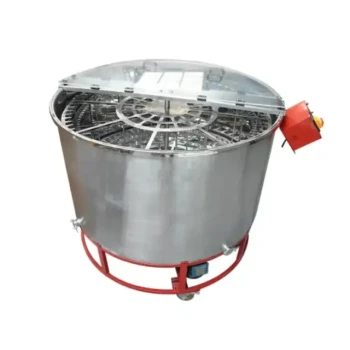
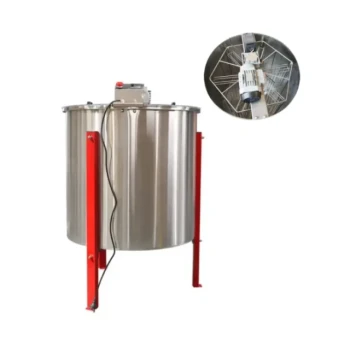
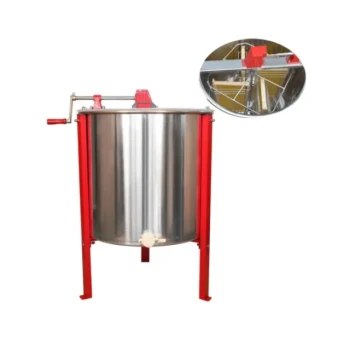
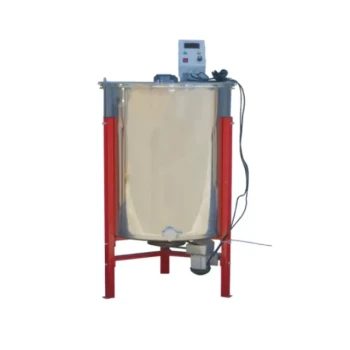
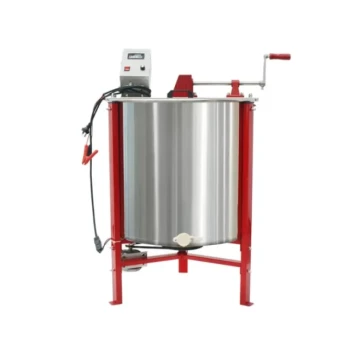
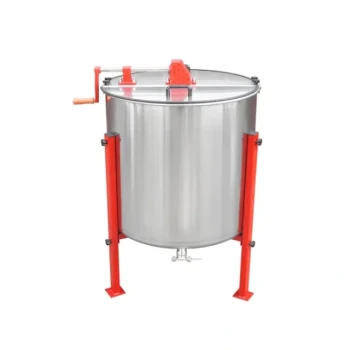
Selecting the correct honey extractor capacity is primarily a function of your current apiary size and your immediate growth plans. generally, a 2-frame extractor is the standard recommendation for 1 to 2 hives, while operations managing 10 to 15 hives should upgrade to a 6/3 frame extractor. For larger setups of 15 or more hives, an 8/4 frame extractor is necessary to maintain workflow efficiency.
Core Takeaway While manual 2-frame units are cost-effective entry points for hobbyists, efficiency drops significantly as you exceed four hives. For sustained growth, prioritize an extractor that can handle at least half your total hive count in frames per hour, or adhere to the "double capacity" rule: an extractor can generally service a maximum of double its frame capacity in hives.
Matching Capacity to Apiary Scale
To avoid bottlenecks during harvest, you must match the machine's throughput to your volume of frames.
The Hobbyist Tier (1 to 2 Hives)
For the micro-apiary, a 2-frame extractor is sufficient. At this scale, the volume of honey does not justify the expense or storage footprint of larger machinery.
A 2-frame unit allows you to spin two frames simultaneously (balancing the drum). While effective for 1–2 hives, be aware that most 2-frame units are tangential, meaning you must stop and flip the frames to extract both sides.
The Expanding Apiary (10 to 15 Hives)
Once you reach double-digit hive counts, manual flipping becomes a significant time sink. Here, a 6/3 frame extractor is the recommended standard.
This notation usually indicates a "universal" basket capability. It can often hold 6 medium/shallow frames radially (spinning both sides at once) or 3 deep frames tangentially. This versatility is critical for mid-sized operations.
The Commercial Threshold (15+ Hives)
For operations exceeding 15 hives, an 8/4 frame extractor is the minimum suggested baseline.
Processing this volume of honey requires speed. An 8/4 unit increases your batch size, significantly reducing the total time spent in the honey house. At this level, efficiency is not just a luxury; it is a labor requirement.
Understanding the Trade-offs
Choosing an extractor involves balancing upfront cost against labor time and equipment longevity.
Manual vs. Electric Power
For beekeepers with only a few colonies, large electric extractors are often unnecessary. They are expensive and sit idle for 50 weeks of the year.
However, for apiaries approaching 10 hives, a manual hand-crank becomes physically exhausting. If you value time and ease over budget, moving to an electric motor is the single biggest upgrade you can make for efficiency.
Radial vs. Tangential Efficiency
Tangential extractors (common in small 2-4 frame units) are slower because they require the operator to flip frames mid-cycle.
Radial extractors are the superior choice for high-volume production. They utilize centrifugal force to pull honey from both sides of the comb simultaneously, eliminating the need to flip frames. This is why larger 6/3 and 8/4 units are preferred for growing apiaries.
Storage and Materials
Large extractors consume significant storage space. If you have limited room, a smaller unit might be a forced requirement regardless of hive count.
Regardless of size, stainless steel is the superior material choice. Unlike plastic, it is rust-resistant, extremely durable, and easy to clean. Crucially, stainless steel does not absorb odors or flavors, ensuring the purity of your harvest over a long service life.
Making the Right Choice for Your Goal
Select your equipment based on where you plan to be in two years, not just where you are today.
- If your primary focus is budget and you have under 4 hives: Stick to a 2-frame manual extractor, or consider borrowing one from a local association since usage is infrequent.
- If your primary focus is efficiency and growth (10+ hives): Invest in a radial electric extractor (6/3 or 8/4 capacity) to eliminate the labor of hand-cranking and flipping frames.
- If your primary focus is longevity and hygiene: Prioritize models made entirely of food-grade stainless steel, including the legs, to ensure stability and rust resistance.
Buy the largest high-quality extractor your storage space and budget will allow, as you will rarely regret having extra capacity on harvest day.
Summary Table:
| Hive Count | Recommended Extractor Size | Extraction Type | Best For |
|---|---|---|---|
| 1 - 2 Hives | 2-Frame Extractor | Tangential / Manual | Budget-conscious hobbyists |
| 10 - 15 Hives | 6/3 Frame Extractor | Radial / Universal | Expanding apiaries & efficiency |
| 15+ Hives | 8/4 Frame Extractor | Radial / Electric | Commercial scale & high throughput |
| Growth Focused | 1-2 Sizes Up | Radial / Electric | Long-term investment & labor saving |
Scale Your Honey Production with HONESTBEE
Whether you are a commercial apiary or a regional distributor, HONESTBEE provides the heavy-duty machinery and professional tools you need to maximize your harvest. From high-capacity stainless steel honey extractors to advanced honey-filling machines and hive-making equipment, our comprehensive wholesale catalog is designed to support your growth.
Why Partner with HONESTBEE?
- Full Spectrum Supply: Everything from hardware to essential beekeeping consumables.
- Built for Business: Durable, food-grade equipment tailored for commercial efficiency.
- Wholesale Value: Competitive pricing on bulk orders of professional-grade tools.
Ready to upgrade your honey house or expand your inventory? Contact HONESTBEE today to receive our full product catalog and a custom quote!
Related Products
- HONESTBEE 72 Frame Industrial Electric Honey Extractor for Beekeeping
- Commercial Electric 12 Frame Honey Extractor Spinner Motorized Honey Extractor
- HONESTBEE 6 Frame Self Reversing Electric Honey Extractor for Beekeeping
- HONESTBEE 3-Frame Manual Acrylic Honey Extractor
- Stainless Steel Manual 8 Frame Radial Honey Extractor Machine for Beehives
People Also Ask
- What is the importance of balancing honeycomb frames within a honey extractor? Ensure Stability and Protect Machinery
- How is honey separated from the frames after they are uncapped? Efficient Extraction Methods for High Yields
- What are the main benefits of using a honey extractor? Maximize Yields and Protect Your Honeycomb
- What are the recommended methods for removing honey from the honeycomb? Top Extraction Techniques for Maximum Efficiency
- How do manual honey extractors compare to electric honey extractors? Choosing the Right Tool for Your Apiary Growth