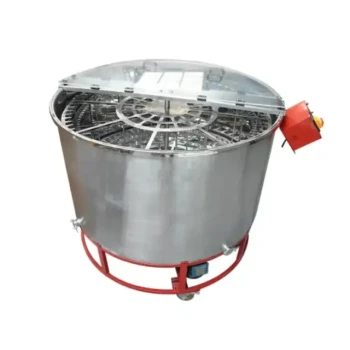
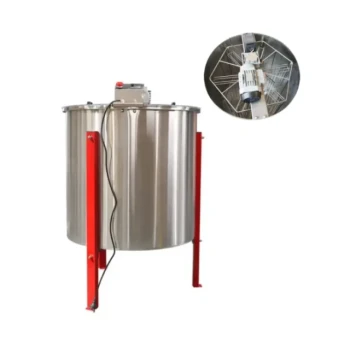
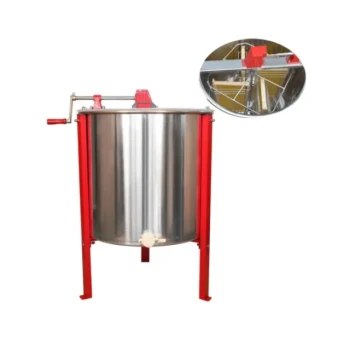
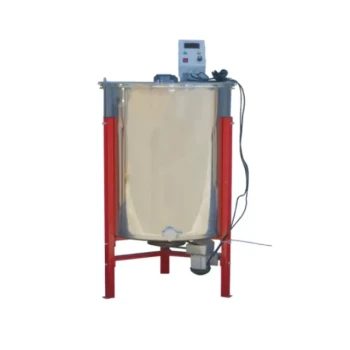
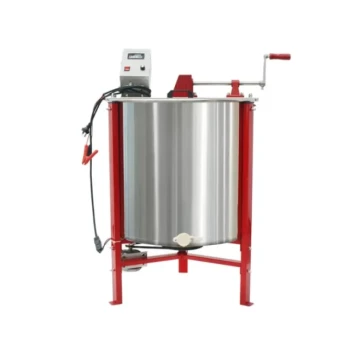
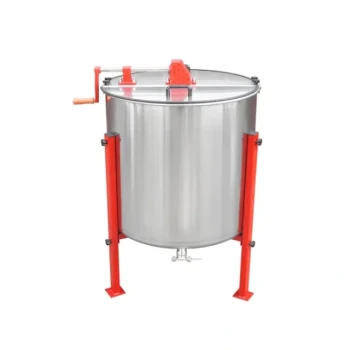
To operate a standard honey extractor, you must systematically uncap the wax cells, balance the load within the drum, and utilize controlled centrifugal force to drain the honey. This process requires a specific cadence—starting slowly to protect the comb structure before increasing speed—and involves manually flipping the frames to harvest both sides of the foundation.
The core objective of extraction is not merely to remove honey, but to preserve the drawn comb. By managing spin speed and frame balance, you ensure the wax foundation remains intact for immediate reuse by the colony.
Preparation and Loading
Before the frames enter the extractor, they must be prepped to allow free flow of the honey.
Clearing the Frame
Ensure the frames are completely free of bees. Use a bee brush to gently wipe any lingering bees off the frame to prevent them from entering the final product.
Uncapping the Cells
Honey cells are sealed with wax caps that must be removed. Use a sharp knife dipped in hot water to slice these caps off. The heat helps the blade glide smoothly through the wax without tearing the delicate comb.
Loading the Drum
Place the decapped frames vertically into the slots of the extractor’s box.
Balancing the Load
Crucially, you must load frames in a balanced manner. If you put a heavy frame on one side, place a similarly weighted frame directly opposite it to prevent excessive vibration or equipment damage during the spin.
The Extraction Process
Once loaded, the mechanical removal of honey begins. This requires patience to prevent "blowouts" (breaking the comb).
Initiating Rotation
Begin rotating the handle gently and slowly. Do not immediately spin at full speed. The combs are heavy with honey, and immediate high-speed rotation can rip the comb apart due to excessive centrifugal force.
Increasing Speed
As honey begins to leave the cells, the frames become lighter. You can now gradually increase the speed. Continue this for approximately 5 to 6 minutes for the first side.
Extracting the Second Side
Standard extractors generally pull from one side at a time. Once the first side is drained, stop the machine, turn the frames over, and repeat the process for the opposite side.
Post-Extraction and Maintenance
Proper cleanup ensures the quality of your honey and the longevity of your equipment.
Collecting the Honey
Open the gate at the bottom of the extractor to drain the honey into a clean bucket. It is best practice to filter the honey at this stage to remove suspended wax particles or impurities before bottling.
Cleaning the Equipment
Disassemble the extractor by removing the frames. Use an uncapping tool to scrape away wax and propolis residue from the interior walls.
Washing and Drying
Wash the interior and the frames with warm water and a mild detergent. Rinse thoroughly to ensure no soap residue remains, and allow the unit to dry completely before reassembling it for storage.
Common Pitfalls to Avoid
Using an extractor seems straightforward, but specific operational errors can ruin your harvest or equipment.
The Risk of Comb Blowout
The most common error is spinning too fast, too early. Heavy, full combs are fragile. If you apply high centrifugal force before some honey has drained, the weight of the honey will break the wax structure, rendering the frame unusable for the bees.
The Danger of Imbalanced Loads
Never run an extractor with an unbalanced load. This causes violent wobbling that can damage the extractor's bearings or cause the machine to "walk" across the floor.
Making the Right Choice for Your Goal
Your approach to extraction should adapt based on your volume and available equipment.
- If your primary focus is comb preservation: Prioritize a slow initial spin speed and ensure the uncapping knife is hot enough to cut cleanly without dragging.
- If your primary focus is processing speed: Utilize a tangential extractor where you can manually flip frames quickly, but ensure you maintain a strict 5-6 minute cycle to avoid under-extraction.
Mastering the extractor is about respecting the wax as much as harvesting the honey.
Summary Table:
| Stage | Key Action | Primary Purpose |
|---|---|---|
| Preparation | Uncapping with a hot knife | Removes wax seals to allow honey flow |
| Loading | Balanced frame placement | Prevents equipment vibration and damage |
| Extraction | Gradual speed increase | Protects delicate wax combs from 'blowouts' |
| Processing | Manual frame flipping | Ensures honey is harvested from both sides |
| Cleanup | Warm water & mild detergent | Maintains hygiene and equipment longevity |
Elevate Your Commercial Apiary with HONESTBEE
At HONESTBEE, we empower commercial apiaries and distributors with high-performance beekeeping solutions. Whether you need professional-grade honey extractors, specialized hive-making machinery, or precision honey-filling equipment, our comprehensive wholesale catalog has you covered.
Why partner with us?
- Full Spectrum Supply: From heavy machinery to essential industry consumables.
- Quality Focused: Tools designed to preserve your comb and maximize production efficiency.
- Expert Support: Tailored solutions for large-scale honey production and distribution.
Ready to scale your honey production? Contact us today to explore our wholesale offerings and see how our equipment can streamline your operations.
Related Products
- HONESTBEE 72 Frame Industrial Electric Honey Extractor for Beekeeping
- Commercial Electric 12 Frame Honey Extractor Spinner Motorized Honey Extractor
- HONESTBEE 6 Frame Self Reversing Electric Honey Extractor for Beekeeping
- HONESTBEE 3-Frame Manual Acrylic Honey Extractor
- Stainless Steel Manual 8 Frame Radial Honey Extractor Machine for Beehives
People Also Ask
- What is the importance of balancing honeycomb frames within a honey extractor? Ensure Stability and Protect Machinery
- How is honey separated from the frames after they are uncapped? Efficient Extraction Methods for High Yields
- What are the main benefits of using a honey extractor? Maximize Yields and Protect Your Honeycomb
- What are the recommended methods for removing honey from the honeycomb? Top Extraction Techniques for Maximum Efficiency
- How do manual honey extractors compare to electric honey extractors? Choosing the Right Tool for Your Apiary Growth