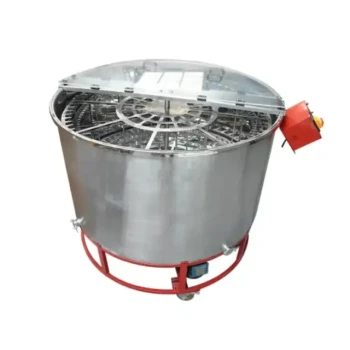
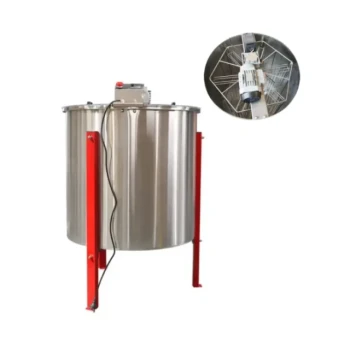
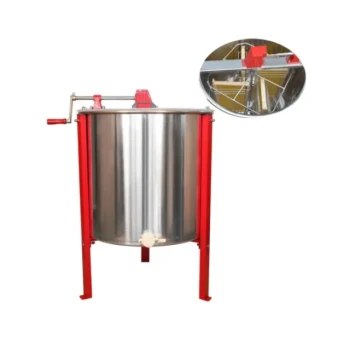
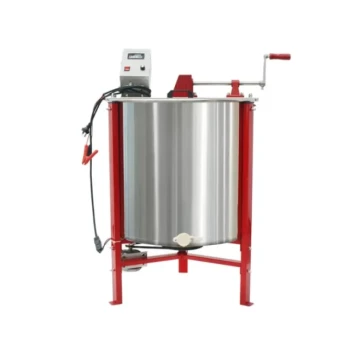
Food-grade stainless steel is the superior and most highly recommended material for honey extractors. While plastic models are available, stainless steel provides the necessary durability, resistance to moisture, and hygienic properties required for food processing. Most importantly, it prevents flavor contamination by refusing to absorb odors or residues from previous harvests.
Core Takeaway For any beekeeper prioritizing longevity and honey quality, stainless steel is the definitive choice. It offers a non-porous surface that ensures sanitary processing and structural integrity that plastic models simply cannot match over time.
Why Stainless Steel is the Standard
Sanitation and Flavor Purity
The primary advantage of stainless steel is its non-porous nature. Unlike plastic, it does not absorb odors or flavors.
This ensures that strong flavors from a previous harvest do not taint delicate varietals extracted later. Furthermore, food-grade stainless steel is exceptionally easy to clean, allowing you to maintain high hygiene standards with minimal effort.
Resistance to Environmental Stress
Honey extraction is a sticky, moisture-rich process. Stainless steel is inherently resistant to moisture and rust, which are common enemies of beekeeping equipment.
A stainless steel unit ensures a long service life, withstanding the wear and tear of annual seasons better than alternative materials.
Critical Structural Considerations
Stability and Leg Construction
The material of the drum is important, but the material of the support structure is equally critical. You should look for models where the legs are also made of thick stainless steel.
Thick steel legs provide superior stabilization during the spinning process. This rigidity reduces the risk of the unit "walking" or vibrating excessively, which protects the unit from breakage and ensures safer operation.
Mechanical Integrity
The internal basket and frame holders face significant centrifugal force. Stainless steel components in these areas prevent warping under pressure.
When the internal mechanisms are rigid and durable, you can spin frames at the necessary speeds without fear of structural failure.
Understanding the Trade-offs
While stainless steel is the recommended material, it is important to understand the context of the market.
Cost vs. Longevity Stainless steel extractors generally command a higher price point than plastic alternatives. However, this should be viewed as an investment in longevity; plastic can degrade, scratch, and hold odors, requiring replacement sooner.
Weight and Portability Steel units are heavier than plastic ones. While this makes them harder to transport, this weight is actually a functional advantage, as it anchors the extractor during the violent spinning motion of extraction.
Making the Right Choice for Your Operation
While the material choice should almost always be stainless steel, the capacity of that steel unit depends on your specific volume.
- If you manage 1 to 2 hives: A 2-frame stainless steel extractor is sufficient for your volume and storage needs.
- If you manage 10 to 15 hives: You should upgrade to a 6/3 frame stainless steel extractor to handle the increased workload efficiently.
- If you manage 15 or more hives: An 8/4 frame stainless steel model is recommended to minimize the time spent actively spinning frames.
Select the highest quality stainless steel your budget allows to ensure your equipment lasts as long as your apiary does.
Summary Table:
| Feature | Food-Grade Stainless Steel | Plastic / Alternative Materials |
|---|---|---|
| Hygiene | Non-porous; won't absorb odors | Porous; can harbor residues/smells |
| Durability | High; rust-resistant & long-lasting | Lower; prone to cracking and warping |
| Flavor Purity | Zero flavor contamination | Risk of flavor transfer between harvests |
| Stability | Heavy and stable during spinning | Lightweight; prone to 'walking' or vibration |
| Investment | Higher initial cost; lifelong use | Lower cost; shorter lifecycle |
Scale Your Honey Production with HONESTBEE Professional Equipment
Maximize your apiary's efficiency and ensure the highest honey quality with premium equipment from HONESTBEE. We specialize in supporting commercial apiaries and distributors with a full spectrum of high-performance beekeeping solutions.
Why partner with HONESTBEE?
- Comprehensive Wholesale Catalog: From durable food-grade stainless steel extractors and hive-making machinery to precise honey-filling systems.
- End-to-End Solutions: We provide everything from heavy-duty hardware to essential industry consumables and honey-themed cultural merchandise.
- Built for Professionals: Our equipment is designed to withstand the rigorous demands of commercial honey processing.
Ready to upgrade your operation or stock the best tools for your customers? Contact us today to discuss your wholesale needs!
Related Products
- HONESTBEE 72 Frame Industrial Electric Honey Extractor for Beekeeping
- Commercial Electric 12 Frame Honey Extractor Spinner Motorized Honey Extractor
- HONESTBEE 3-Frame Manual Acrylic Honey Extractor
- electric honey extractor honey centrifuge 3 frame honey extractor stainless steel honey frame extractor
- HONESTBEE 6 Frame Self Reversing Electric Honey Extractor for Beekeeping
People Also Ask
- What is the importance of balancing honeycomb frames within a honey extractor? Ensure Stability and Protect Machinery
- How is honey separated from the frames after they are uncapped? Efficient Extraction Methods for High Yields
- What are the main benefits of using a honey extractor? Maximize Yields and Protect Your Honeycomb
- What are the recommended methods for removing honey from the honeycomb? Top Extraction Techniques for Maximum Efficiency
- How do manual honey extractors compare to electric honey extractors? Choosing the Right Tool for Your Apiary Growth