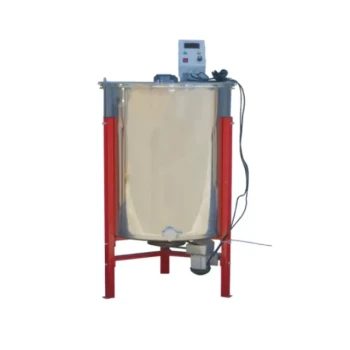
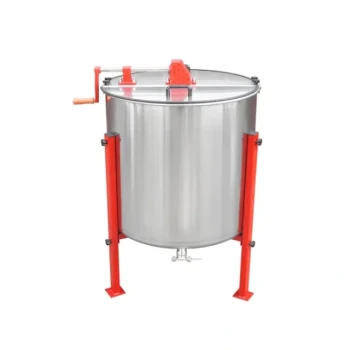
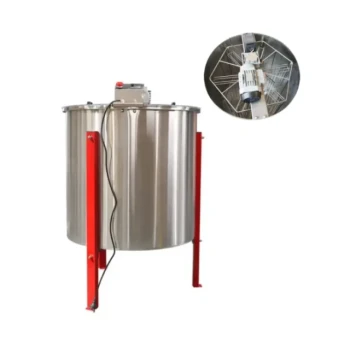
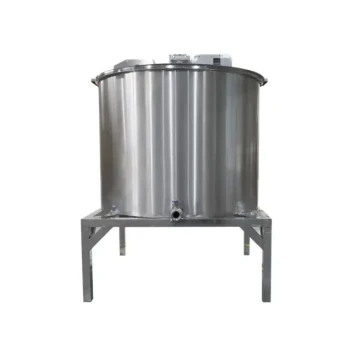
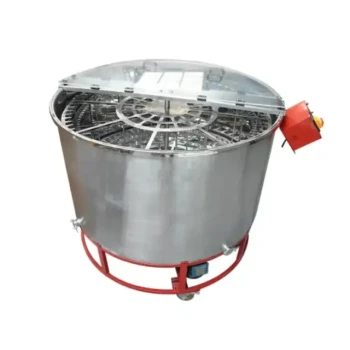
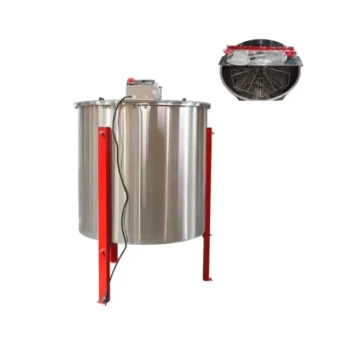
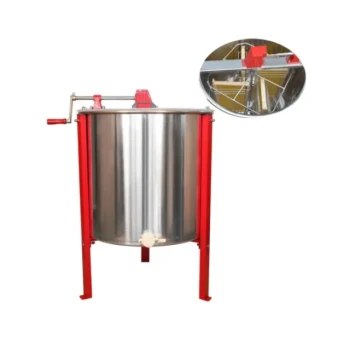
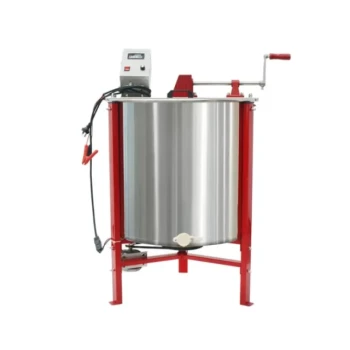
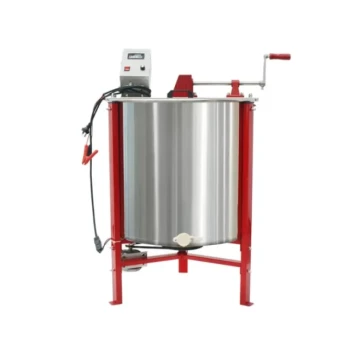
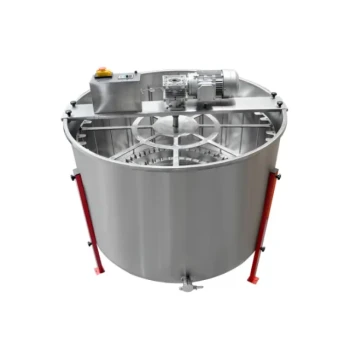
Centrifugal honey extractors are the cornerstone of modern, efficient apiary management. These devices function by utilizing high-speed rotation to generate centrifugal force, which rapidly expels liquid honey from uncapped honeycomb frames. They are considered essential equipment because they offer the unique ability to harvest honey without destroying the physical structure of the wax comb, a feat impossible with manual pressing methods.
The Core Value The definitive advantage of a centrifugal extractor is that it separates honey from wax while keeping the honeycomb intact. By returning undamaged combs to the hive, you eliminate the need for bees to rebuild their infrastructure, saving the colony immense energy and significantly shortening the production cycle for the next harvest.
The Mechanics of Efficient Extraction
Harnessing Centrifugal Force
The fundamental principle of these extractors is the use of high-frequency rotation. Frames are placed inside a drum, and as the internal basket spins, centrifugal force pulls the liquid honey out of the cells.
The honey is flung against the inner walls of the extractor, where it drains to the bottom for collection. This physical separation is rapid and consistent, handling large volumes of honey far faster than gravity draining alone.
Non-Destructive Separation
Unlike traditional methods that involve crushing or pressing the comb to squeeze out the honey, a centrifuge is non-destructive. The force is calibrated to remove the fluid while leaving the fragile beeswax structure unharmed.
This distinction is critical for commercial scalability. Manual pressing destroys the comb, forcing a total rebuild; centrifugal extraction preserves the frame as a reusable asset.
The Biological and Economic Impact
Preserving "Drawn Comb"
In beekeeping, "drawn comb" (built-out wax cells) is a valuable resource. The primary technical advantage of using a centrifuge is the preservation of this infrastructure.
Because the frames remain intact, the empty combs can be returned immediately to the beehive. The bees do not need to construct new storage cells and can begin filling them with nectar almost immediately.
Reducing Colony Energy Expenditure
Producing beeswax is biologically expensive for a bee colony. Bees consume vast amounts of honey and energy to secrete the wax scales necessary to build combs.
By recycling the combs via centrifugal extraction, you spare the colony this significant energy cost. The resources that would have been spent on construction are instead directed toward foraging and honey production.
Shortening Production Cycles
The cumulative effect of preserving combs is a drastic reduction in the turnaround time between harvests. Since the bees skip the construction phase, the colony rebuilds its food stores much faster.
This efficiency directly translates to higher apiary production rates over the course of a season, making the extractor vital for maximizing yield.
Quality and Purity Standards
Minimizing Wax Residue
Centrifugal extraction yields a cleaner final product compared to pressing. Because the comb is not crushed, there is significantly less wax debris mixed into the honey.
Enhancing Sensory Quality
By separating the honey cleanly, the process improves the clarity and purity of the harvest. This ensures the final product meets high hygiene standards and maintains better visual and sensory quality.
Understanding the Trade-offs
Equipment Complexity and Cost
Unlike simple strainers or crush-and-strain setups, centrifugal extractors are mechanical devices that require an initial investment. They also require maintenance, such as cleaning the drum and lubricating moving parts, to ensure consistent operation.
Risk of Frame Damage
While the goal is to save the comb, incorrect operation can damage it. If the rotation speed is too high or the frames are unbalanced, the centrifugal force can blow out the wax foundation. Operators must carefully manage spin speeds, especially with fresh, soft wax.
Making the Right Choice for Your Goal
Centrifugal extractors are not just about speed; they are about sustainable resource management within the hive.
- If your primary focus is Maximum Yield: Prioritize this method to reuse drawn comb, which allows bees to focus entirely on nectar collection rather than wax secretion.
- If your primary focus is Product Clarity: Use centrifugal extraction to minimize wax particulate and improve the visual presentation of your bottled honey.
- If your primary focus is Time Efficiency: Rely on this equipment to process multiple frames simultaneously, vastly outperforming manual gravity or pressing techniques.
By integrating a centrifugal extractor, you transform honey harvesting from a destructive reset into a continuous, efficient cycle that benefits both the apiarist and the colony.
Summary Table:
| Feature | Centrifugal Extraction | Manual Pressing |
|---|---|---|
| Comb Condition | Intact & Reusable | Destroyed |
| Processing Speed | High-Volume/Rapid | Slow/Labor-Intensive |
| Honey Purity | High (Minimal Wax Residue) | Lower (High Wax Content) |
| Colony Impact | Saves Bee Energy | High Energy Cost to Rebuild |
| Production Cycle | Significantly Shortened | Delayed by Reconstruction |
Elevate Your Honey Production with HONESTBEE
As a dedicated partner to commercial apiaries and global distributors, HONESTBEE provides the professional-grade tools you need to scale your operations. From high-efficiency centrifugal honey extractors and honey-filling machines to specialized hive-making machinery, our comprehensive wholesale portfolio is designed to maximize your yield while minimizing labor.
Ready to upgrade your equipment or stock the industry's best beekeeping consumables? Contact us today to discover how our tailored hardware solutions and honey-themed cultural merchandise can drive growth for your business.
References
- María Fernanda Miranda Salazar, Luis Antonio Velasco Matveev. Proposal for the Production and Marketing of Beekeeping Products. DOI: 10.18502/espoch.v2i2.11194
This article is also based on technical information from HonestBee Knowledge Base .
Related Products
- electric honey extractor honey centrifuge 3 frame honey extractor stainless steel honey frame extractor
- Manual Hand Crank 4 Frame Honey Extractor Centrifuge for Beekeeping
- Professional 4 Frame Self Reversing Electric Honey Extractor for Beekeeping
- Electric 4 Frame Tangential Honey Extractor
- 24 Frame Honey Extractor Commercial Radial Honey Frame Extraction Machine
People Also Ask
- What are the characteristics of electric honey extractors? Boost Your Apiary Efficiency with Automated Technology
- What are the disadvantages of using an electric honey extractor? Weighing Cost, Power, and Comb Safety
- What are the advantages of an electric honey extractor? Boost Efficiency and Scale Your Honey Production
- What are the technical advantages of electric honey extractors? Maximize Yield and Protect Your Bee Colony
- How does an electric honey extractor affect the quality of honey? Preserve Flavor & Purity with Precision Extraction