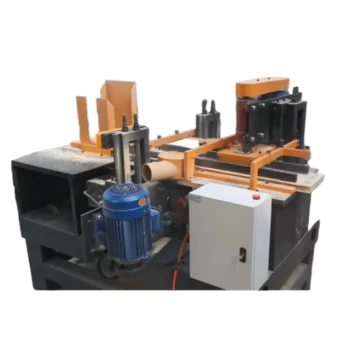
Specialized beehive manufacturing machinery is the fundamental driver of industry resilience because it shifts hive production from variable craftsmanship to precise, industrial-grade engineering. By guaranteeing exact structural dimensions and superior sealing, this technology ensures that hives are not just wooden boxes, but standardized tools that protect colony health and support large-scale scientific management.
The Core Insight Resilience in commercial beekeeping is not achieved through better bees alone, but through the standardization of their environment. Specialized machinery creates a consistent, interchangeable hardware ecosystem that lowers biological stress on colonies while enabling the operational scale required for economic viability.
The Foundation of Biological Resilience
To understand why this machinery is essential, one must look beyond the wood and see the impact on the colony's biology.
Creating a Stable Micro-climate
The primary contribution of specialized machinery is the creation of a consistent internal environment. Precision-made structures provide superior sealing and structural integrity compared to manual assembly.
This manufacturing precision ensures tight-fitting components that stabilize the hive's internal temperature. By reducing drafts and thermal fluctuations, the machinery enhances the colony's natural ability to withstand extreme weather and environmental risks.
Energy Conservation for the Colony
A direct result of this stable micro-climate is energy efficiency. When hives are manufactured with poor tolerances, bees must expend significant metabolic energy regulating temperature.
Standardized, well-insulated structures produced by these machines reduce this energy burden. This allows the colony to redirect calories away from survival heating and toward productive activities, such as collecting pollen, nectar, and building up resistance against external stressors.
Enhancing Disease and Pest Control
Machinery enables the construction of modern hives compliant with strict biosecurity standards. Uniform specifications facilitate precise Varroa mite monitoring and the implementation of physical treatments, such as heat applications, which are difficult to perform in irregular hives.
Operational Resilience through Standardization
Commercial resilience also depends on the efficiency of the beekeeper. Specialized machinery solves the logistical bottlenecks of large-scale operations.
The Critical Role of "Bee Space"
The most vital technical specification in a hive is bee space—the precise gap required for bees to move without building excess wax (burr comb) or gluing parts together with propolis.
Specialized machinery strictly maintains these critical dimensions. This prevents the "gumming up" of frames, ensuring that internal components remain mobile and interchangeable. Without this machine-grade precision, management efficiency plummets as beekeepers struggle to inspect or manipulate colonies.
Universal Interchangeability
For commercial apiaries, hardware interchangeability is non-negotiable. Specialized machinery ensures that a frame or box produced today fits perfectly with one produced five years ago.
This allows for the seamless rotation of colonies and equipment across different operation sites. It also provides the necessary infrastructure for mechanized honey harvesting, which requires uniform frame dimensions to function correctly.
Durability in Logistics
Commercial beekeeping often involves migratory pollination services, subjecting hives to the stress of long-distance transportation.
Industrial-grade manufacturing produces robust hives capable of withstanding these physical demands. By ensuring structural stability during transport, the machinery protects the colony from collapse and stress, securing the supply chain for pollination services.
Understanding the Trade-offs
While specialized machinery offers immense benefits, relying on high-precision manufacturing introduces specific constraints that operation managers must acknowledge.
The "Zero-Tolerance" Risk
The primary trade-off is the inflexibility of precision. Because the efficiency of the system relies on exact "bee space" and interchangeability, any deviation in the machinery’s calibration can be disastrous. A machine producing components even slightly out of tolerance can render thousands of units incompatible or biologically inefficient (inducing burr comb), creating a large-scale waste of capital.
Capital Intensity vs. Long-Term Value
Transitioning to or purchasing from sources using industrial-grade machinery involves higher initial complexity or cost compared to basic carpentry. However, this is balanced by long-term asset value. High-quality hives produced by these machines can exceed a service life of 20 years, significantly lowering depreciation and replacement costs over time.
Making the Right Choice for Your Goals
The value of specialized manufacturing depends on the specific operational challenges you are trying to solve.
- If your primary focus is Colony Health: Prioritize machinery that guarantees sealing performance and thermal consistency, as this directly reduces the metabolic stress on bees.
- If your primary focus is Operational Efficiency: Focus on the precision of "bee space" dimensions, as this prevents wild wax buildup and enables rapid, mechanized frame manipulation.
- If your primary focus is Long-Term ROI: Look for industrial-grade durability, where the initial cost is offset by a lifespan exceeding 20 years and reduced maintenance needs.
True industry resilience is built on the certainty that every hive offers the same high standard of protection and functionality.
Summary Table:
| Key Benefit | Impact on Resilience | Practical Value |
|---|---|---|
| Micro-climate Stability | Improves biological health | Reduces colony energy expenditure and winter loss |
| Bee Space Precision | Enhances operational efficiency | Prevents burr comb and ensures easy frame manipulation |
| Hardware Interchangeability | Optimizes logistics | Enables seamless rotation and mechanized harvesting |
| Industrial Durability | Lowers long-term costs | Extends hive service life to 20+ years |
Transform Your Beekeeping Operation with HONESTBEE
At HONESTBEE, we empower commercial apiaries and distributors with the industrial-grade precision required for modern beekeeping. From specialized hive-making machines to honey-filling systems and high-performance consumables, our equipment ensures your infrastructure meets the highest standards of resilience and efficiency.
Why partner with us?
- Precision Engineering: Guarantee perfect bee space and structural sealing.
- Wholesale Scalability: Comprehensive supply chains for beekeeping tools and hardware.
- Long-term ROI: Durable machinery designed to outlast and outperform.
Ready to scale your production and secure your colony health? Contact Our Expert Team Today to explore our wholesale solutions!
References
- Mihaela Grumeza. The Impact of Non-reimbursable External Financial Assistance on Consolidating the Resilience of the Beekeeping Sector in the Republic of Moldova. DOI: 10.53486/econ.2025.133.109
This article is also based on technical information from HonestBee Knowledge Base .
Related Products
- High-Efficiency Pneumatic Bee Hive Making Machine for Rapid Box Assembly
- Mini Desktop Bee Hive Frame Forming Making Machine
- Beehive Machine Double End Saw for Precision Hive Component Manufacturing
- Automatic High-Speed Bee Hive Box Stapling Machine
- HONESTBEE Top Bar & Bottom Bar Forming Machine | Bee Frame Machine
People Also Ask
- How does the introduction of professional beehive-making machinery benefit sustainable beekeeping? Scale Your Apiary
- Why is specialized beehive-making machinery critical for low-defense breeding? Enhance Selection with Precision Tools
- How does the introduction of specialized beehive making machinery contribute to increasing the scale of regional beekeeping industries?
- What is the importance of specialized beehive making machinery in a circular bio-economy? Build Local Sustainability
- Why is specialized beehive-making machinery essential? Scale Your Apiary with Precision Industrial Standards